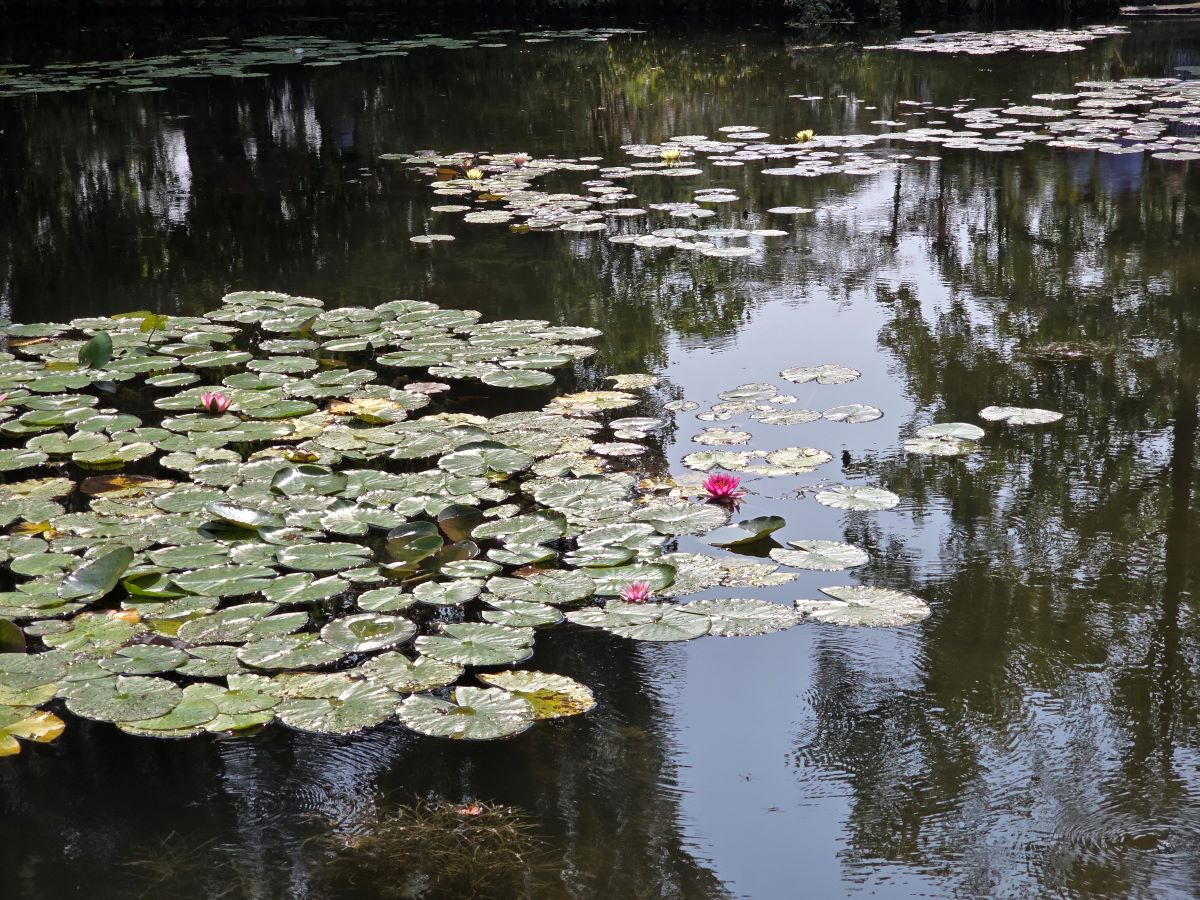
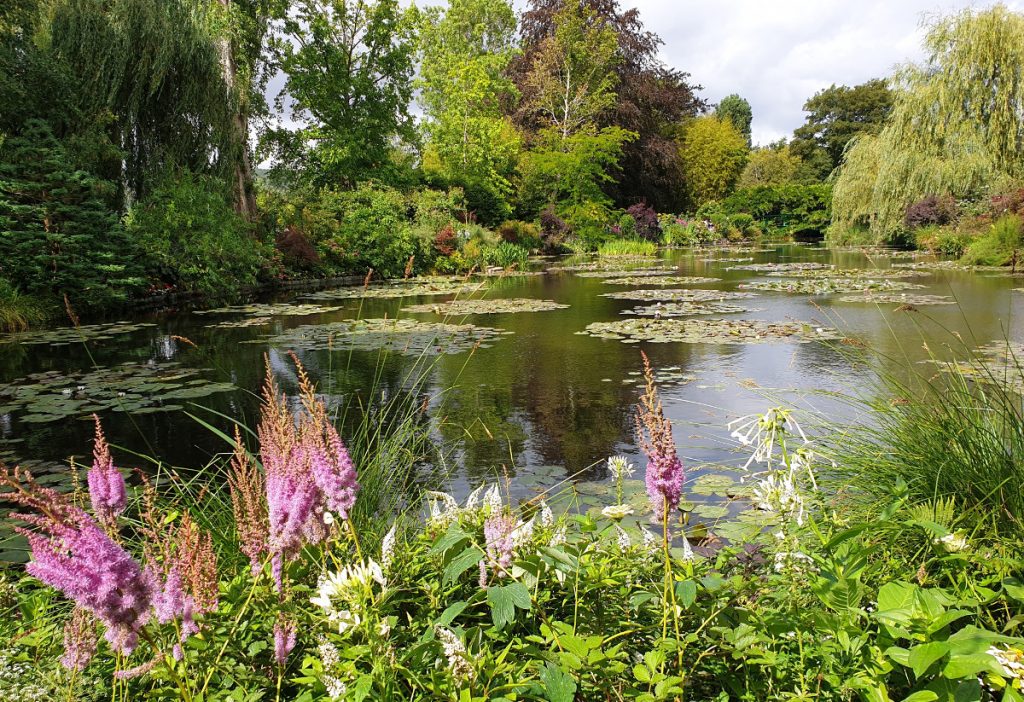
In the soft light of September, water lilies open in the afternoon. They need all the morning to decide it’s warm enough.
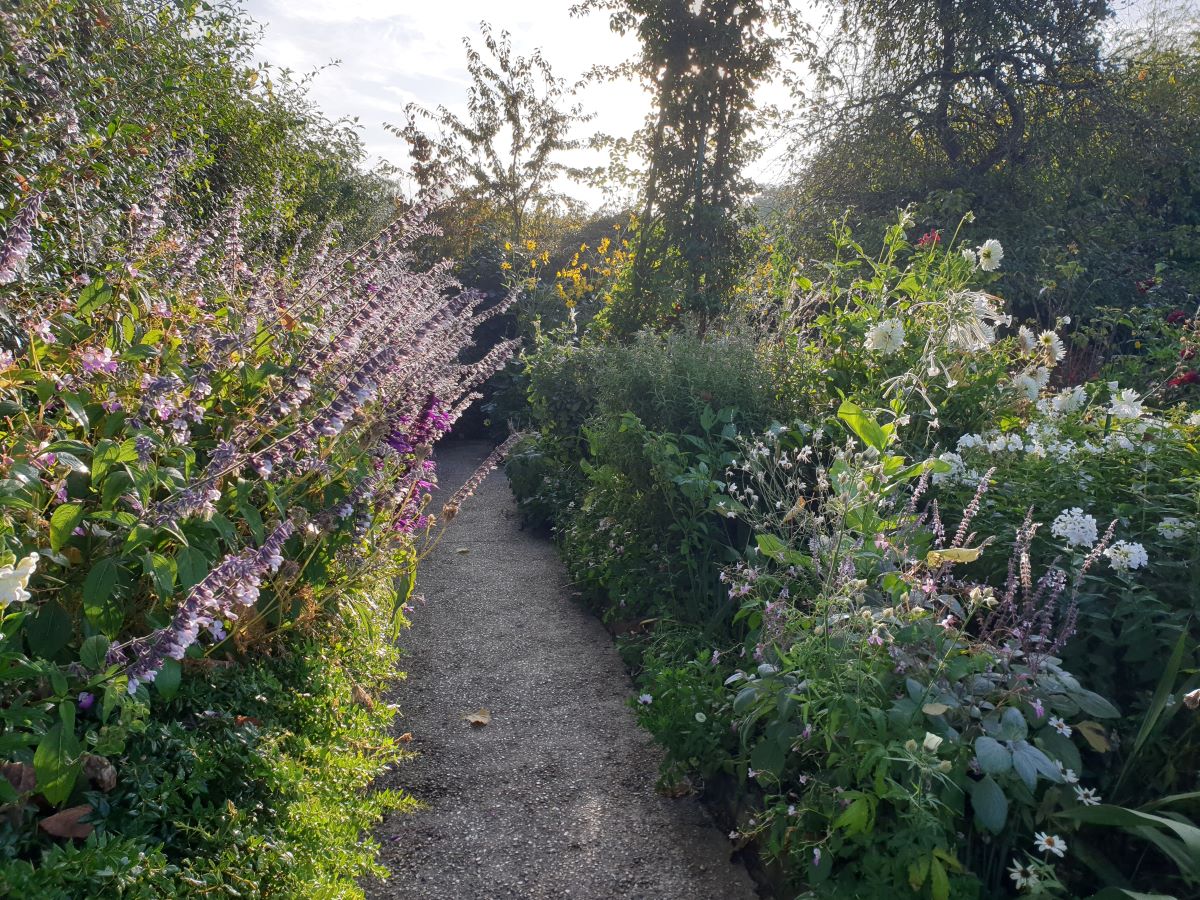
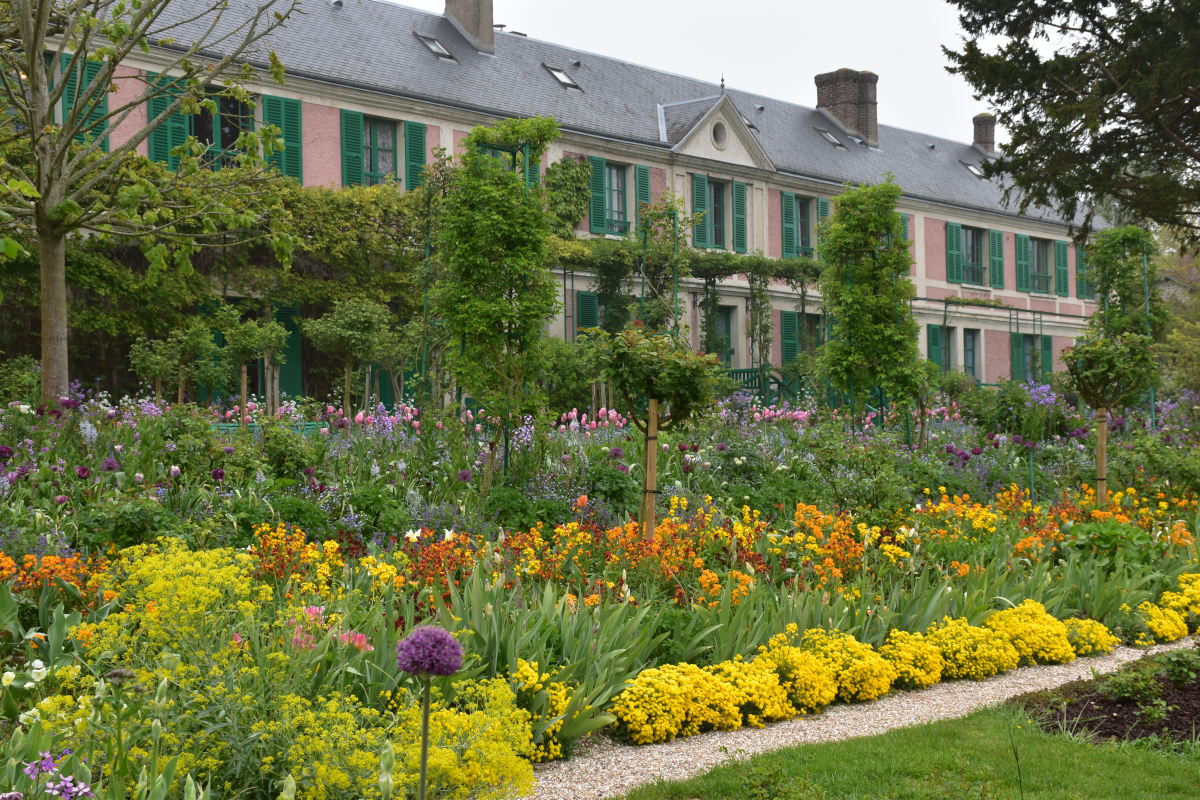
Flowers are tall, filling the beds with masses of vegetation and colors. Dahlias, sages, gauras, nicotianas, balsams are at their best, as well as the giant yellow helianthus. Asters will start soon.
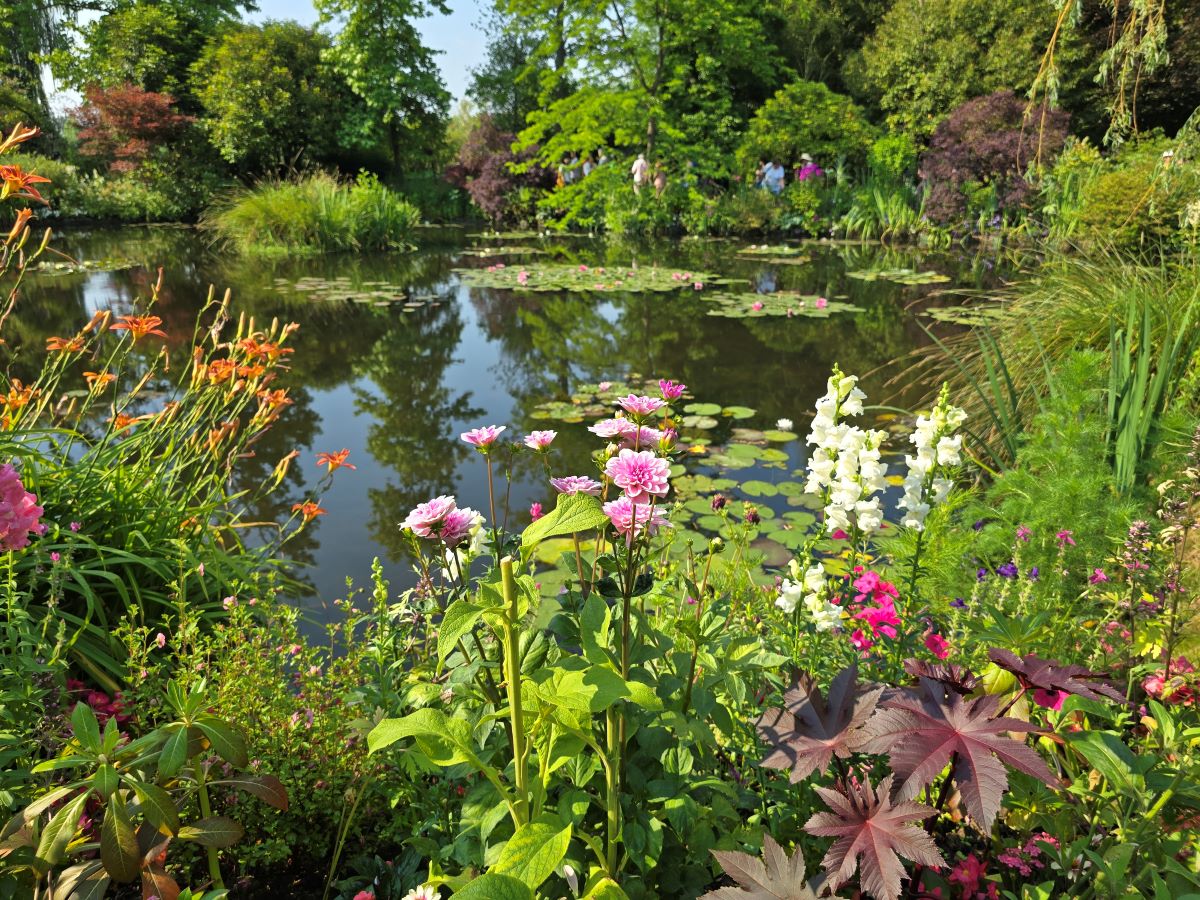
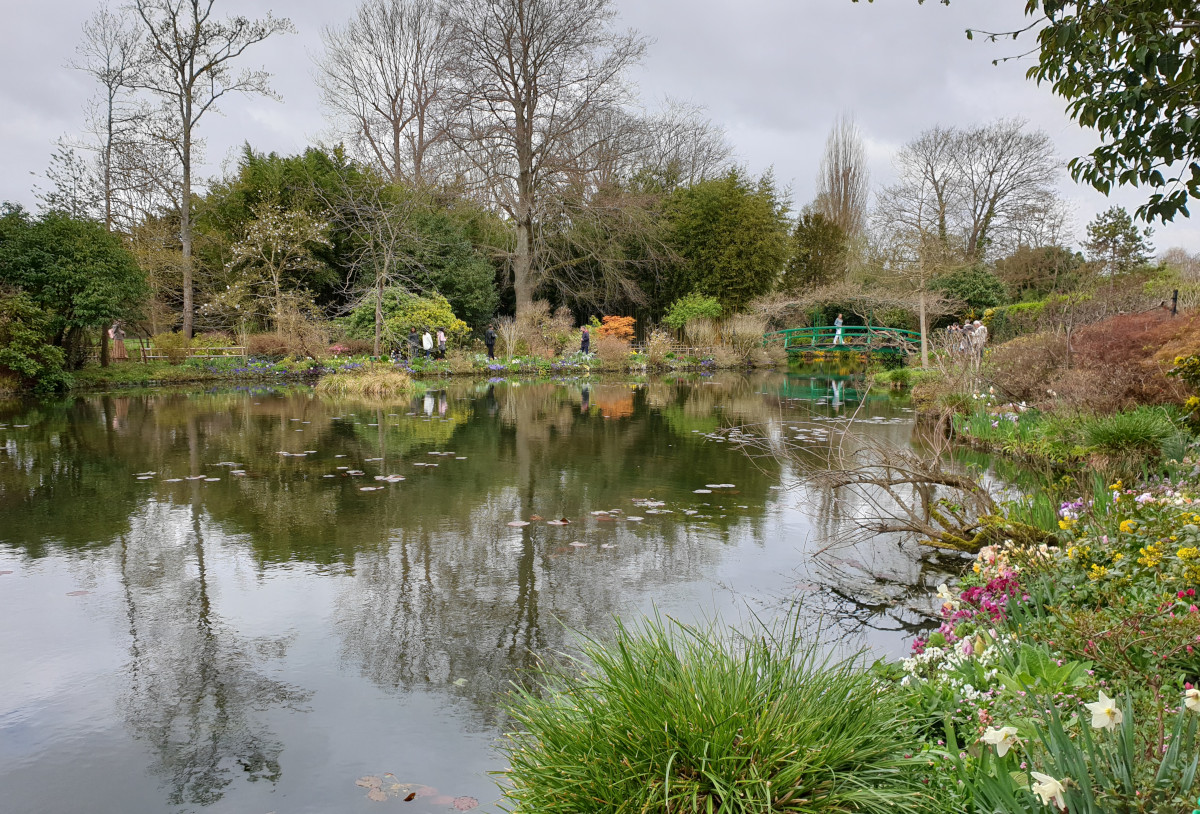
Summer is back! In Monet’s garden, it’s the best time to see water lilie in their splendor. They love a warm water, many hours of sunshine, and all the admirers who walk around the Giverny pond, just like the painter in his times.
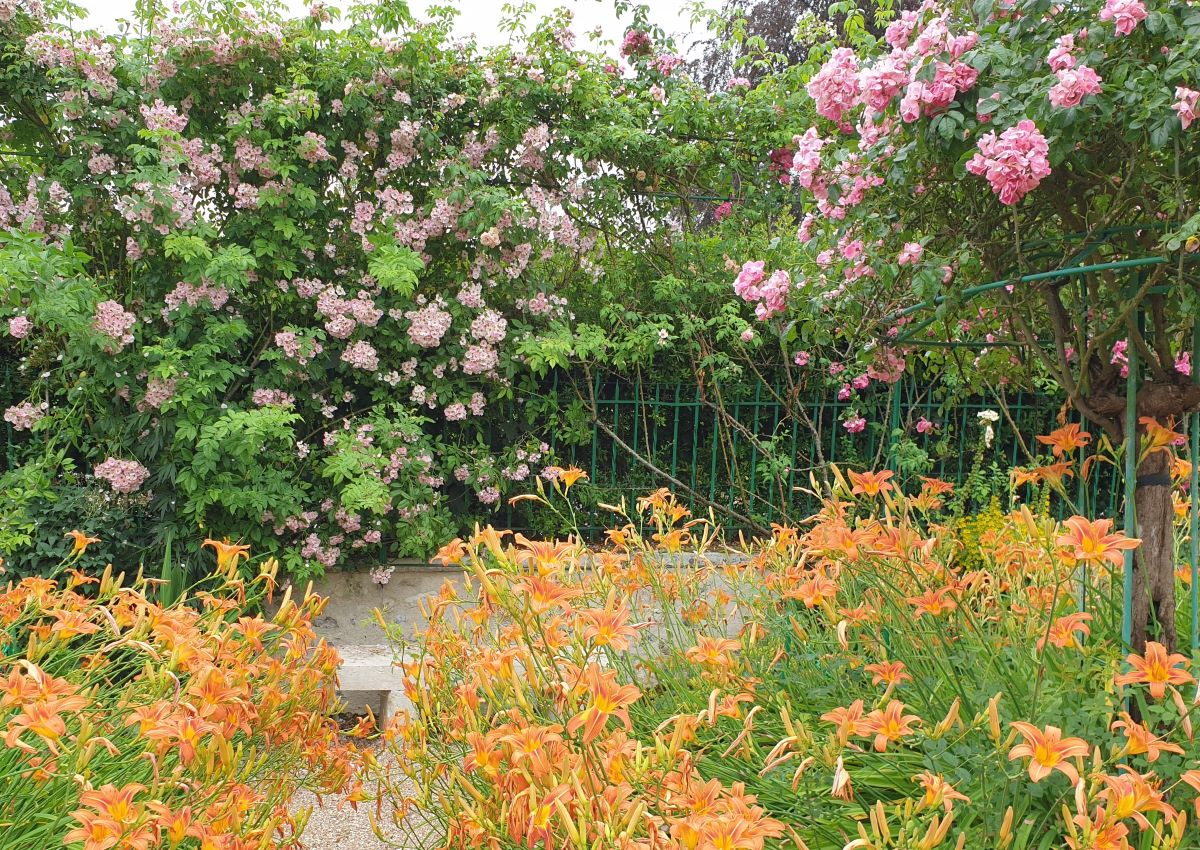
Summer is also a great time for dahlias, day lilies, snap dragons or castor plants, to quote but a few visible on this picture.
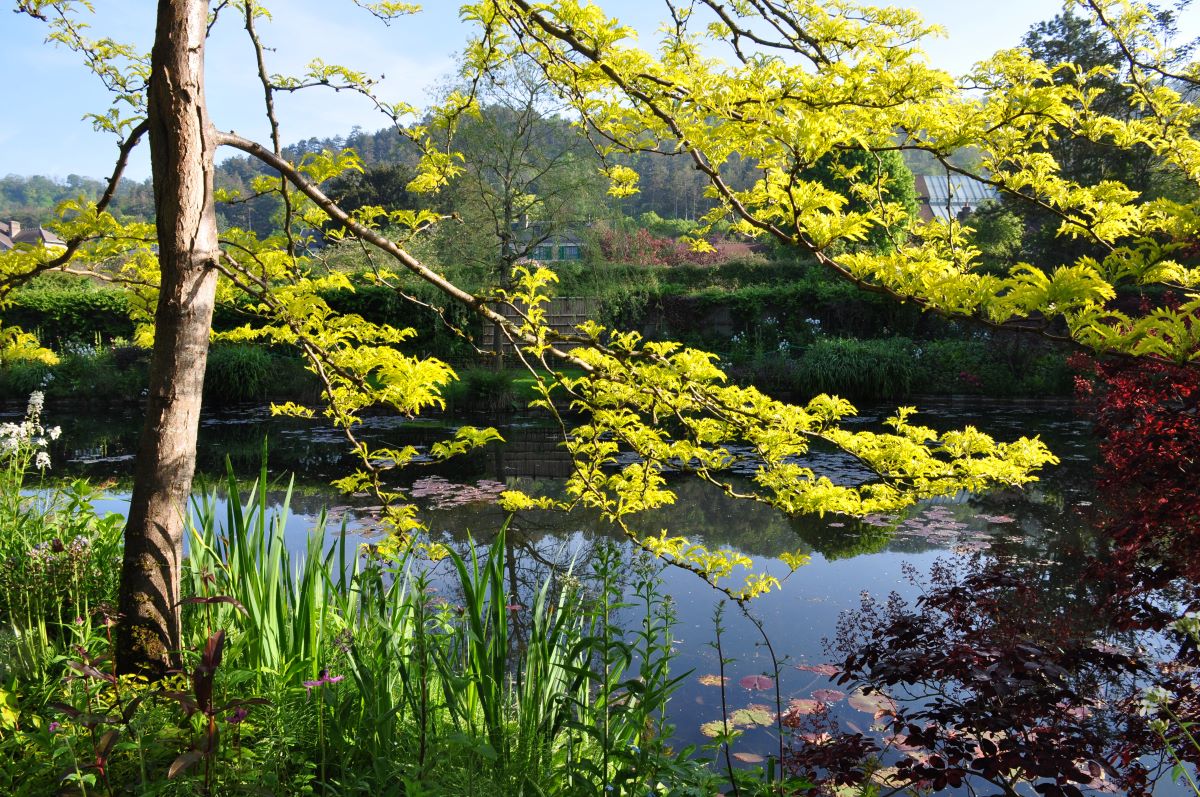
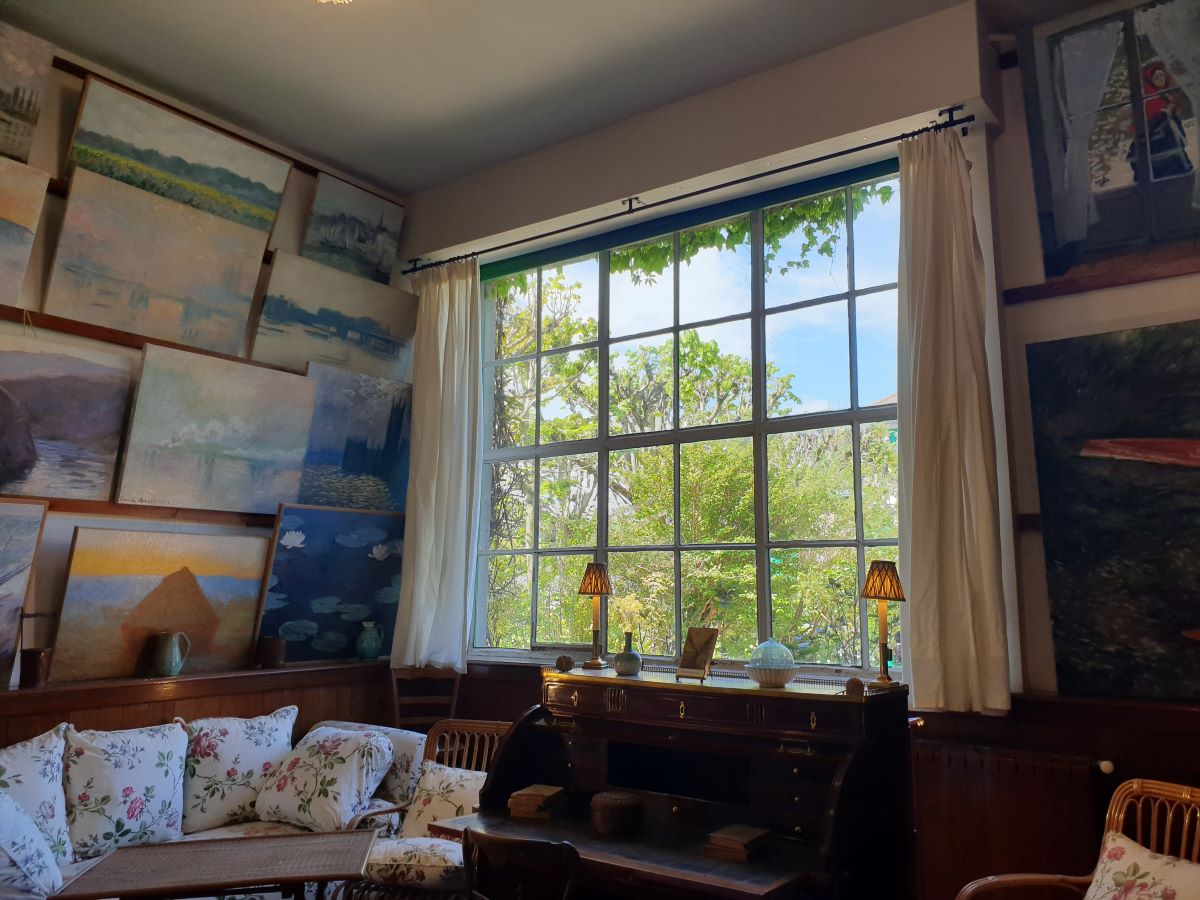
In Claude Monet’s water garden in Giverny, each tree has its own color. In spring, the honey locust (aka gleditsia) planted next to the water lily pond boasts an extraordinary color, that combines beautifully with the purple foliages around. Through its elegantly curved branches, Monet’s house appears in the distance. Two windows look like eyes peeping through the vegetation. On the right, the large windows of Monet’s third studio shine in the early light.
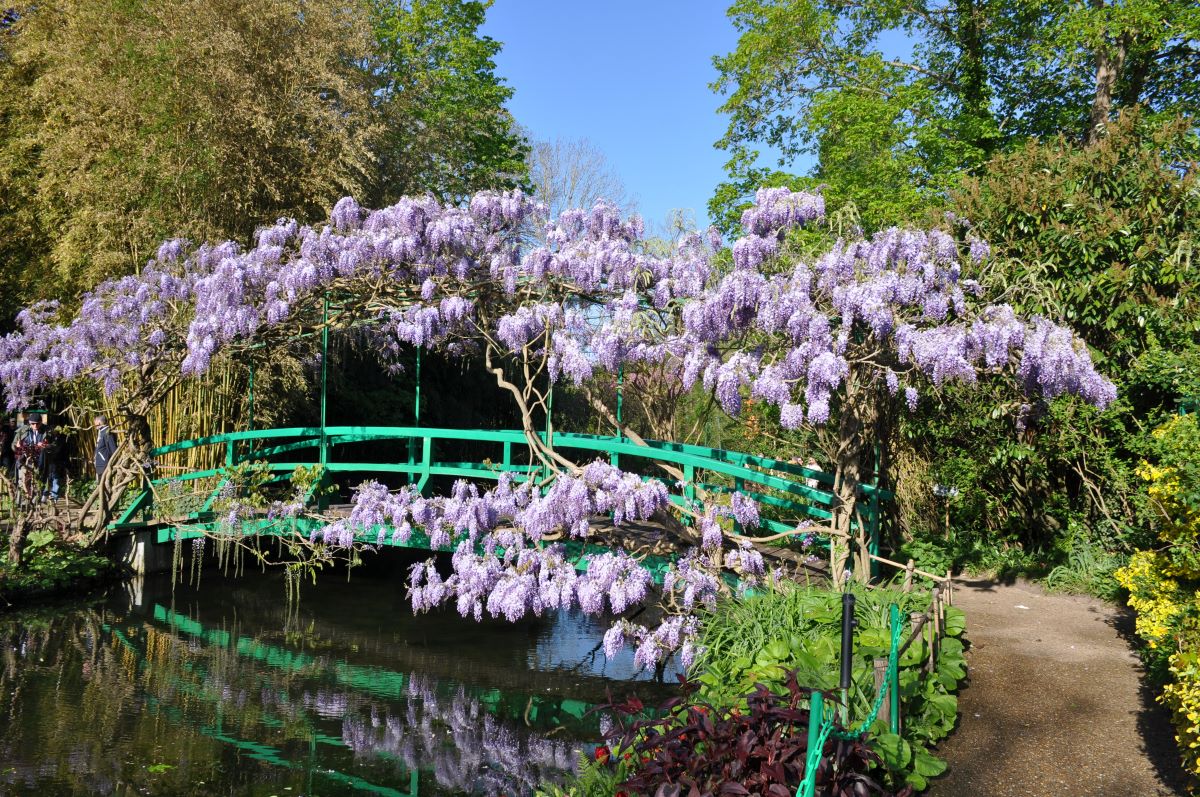
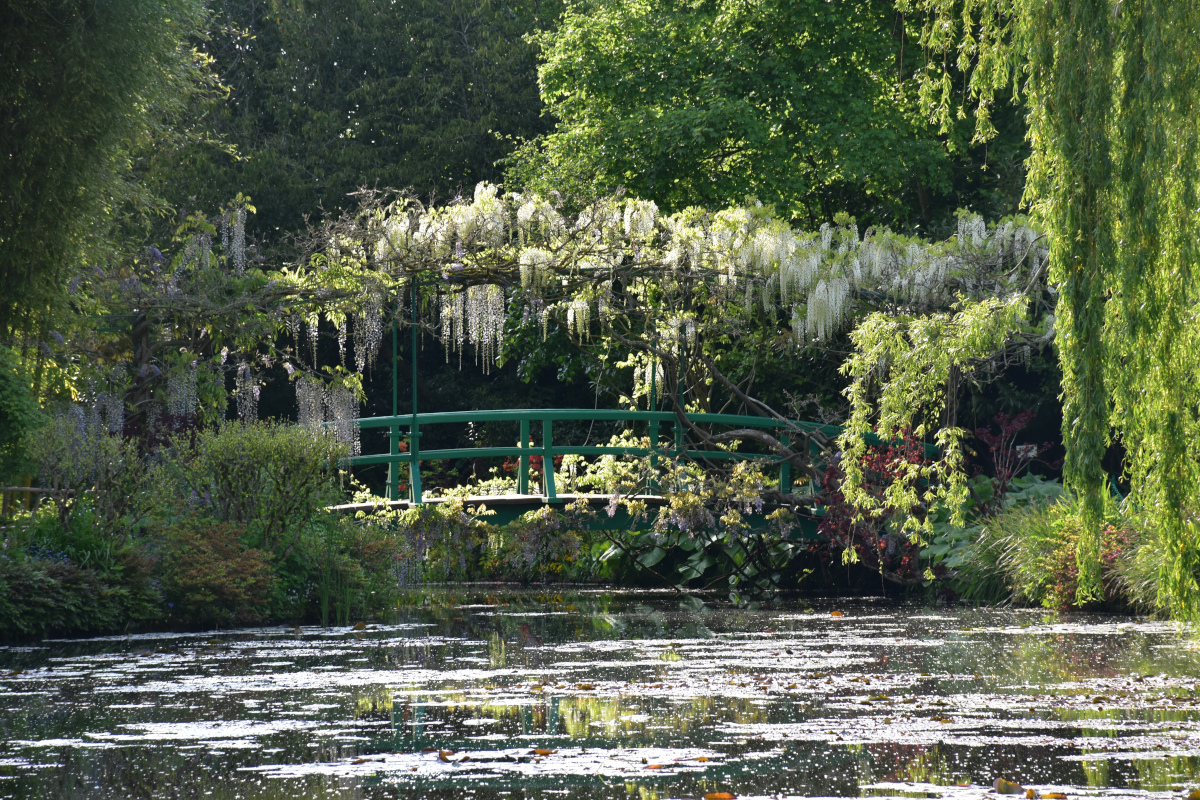
This is how the wisterias over the Japanese footbridge in Monet’s garden look today. The earliest is in full bloom, but not yet the ones with long flowers on the far left. The beautiful white wisteria will flower last, when the first one will be over, in about 10-15 days. As always in a garden, you cannot have it all at the same time. But no matter when in the next days, the wisterias will steal the show, before the first water lilies open on the surface of the Giverny pond.
Claude Monet’s house and gardens, aka Fondation Claude Monet, will reopen to the public after the winter break on March 29, 2024. It will be the Easter week-end, so it may be quite busy on the first days. To save time, make sure you buy your admission tickets ahead of time. Here is the link: http://giverny.org/gardens/fcm/ticket/
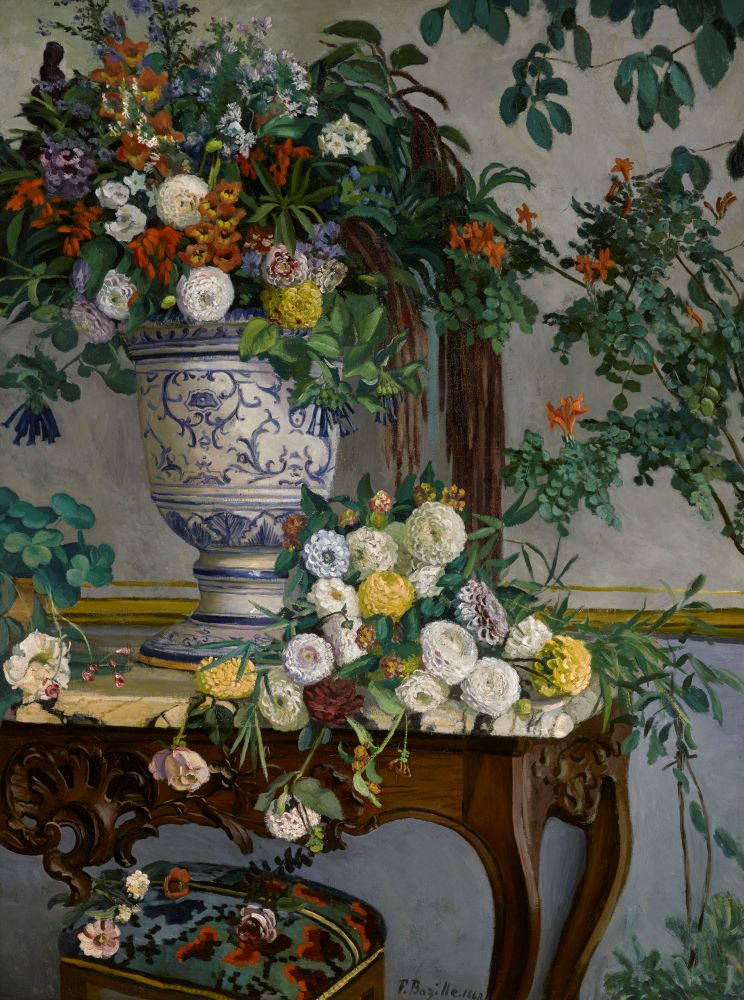
The fine arts museum ‘Musée des Impressionnismes Giverny’ has a new exhibition that will last through January 2024. It is dedicated to flowers in art and encompasses so many styles, times, forms of art, subjects and purposes that everybody will find something to feel moved, impressed and amazed. No Monets, though he painted many flowers, but canvases by his friends Bazille, Boudin, Cézanne, an extraordiany Fantin-Latour… Up to present day flowered dresses and Warhol series of flowers… Let it bloom!
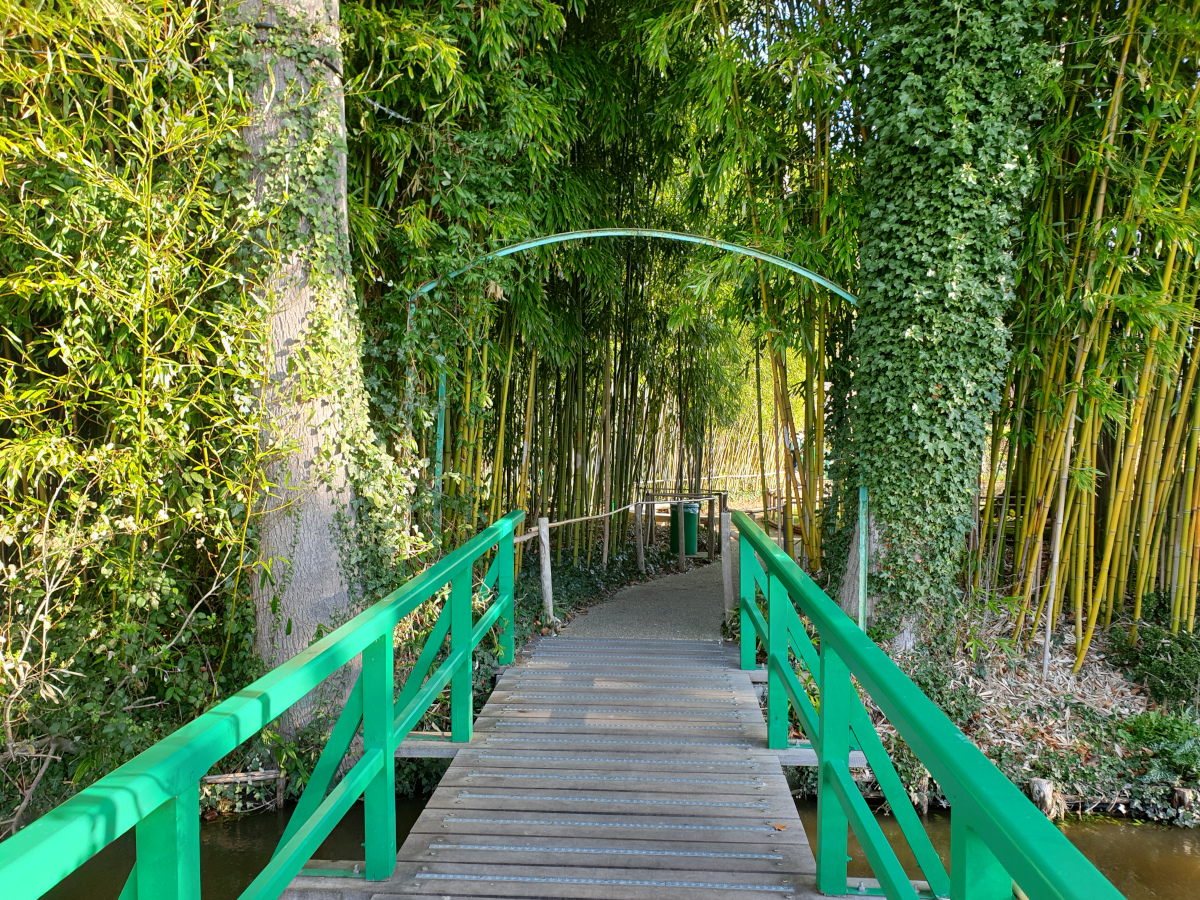
In Claude Monet’s garden at Giverny, the bamboo grove is still the same as in the painter’s time. It shows how much the impressionist leader was influenced by the Far East, that he knew through Japanese woodblocks. Monet was a keen collector of Japanese prints and covered the walls of his home with these exotic pictures.
Monet’s gardens at Giverny, 2023, 1st April / Photo Ariane Cauderlier
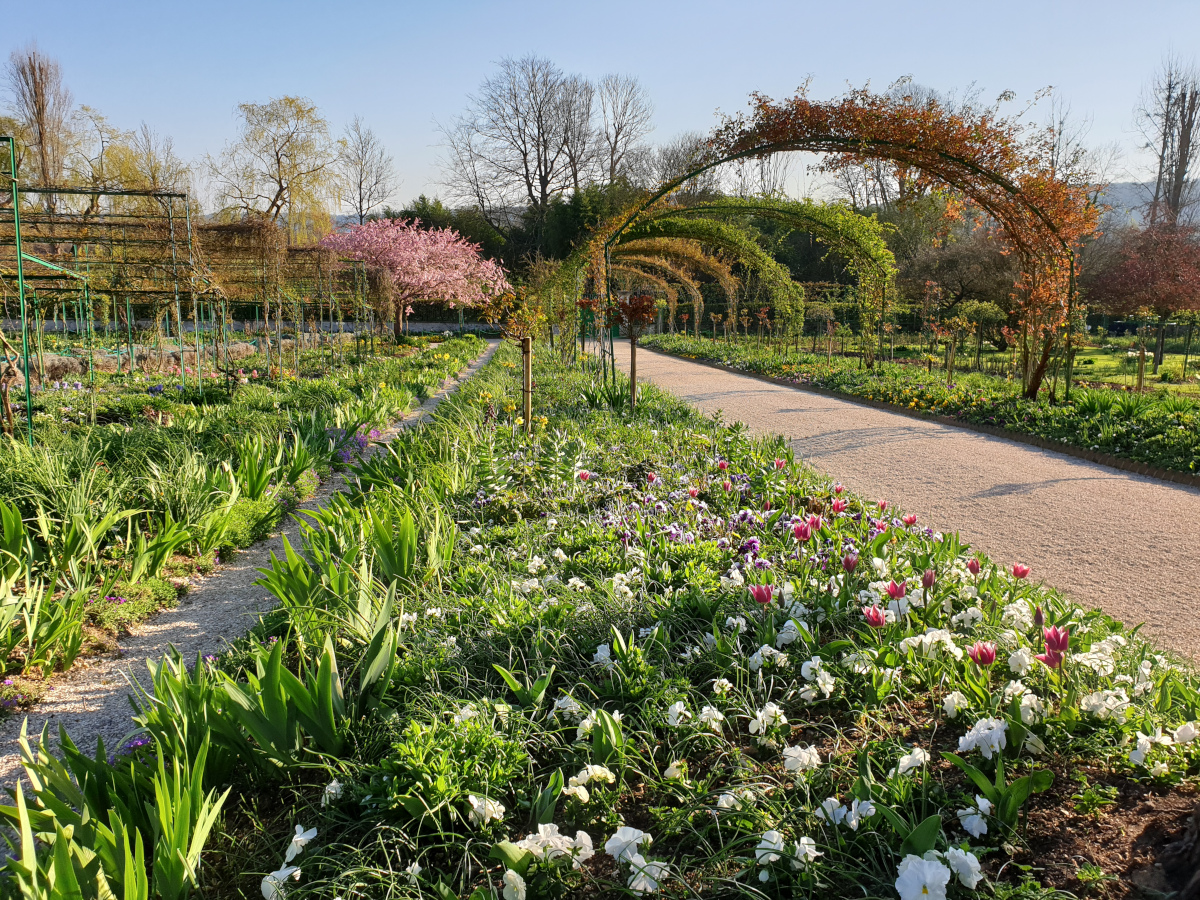
Visitors are back in Monet’s gardens in Giverny, enjoying the first flowers of the season: daffodils, tulips, pansies, hyacinths, fritillaries… Trees blossom in pink and white. The first water lily pads are appearing on the pool.
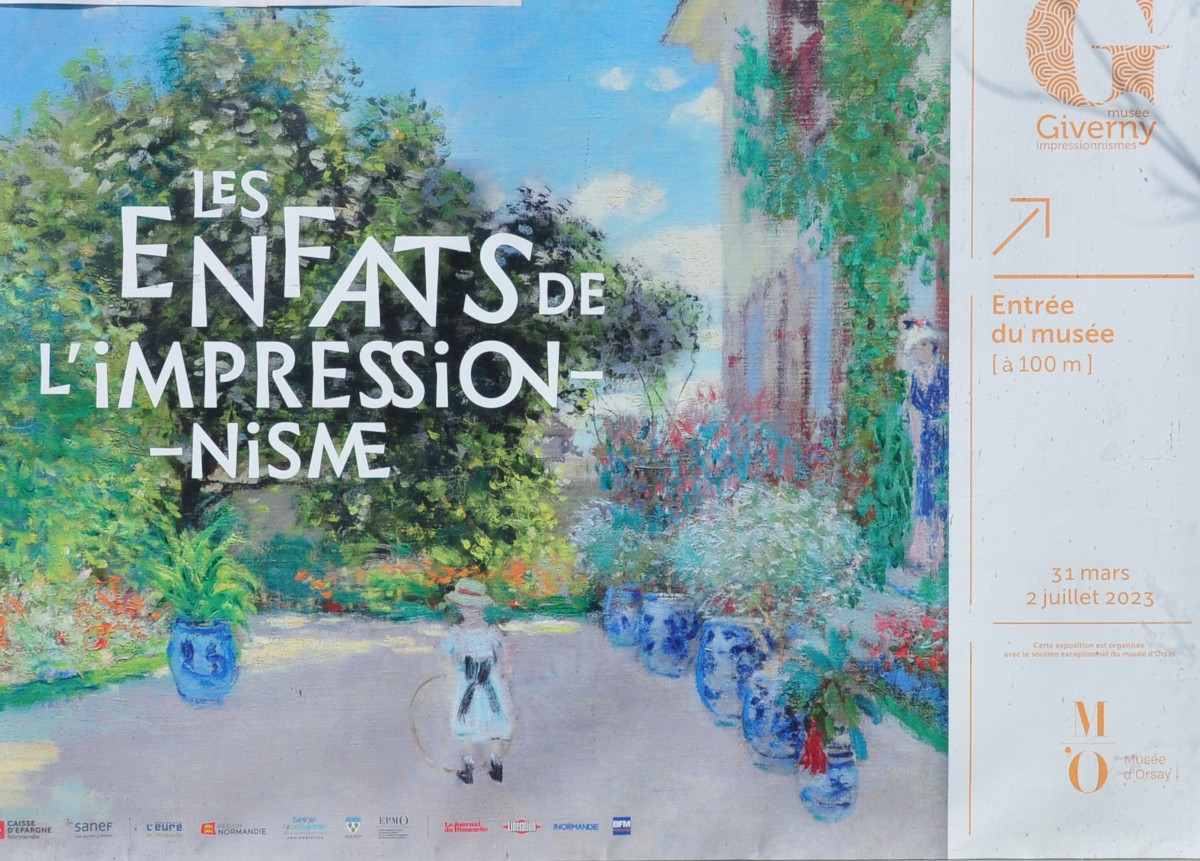
Exhibition ‘The Children of Impressionism’ in Giverny, spring 2023
In the nearby Musee des Impressionnismes Giverny (MDIG) the current exhibition is called ‘The Children of Impressionism’. It is packed with works by Renoir, Monet, Morisot, Pissarro, Boudin… full of fatherly or motherly tenderness. The exhibition will last up to July 2, 2023. Enjoy!
Rue Claude-Monet, Giverny, 21 March 2023 – Photo Ariane Cauderlier
The main street of Giverny is still very peaceful and the shutters are still closed on Monet’s house, but strollers, if any, can notice that winter is over. A warmer air, a brighter sunshine, wind and short showers are giving a boost to nature. The large saucer magnolia next to Monet’ second studio couldn’t wait to open its buds. I hope it will still be beautiful on April 1st, when Monet’s house and gardens will open again after the winter break. Anyway there will be lots of colorful flowers to turn the gardens into a feast for the eyes. I can’t wait! Will you be back too?
My name is Ariane, I work as a local guide in Claude Monet’s gardens at Giverny.
Here are 12 tips to make most of your time if you intend to visit Monet’s place :
Monet’s house and flowers garden on May 1st, photo Ariane Cauderlier
Buy your ticket ahead of time to skip the line to be on the safe side, because you don’t want to waste your precious vacation time standing for half an hour (or more) to buy your admission ticket, do you? This will also prevent you from travelling to Giverny when it is closed for the winter. (!) Fondation Monet is open 7/7 from April 1st to November 1st. Here is where to buy your ticket. For 2023, the sale starts in March.
Consider staying overnight in the area The best time to tour Monet’s gardens is either early in the morning or late in the afternoon from 4 to 6 pm when groups are gone. Staying overnight in one of the lovely B&Bs will give you a unique chance to enjoy the village in the evening when it is peaceful, as well as the charming countryside. Check here the availability of accommodations around Giverny.
A snail on a bench in Monets garden: an example to follow 🙂 – Photo Ariane Cauderlier
3. Give yourself enough time I know there is a lot to see in Paris or Normandy, but it is a pity to have to rush through Monet’s gardens just because there are too many places to see on your list. Slow down, take your time… Count at least two hours inside of Fondation Monet, + one or two hours to explore the village and the Musee des impressionnismes. You can plan to spend a full day in Giverny and Vernon, you won’t get bored.
4. Dress appropriately Check the weather forecast the day before to make sure you will have enough layers to feel comfortable for a day outside in the open air. Giverny is generally a bit cooler (or colder) than Paris. You will walk around a pond, it can be windy or rainy. Rain is not an issue as long as you have one umbrella per person.
Giverny Water Garden on May 16 – Photo Ariane Cauderlier
5. Don’t miss the water garden ! The water lily pond where Monet painted his famous Japanese bridge and many, many water lily paintings is located on the other side of the road. Once you’ve entered the gardens, you need to take an underpath to get to the water garden. Make sure you’ve seen the water garden, the flowers garden, and the house before you exit. The way out is by the huge water lily studio, that has been turned into the gift shop.
The medieval church of Vernon boasts a pipe organ of the 17th Century – Photo Ariane Cauderlier
6. Explore Vernon, a hidden gem Located 3 miles (5 km) away from Giverny, Vernon is a little town that has 25 000 inhabitants. If you travel by train, you will get out of the train at the Vernon train station, that bears the name Vernon-Giverny. Before or after you head to Giverny, take some time to enjoy Vernon. It has old narrow streets next to the beautiful gothic church, quaint half-timbered houses, a medieval tower and a fine arts museum that is definitely worth a visit.
7. Eat local
There are lots of restaurants in Giverny or Vernon that serve delicious food. If you are on a budget or want to save time, an option is to grasp a bite in one of the boulangeries of Vernon or Giverny. At Giverny, the only bakery is located 73 Rue Claude Monet not far from the church.
8. Rent a bike or an e-scooter
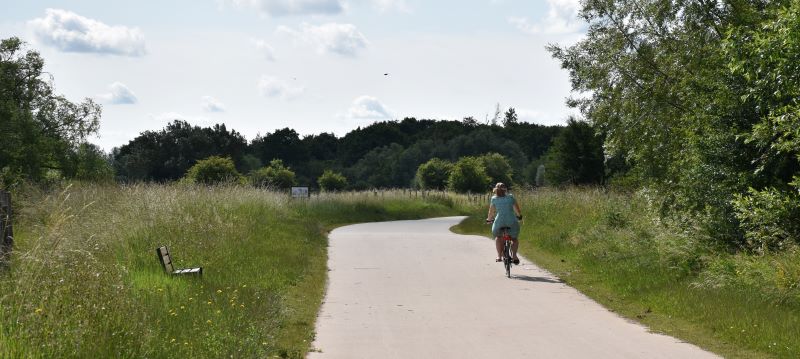
Beside the traditional ways to get to Giverny from Vernon’s train station (bus shuttle, tourist train, taxi) you will find bikes (normal or electric) and electric scooters for rent. They will enable you to get a bit more out of the beaten tracks to explore on your own. The bicycle road along the river Seine is absolutely lovely, and also a nice place for a picnic.
9. Go and say hello to Monet on his grave
Did you know that Claude Monet is buried in the cemetery of Giverny? If you are a big fan of him, you may want to take some time to see his grave and medidate. It is located next to the church of Giverny.
The Musee des Impressionnismes Giverny (museum of impressionisms) and its garden in October – Photo Ariane Cauderlier
11. Tour a second outstanding garden steps away from Monet’s 200 meters down the Claude Monet street, the musee des impressionnismes Giverny offers fascinating exhibitions and has an incredible garden full of colors.
12. Go and see Hotel Baudy A bit farther in the same street, Hotel Baudy used to be the meeting place of the artists at the turn of the century. It is now a restaurant and coffee shop. The back yard is accessible to customers. It is a rose garden under tall trees, famous for the old artist studio that Mrs Baudy built to please her guests.
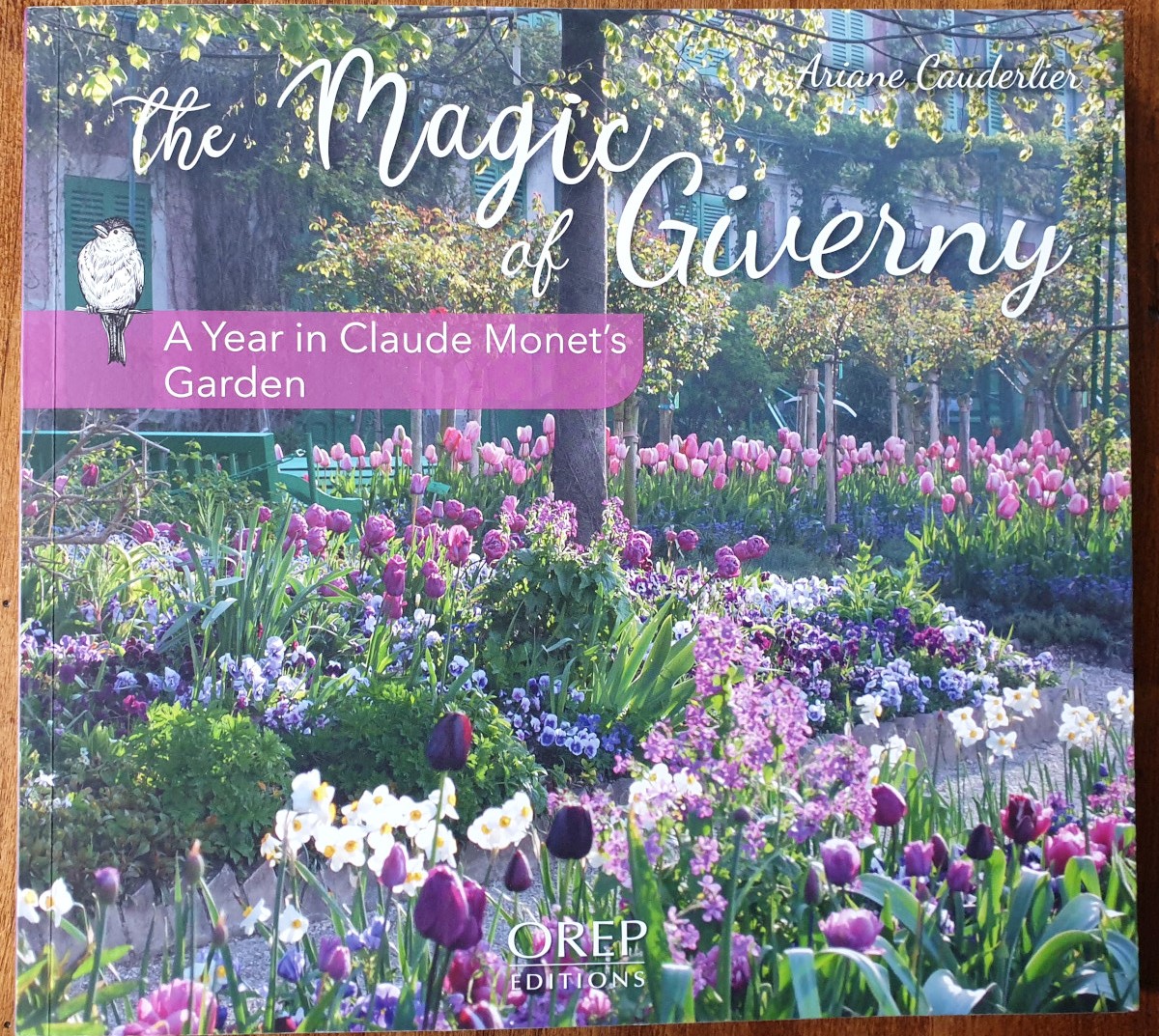
It is in the spirit of my French blog, Giverny News: a warm and poetic description of the seasons in the beautiful garden created by the impressionist painter. It is illustrated by tons of photos I took early in the morning, or after closing time, or even in the winter when it snowed.
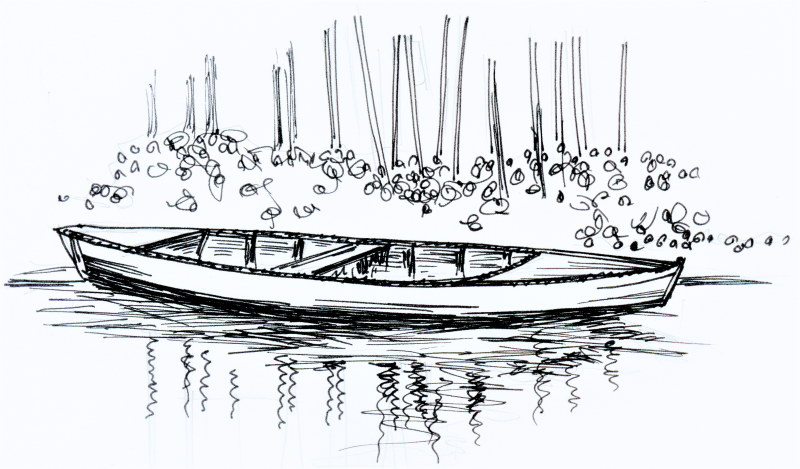
My friend Vero Stark, a draftswoman, drew lovely sketches of the garden, to give the reader the feeling that s.he is sitting on the bank of the water lilies pond or on a bench in the flowers garden.
The book was published last year in French and sold very well, so this year we can enjoy its English translation made by an American translater named… Catherine Monnet!!! Isn’t it amazing?
The boat in Monet’s garden, Vero Stark, 2021
The Magic of Giverny is published by OREP editions. 96 pages, 18 euros. To have a look inside or to order, click here.
The sun has been shining on Giverny lately, awakening flowers and buds. Spring is back, and for the first time in three years the Monet gardens are due to open on their usual opening day: April 1st.
We all are super excited ! There is joy and relief in the air, after two long seasons impacted by the pandemic. As I am writing this post, no mask nor vaccination pass are required any more. You can either buy your ticket online or on site, though it is recommended to use e-tickets to avoid waiting in line.
The gardens will be as lovely and stunning as usual, and the Musee des Impressionnismes Giverny treats us with a Monet/Rothko exhibition that will please the many fans of both artists, I hope. The museum opened last week.
Coffee-shops and little restaurants are preparing their open air terrasses, and birds have started their spring concert. Guides, like me, read their notes once again to remember every single detail. In Monet’s gardens, the gardeners hurry to take advantage of the empty garden to finish their winter tasks. Everything will look pristine next Friday ! 🙂
Giverny, white garden of the Musee des Impressionnismes
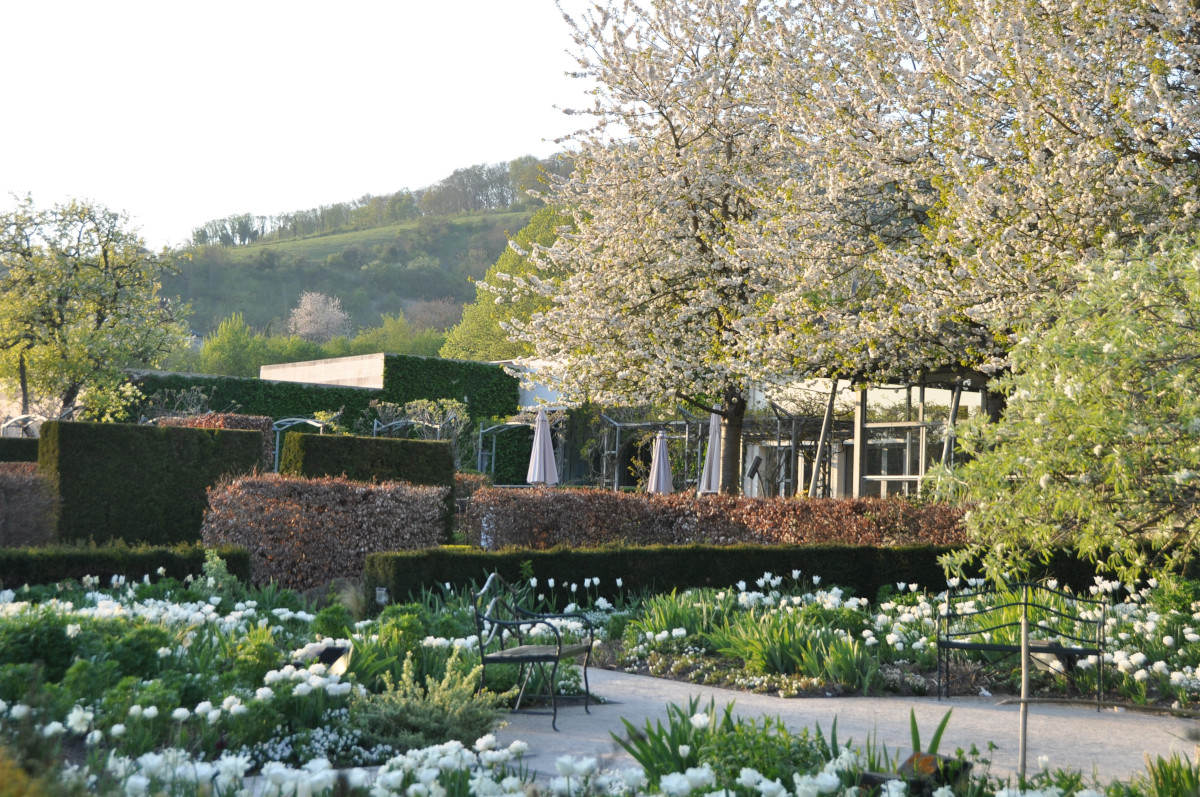
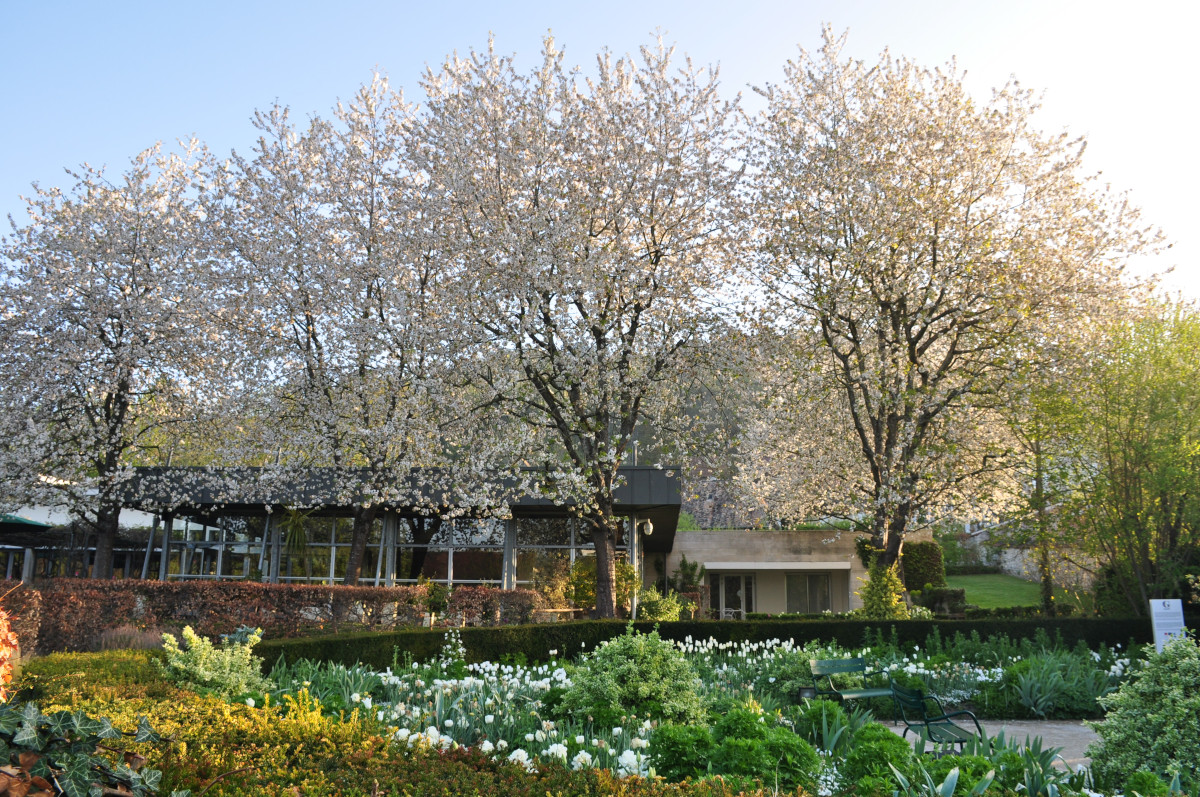
While at Giverny, you shouldn’t miss the beautiful ‘Musee des Impressionnismes’, a few steps away only from Monet’s place. Because it has great exhibitions organized with the help of Musee d’Orsay in Paris, the very specialist of this art movement in France. And because of its stunning garden. This is a corner of the white garden at the tulips time, mid or late April, with the backdrop of blossoming cherry trees.
This year the season will start on March 18, 2022 with an exhibition I am already eager to see: Monet / Rothko. It should be an uplifting feast of colors. (up to July 3, 2022). It will be followed on July 14 by The Collection’s Summer, up to October 2, 2022.
The pandemic is clearly a disaster for tourism, but it has some positive effects. At Giverny, the few visitors of 2020 can enjoy Monet’s gardens in a way that had long been forgotten.
Last year had been a new record year with 715 000 visitors coming from all over the world. During the last decade, the painter’s little paradise had won a reputation of being over crowded. If not every day, it was often the case.
This was in the past, up to 2019. The corona changed it all, reducing the number of visitors drastically to a mere 15% of the previous years visits.
Visitors must wear a mask, sure. They must also buy advance tickets on line. A very limited amount of tickets are for sale. And not a single group over 5 people is accepted.
As a result, touring Monet’s gardens and house has never been that comfortable, with nobody to shrub shoulders with. It is all one way to ensure physical distancing. On the way back after walking around the pond, staff help people over the road to the flower garden. Visitors enter the house by the studio, which is great.
When, by any chance, I give a guided tour in the gardens, this year it is always a private tour. It is easy to find a spot where to stay and talk. We take our time. No rush. The gardens are gorgeous.
I’ve been there a dozen of times this year. Instead of around 200 the previous ones, when the gardens opened in March and admitted all the visitors willing to enter.
Each time was a feast. And at the same time it broke my heart, because I can’t live anymore from this job I love.