July 24, 2018
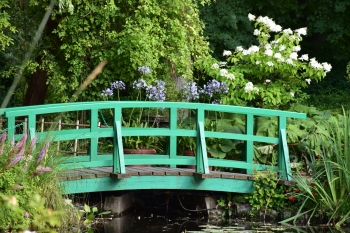
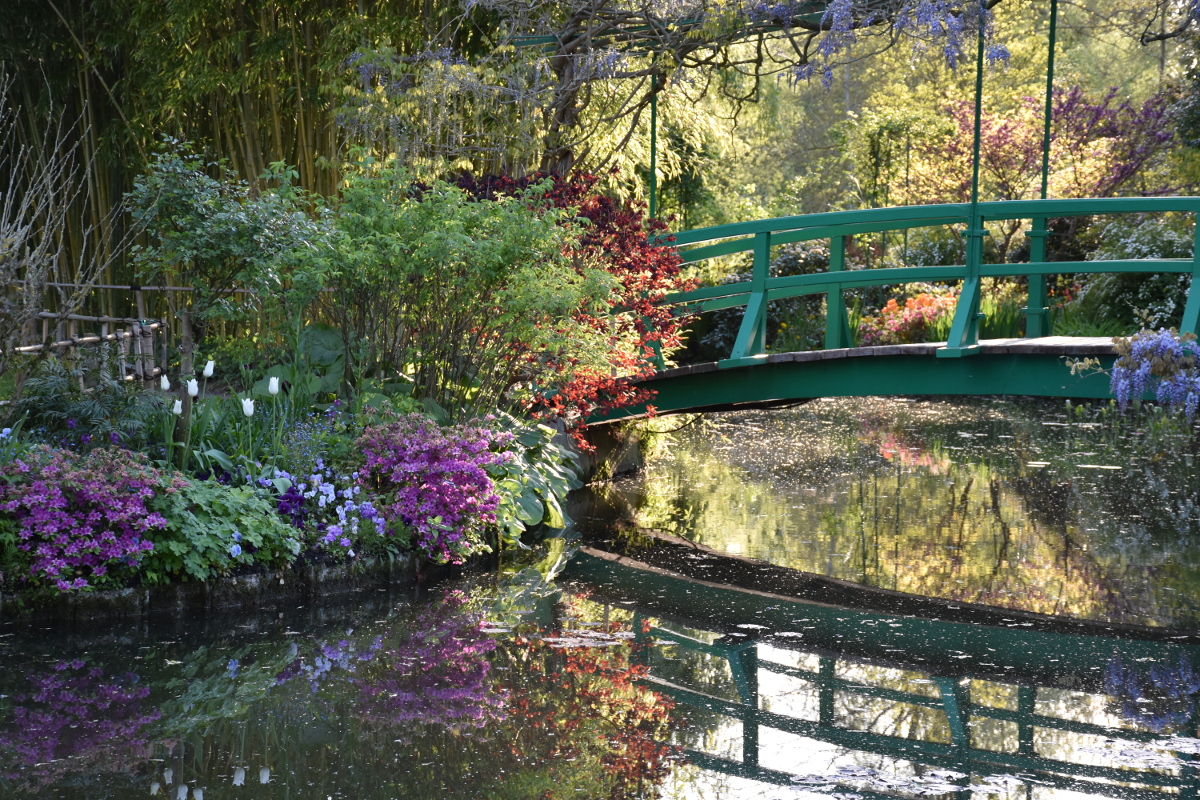
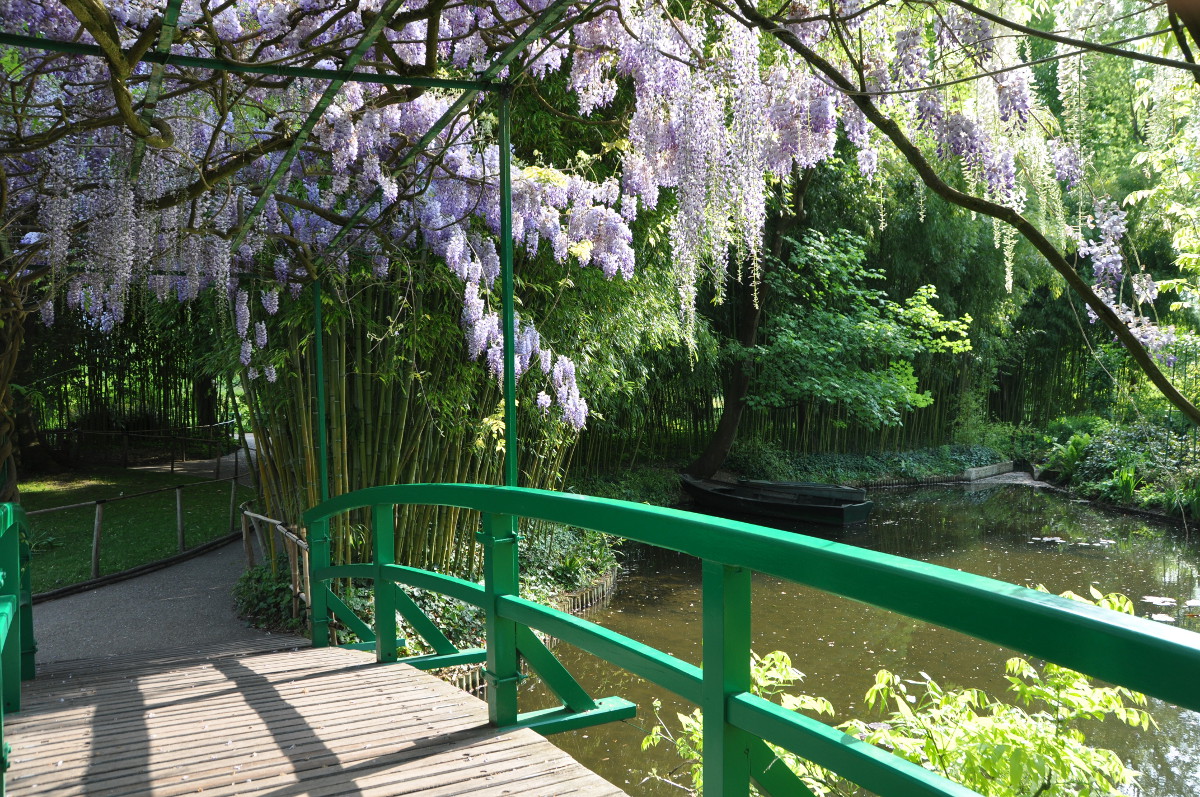
This charming little bridge stands at one end of Claude Monet’s water lily pond in Giverny, over the small canal that used to bring some water into the pond. Agapanthus grown in planters and white hydrangeas cultivated like trees grace the place. Does this scene look familiar to you? It recalls many famous works of the artist. But as iconic as it sounds, Monet never painted this little bridge in his garden, but the big one only. Now covered with a canopy of wisterias, the big bridge has lost some of its likeness with Monet’s paintings.
Posted in Water-Garden No Comments »
April 28, 2017
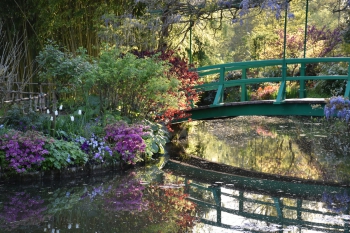
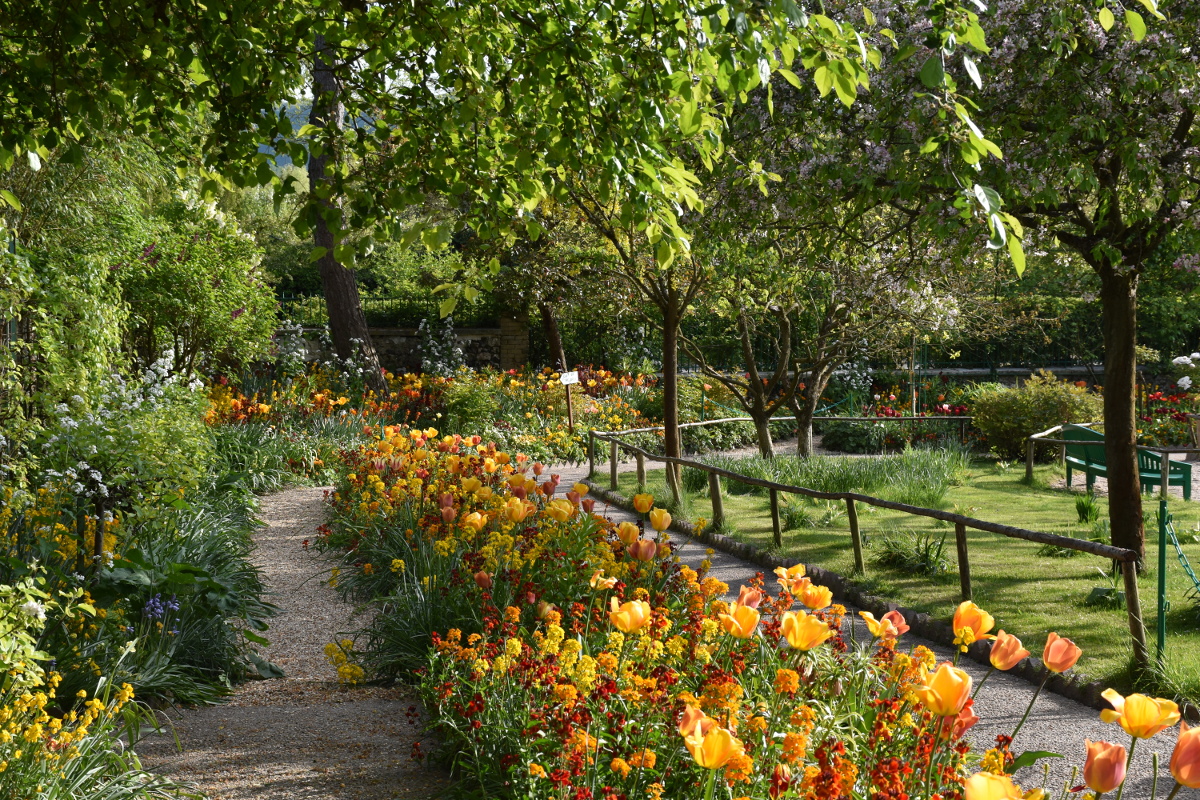
Spring makes us all want to walk in beautiful gardens. At Giverny, azaleas and tulips gradually give way to irises, peonies and wisterias. The first water lilies should open within two weeks, recreating once more Monet’s beautiful setting and endless source of inspiration. 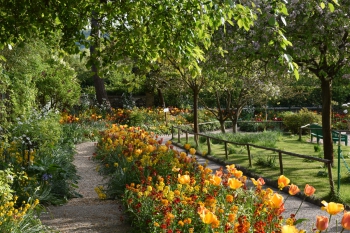
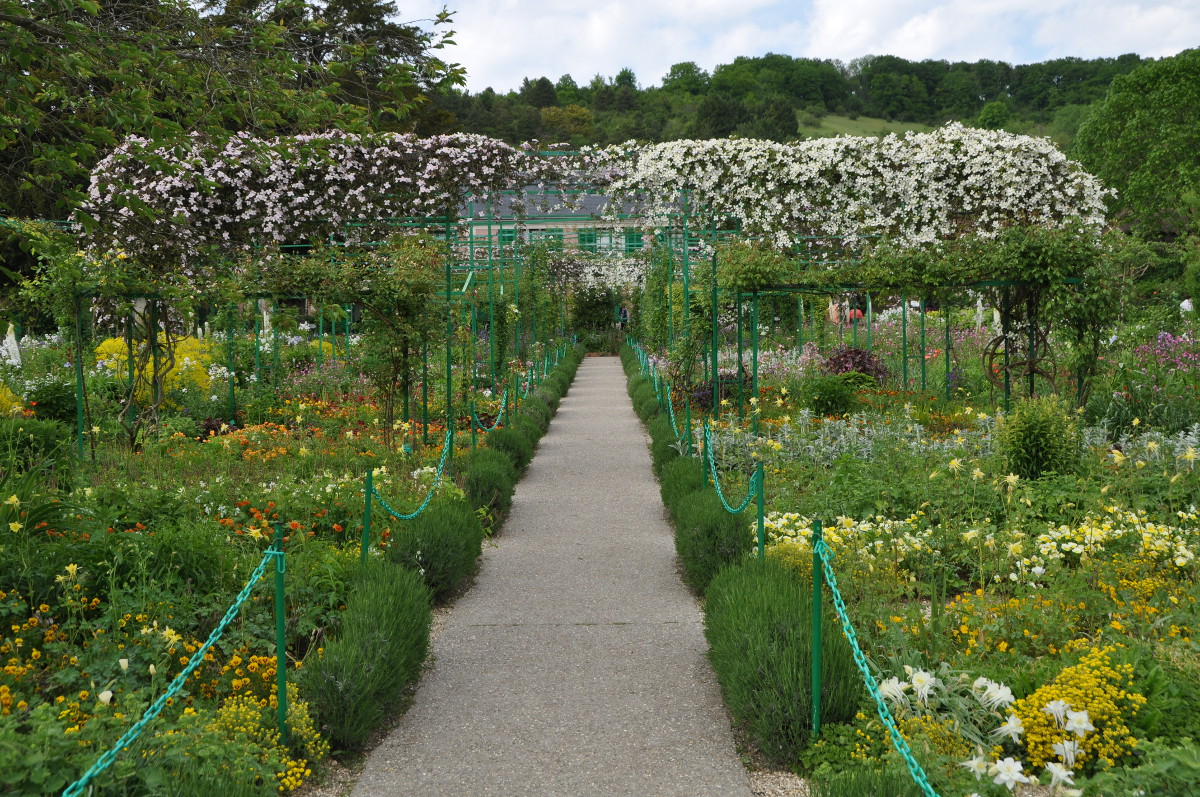
In the flower garden, visitors meander inside of a living painting where flowers recreate the illusion of brushstrokes. Monet had good reasons to claim that his garden was his most beautiful masterpiece.
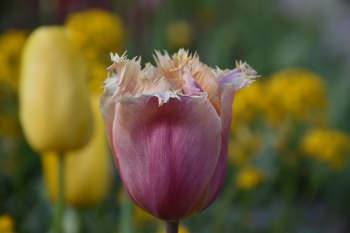
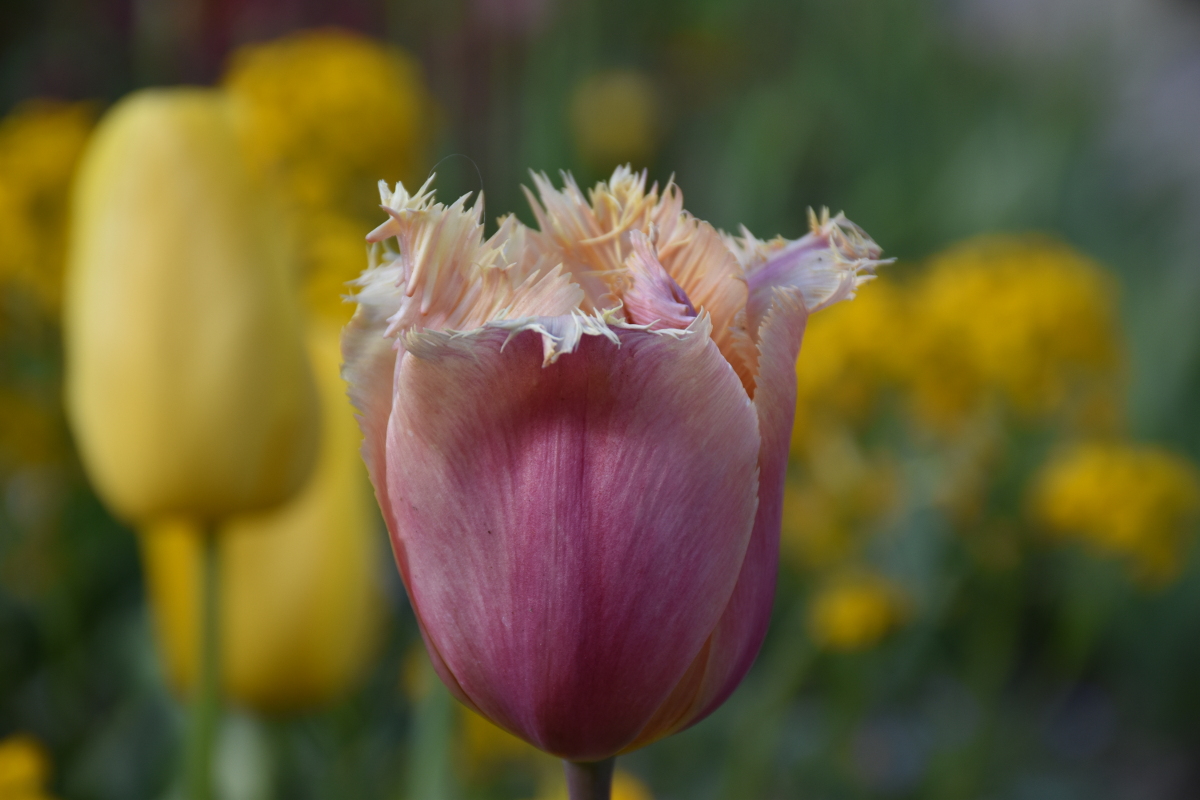
Just like you can see the brushwork when you tour an exhibition and have a close look at paintings, at Giverny each single flower is a little universe in itself, offering its beauties to our admiration.
Posted in Giverny, Monet's flower garden, Water-Garden, Flower 1 Comment »
April 5, 2017
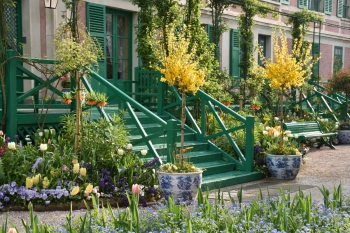
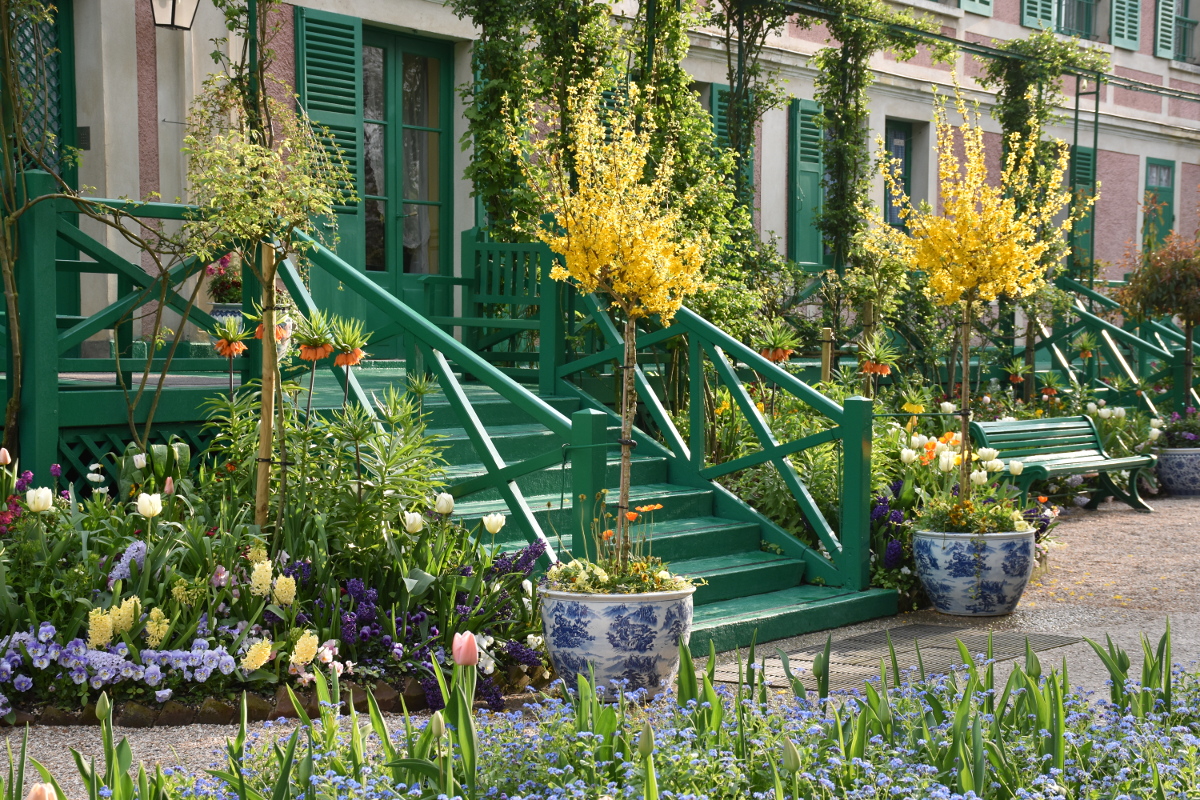
Today at Giverny, at the entrance to Monet’s house, two forsythias grown in planters glow for the show.
Posted in Monet's House, Monet's flower garden 2 Comments »
February 6, 2017
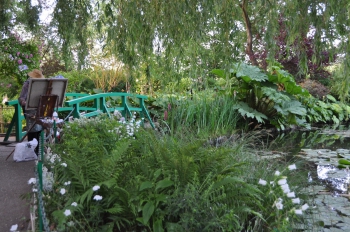
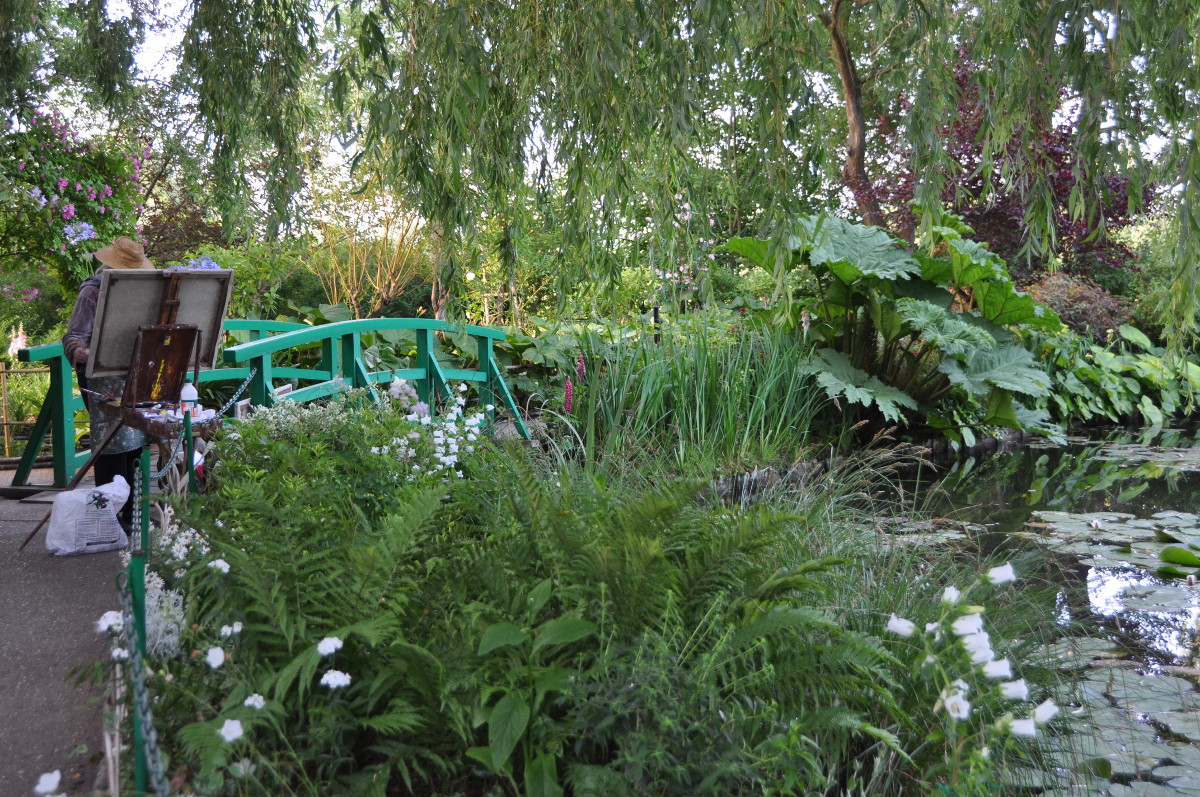
The beautiful water garden created by the impressionist master Claude Monet at Giverny still inspires painters.
Monet’s house and gardens will re-open on March 24, 2017. I’m looking forward to it. It is such a joy to work daily in this beauty giving guided tours to wonderful people. I miss flowers so much. What about you?
Posted in Giverny, Claude Monet, Water-Garden 2 Comments »
October 21, 2016
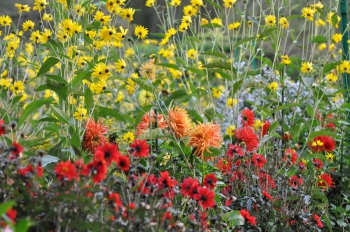
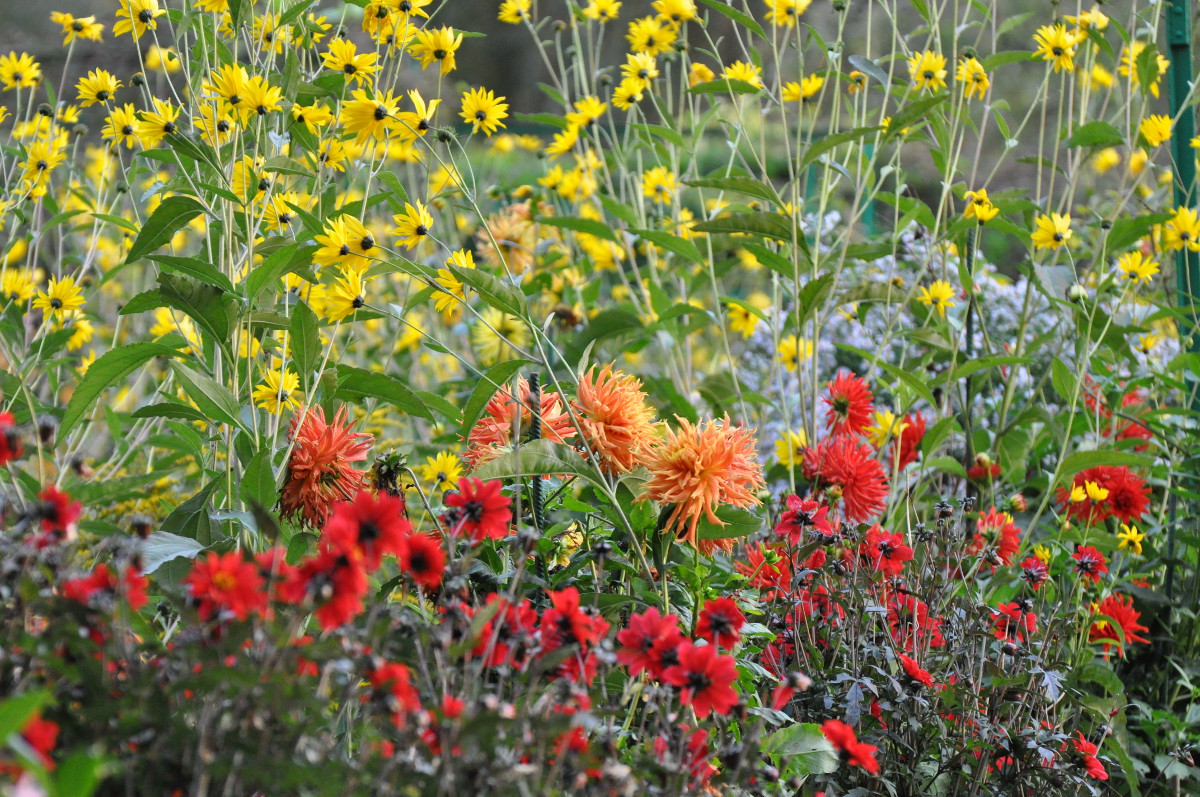
Is it worth visiting Monet’s gardens in October? Yes it is!
While the other gardens open to the public have closed or are already preparing their winter borders, at Giverny the fall flowers are at their best.
They have been patiently selected for their longevity to last till the end.
If frost waits for a few more weeks as it is suppose to do, the show will go on until closing day (November 1st).
Posted in Monet's flower garden No Comments »
May 15, 2016
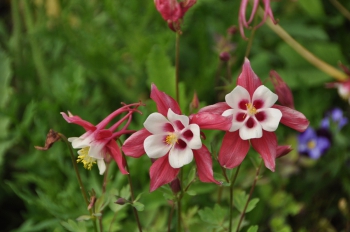
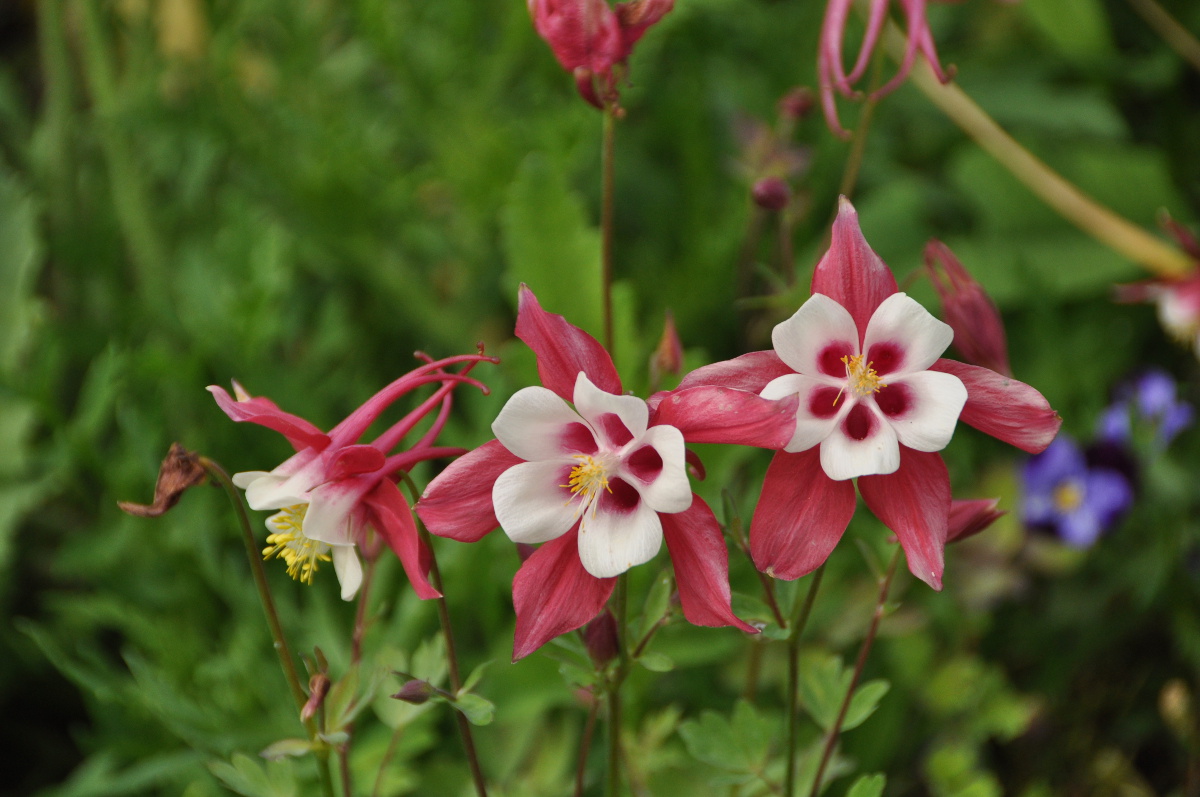
After tulips, what kind of flowers steel the show at Giverny? Among my favorite are aquilegias, for their delicacy, strange shapes and wide range of colors including white and black, yellow and blue, and pink. Their light foliage is a beauty.
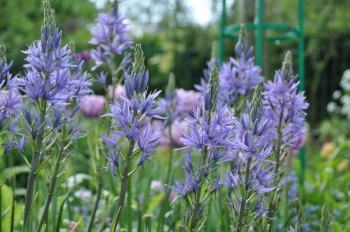
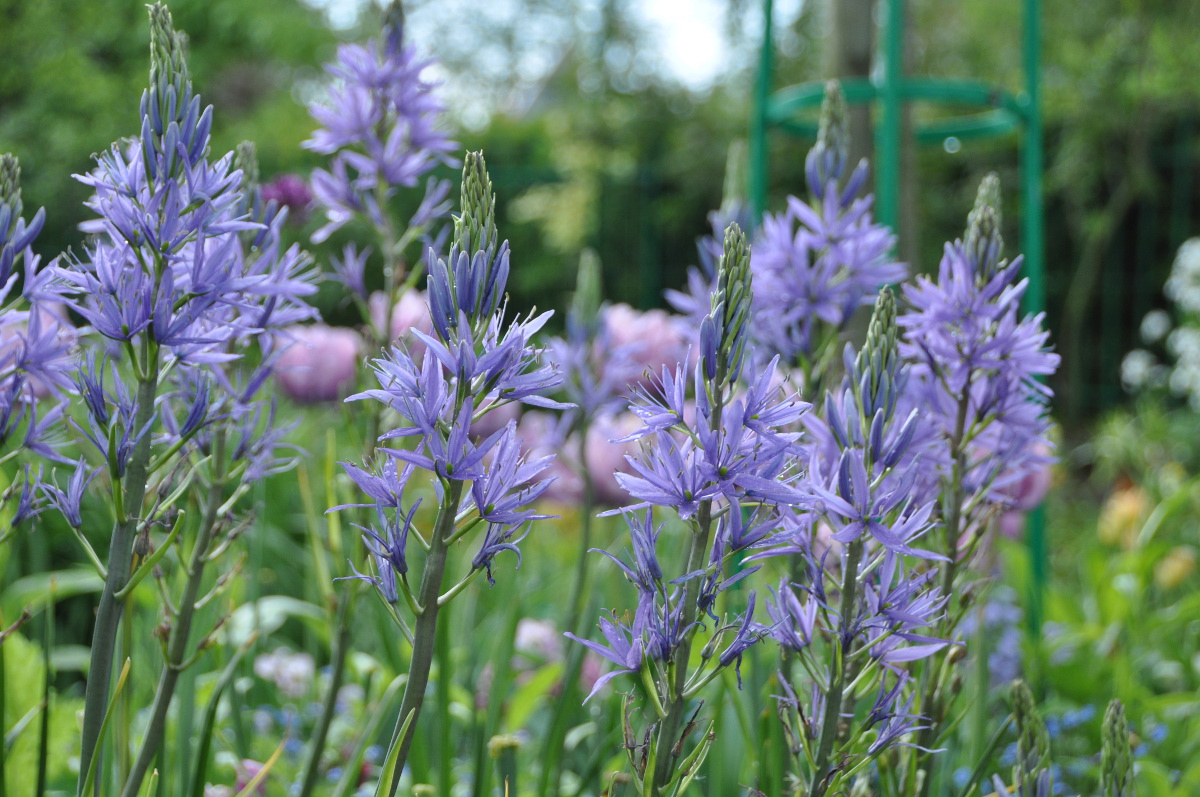
Camassias are late spring bulbs that grow rather tall.
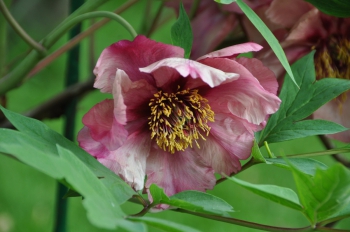
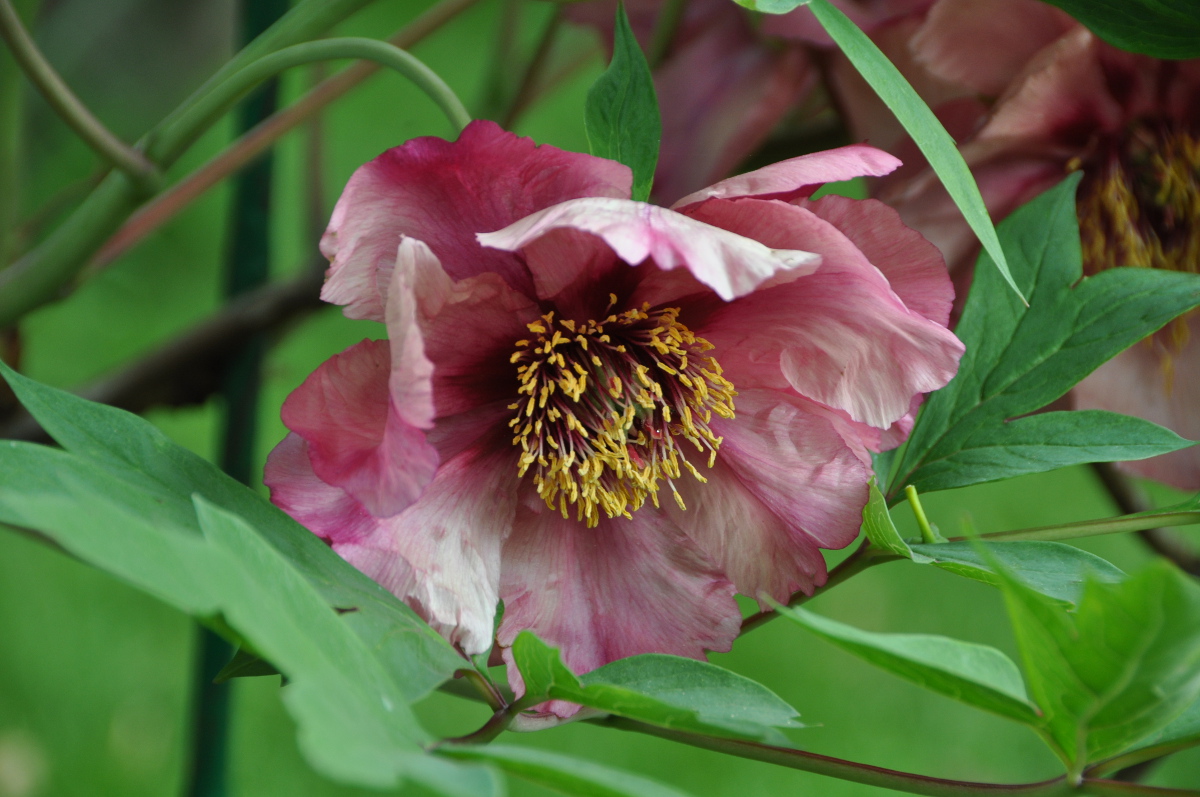
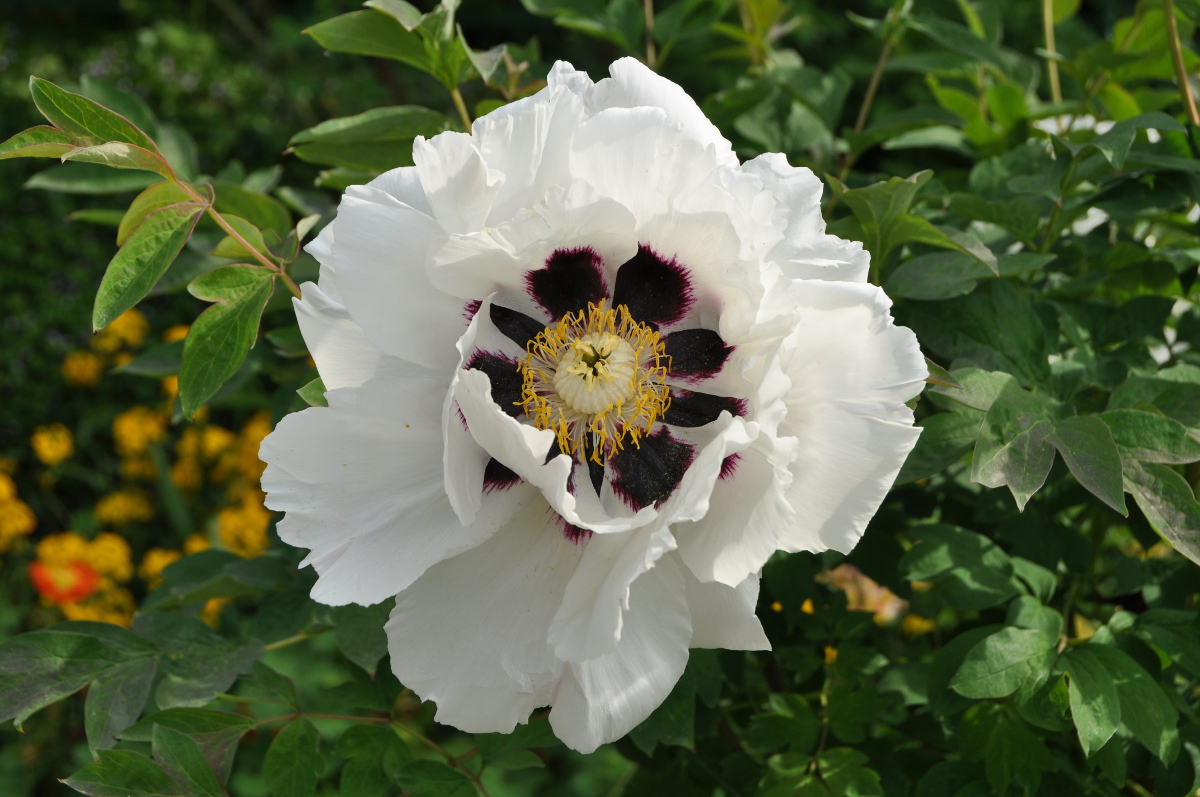
Pink tree peonies are short lasting little wonders,
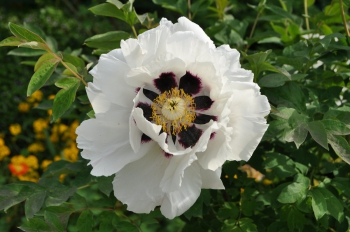
just like this one that looks more modern.
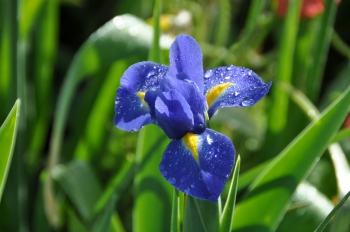
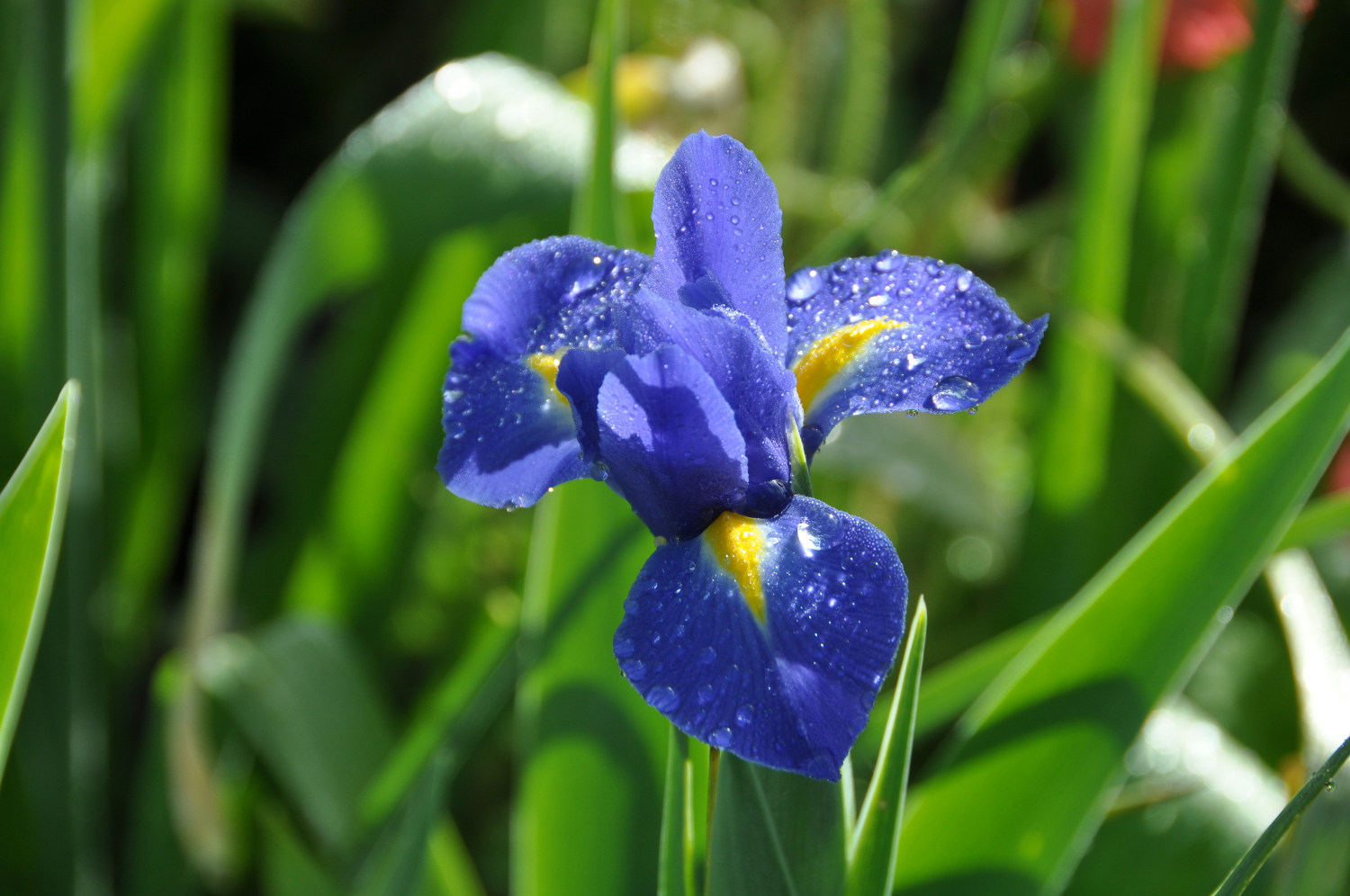
Irises are just starting.
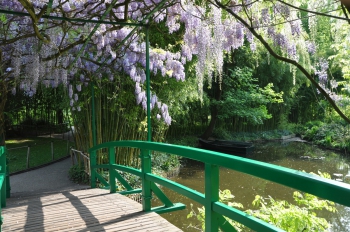
The vines are at their best. Here the wisterias over the Japanese footbridge,
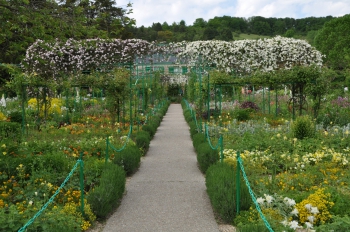
And the Clematis montana covering the trellises in the flower garden.
Posted in Giverny, Monet's flower garden, Flower 2 Comments »
April 6, 2016
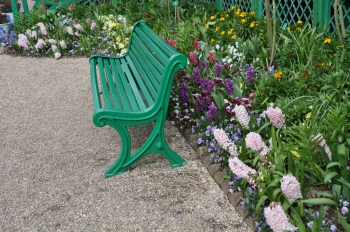
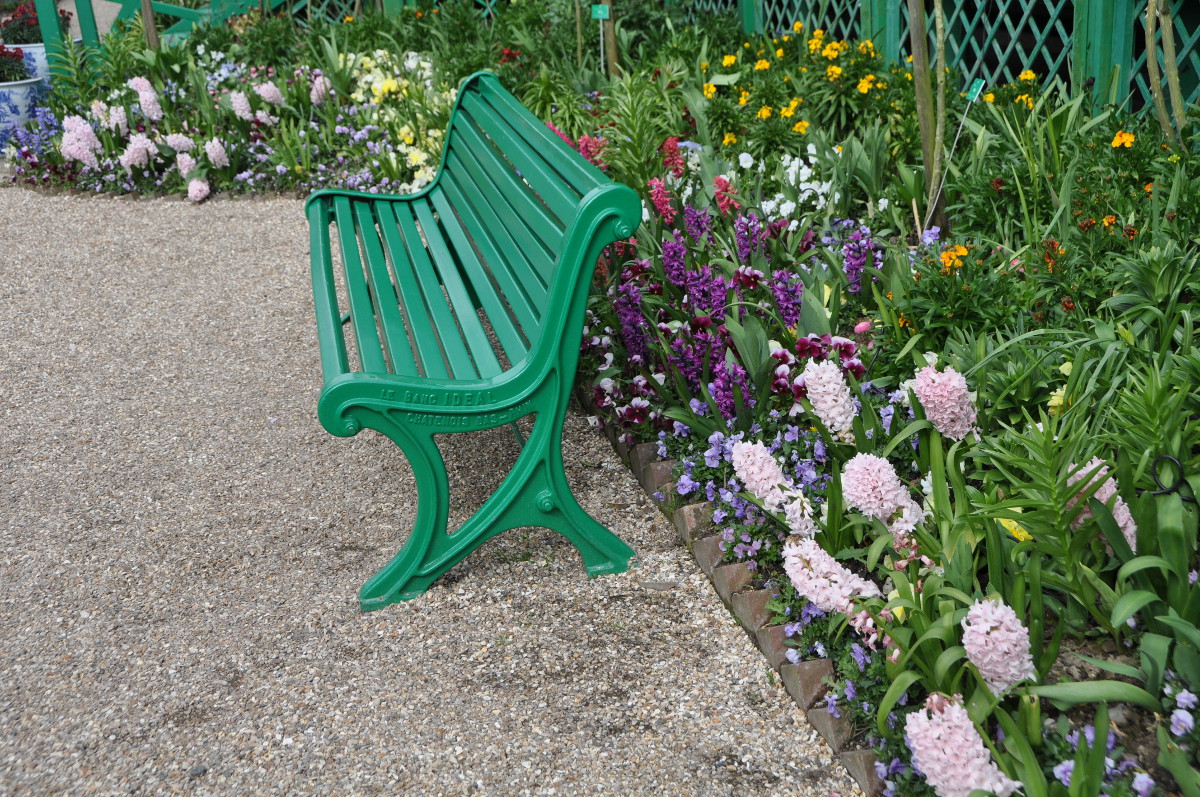
Did you ever try and grow a hyacinth in your kitchen? If so, you certainly remember how fragrant a single bulb is. So imagine being seated on this green bench in Monet’s garden, wrapped by the scent of hundreds of hyacinths… This is an early April rapture at Giverny.
The brand of the bench, le banc idéal – the ideal bench – has nothing to do with the floral wonders of Giverny. But it sounds appropriate, doesn’t it?
Posted in Giverny, Monet's flower garden, Flower 2 Comments »
February 20, 2016
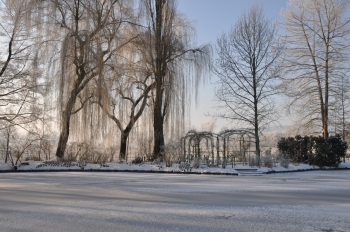
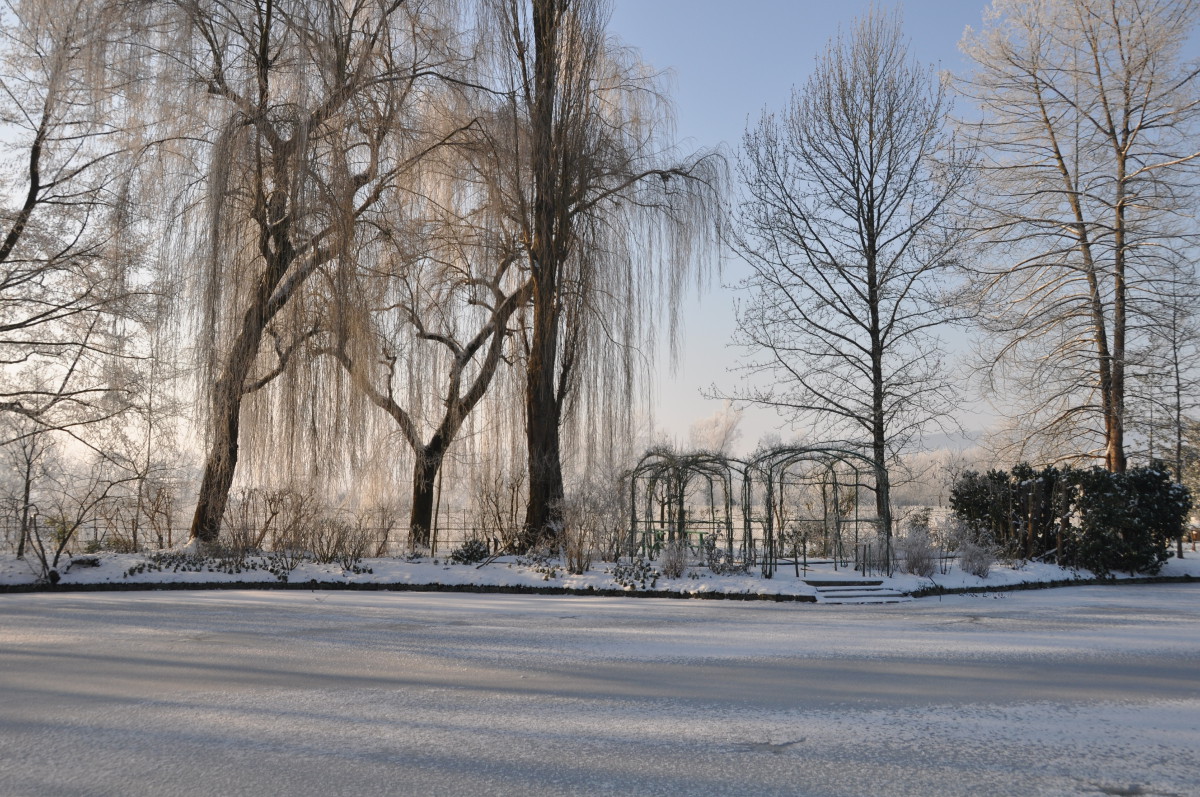
This is not the winter we are having at Giverny this year. The last time Monet’s water lily pond looked that way was in 2012.
It was so beautiful then! I roamed in the gorgeous yet closed garden and couldn’t look and shoot enough.
The landscape turned white is not that frequent at Giverny. Although we do get a few flakes every winter and a few nights of frost, generally the weather is more humid than cold. It is overcast, it rains, but not cats and dogs, only kittens and puppies, you know.
Patience. All this will soon be over. Fondation Claude Monet opens rain or shine on March 25, 2016, and the seven-month flower show wil be more beautiful than ever.
Posted in Giverny, Water-Garden No Comments »
August 2, 2015
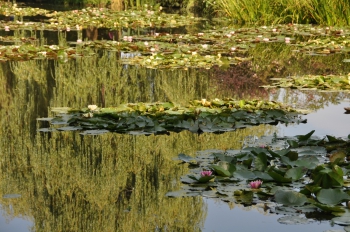
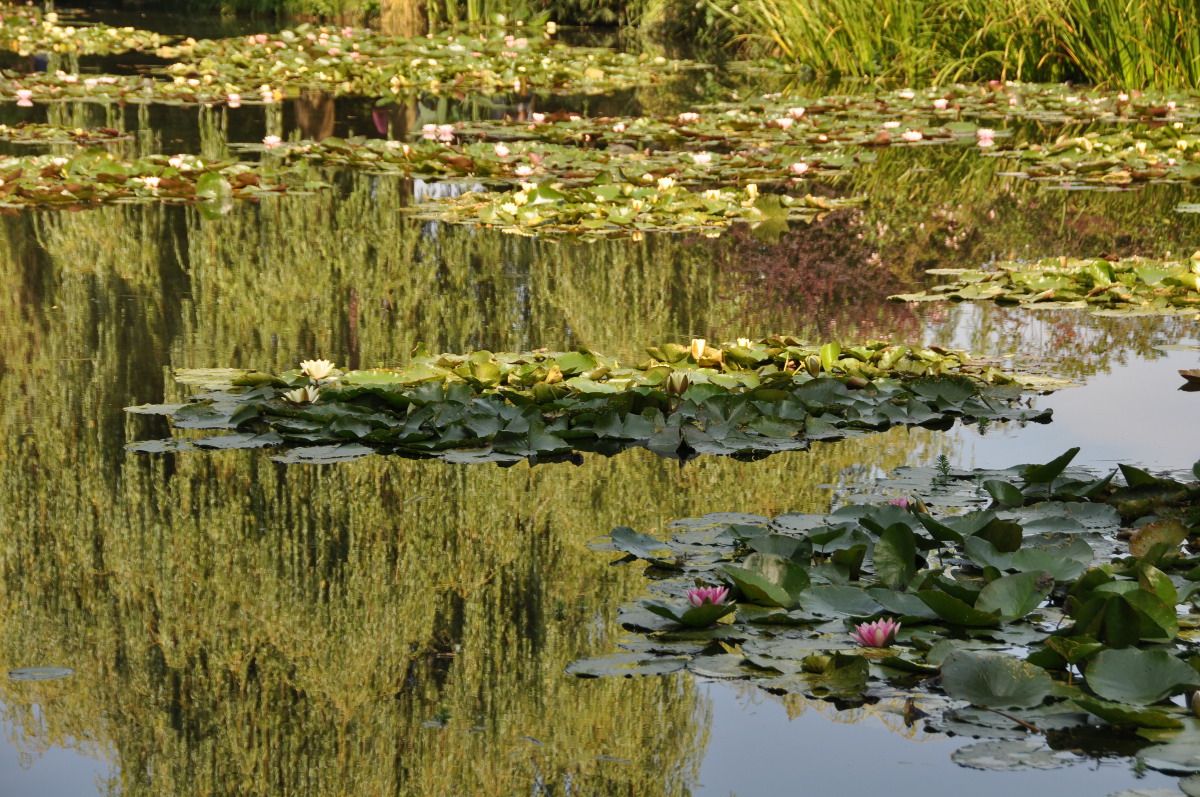
When there is no wind at all, the water lilies painted by Monet at Giverny seem to be floating in the air.
The surface of the pond is such a perfect mirror that the water turns invisible.
The rafts of water lilies resemble flying carpets en route for a long trip to mysterious countries.
Posted in Water-Garden 2 Comments »
June 30, 2015
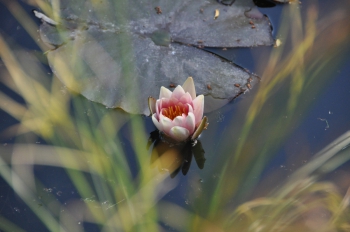
Claude Monet was never tired of painting his water lilies, because they are ever changing. They open, they close, they float on a mirror that reflects the clouds passing, the sun getting higher and lower in the sky. Monet painted his water lilies relentlessly, almost 300 times.
It is a question that visitors I guide through the gardens ask regularly: “Do you ever get tired of it?” No, never. How could one get tired of beauty?
Posted in Monet's flower garden, Flower 1 Comment »
May 18, 2015
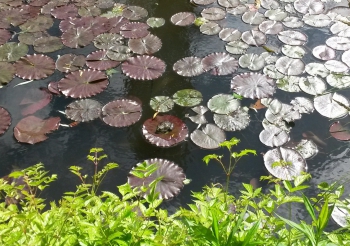
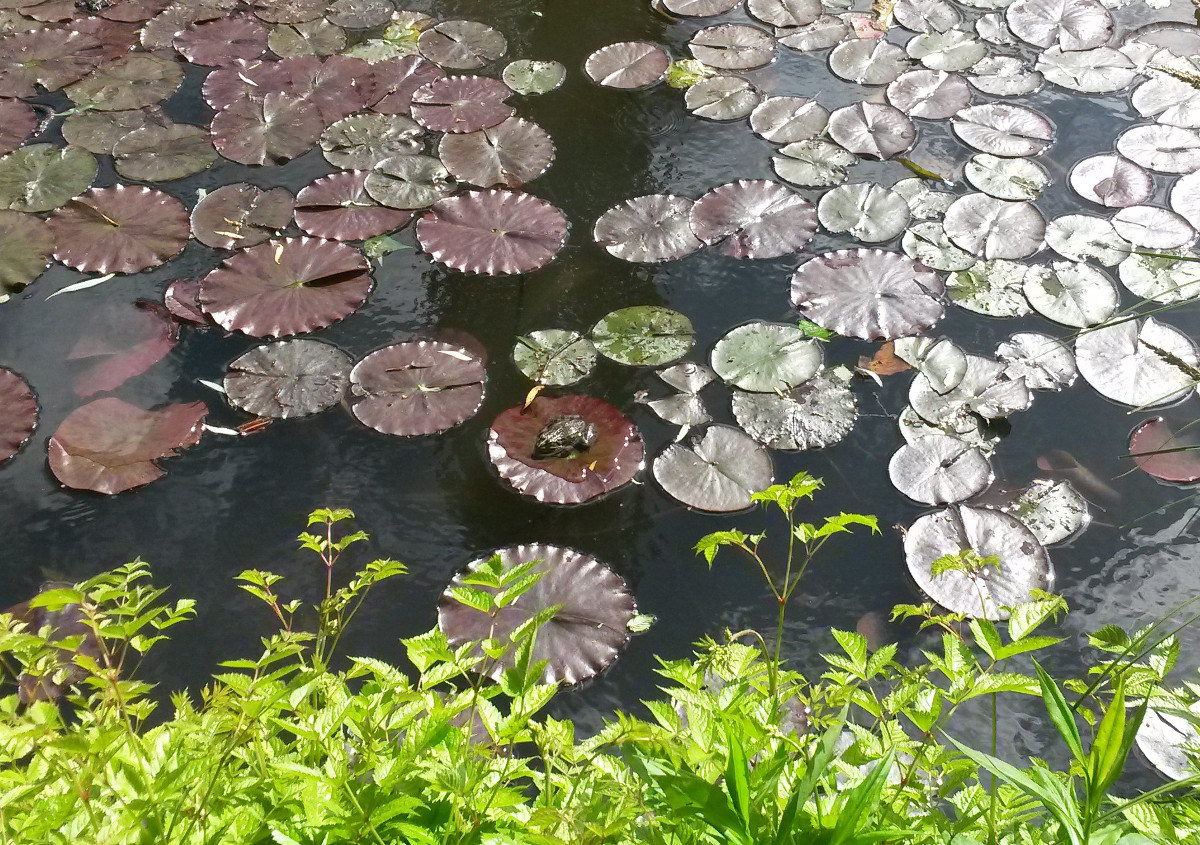
Claude Monet’s water lily pond in May, when frogs croak and sit on pads…
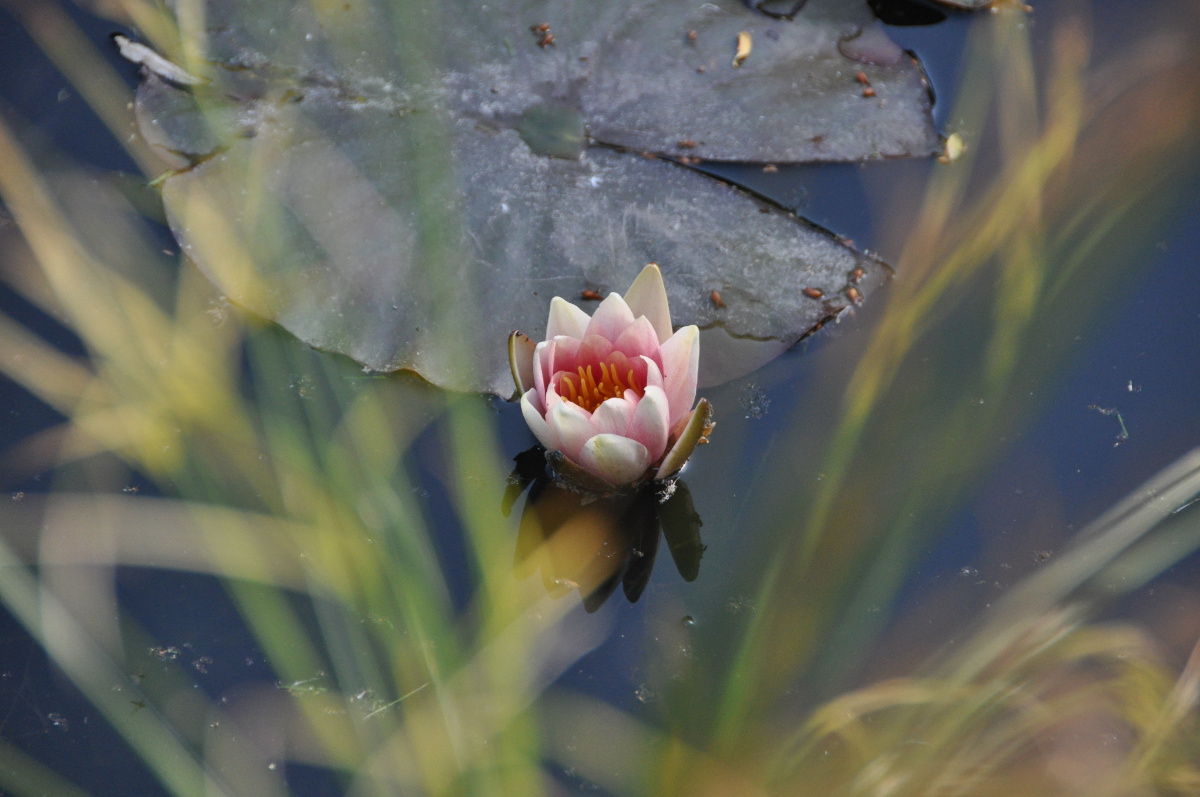
The first Nympheas have opened! They will flower until September.
I’m grateful to the kind visitor that quoted the above title, and then patiently explained to me the related colloquialism and thus the joke. In French we don’t have the same image. We say that time passes in a lightning, le temps passe en un éclair. The way each language expresses reality and experiences its own way is an endless source of amazement and amusement to me.
Posted in Water-Garden No Comments »
January 20, 2015
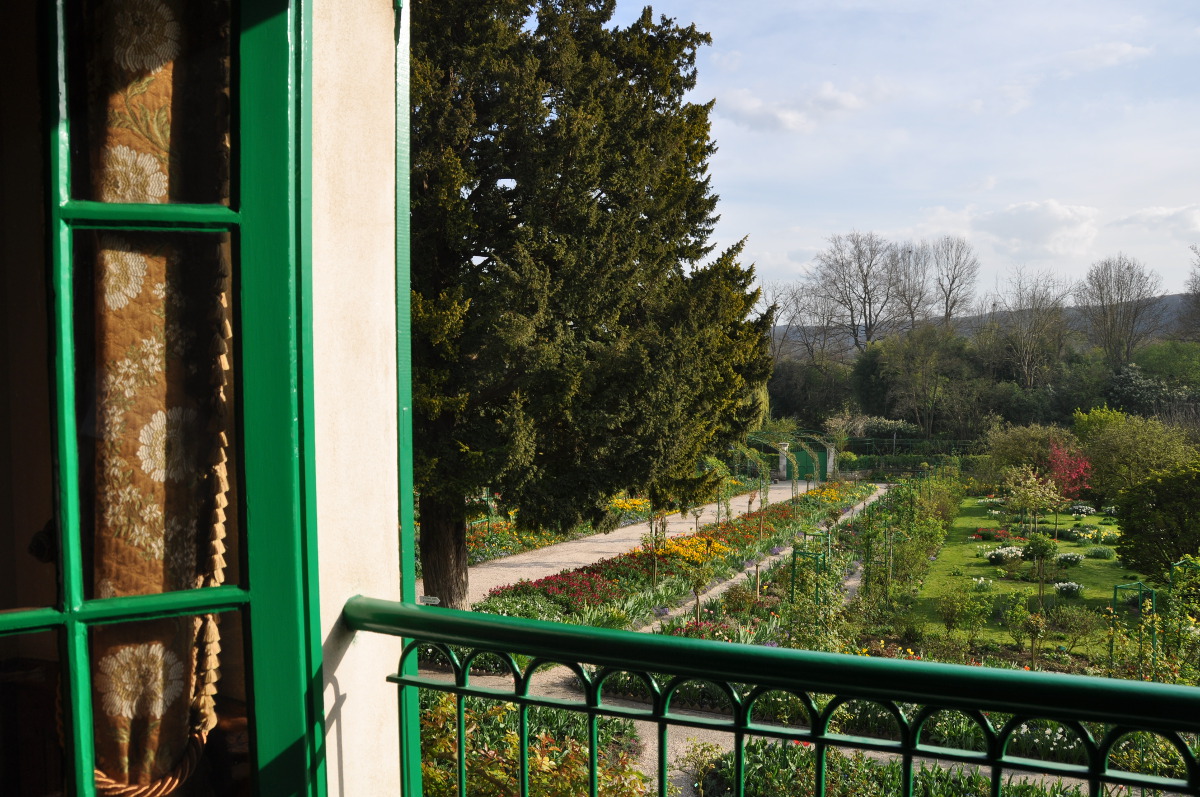
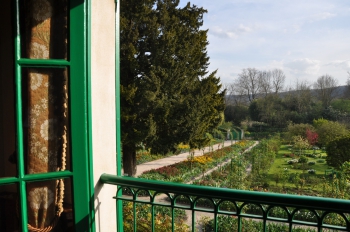 This is what Claude Monet could see when he gazed through his bedroom’s window in April. Last year spring was very early and the first colors were already there at the opening of the garden. Wallflowers make a striking effect combined with tulips, while daffodils and jonquils form islands of white and yellow flowers on the lawns. In the distance, the tall trees of the water garden don’t have any leaves yet. It is just a matter of days.
Posted in Giverny, Monet's House, Monet's flower garden 4 Comments »
November 10, 2014
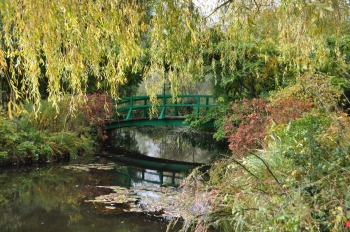
Do you want to have a look at the Monet Garden while it is closed for the winter?
Here is the Japanese bridge as it was this morning.
Giverny is now closed for five months.
The village will awake again next spring.
The first day for visiting the gardens will be Saturday 28 March, 2015.
Posted in Giverny, Claude Monet, Water-Garden 2 Comments »
October 22, 2014
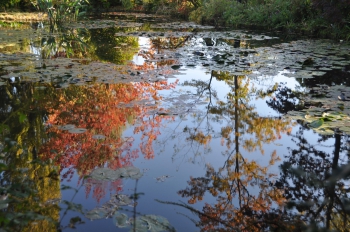
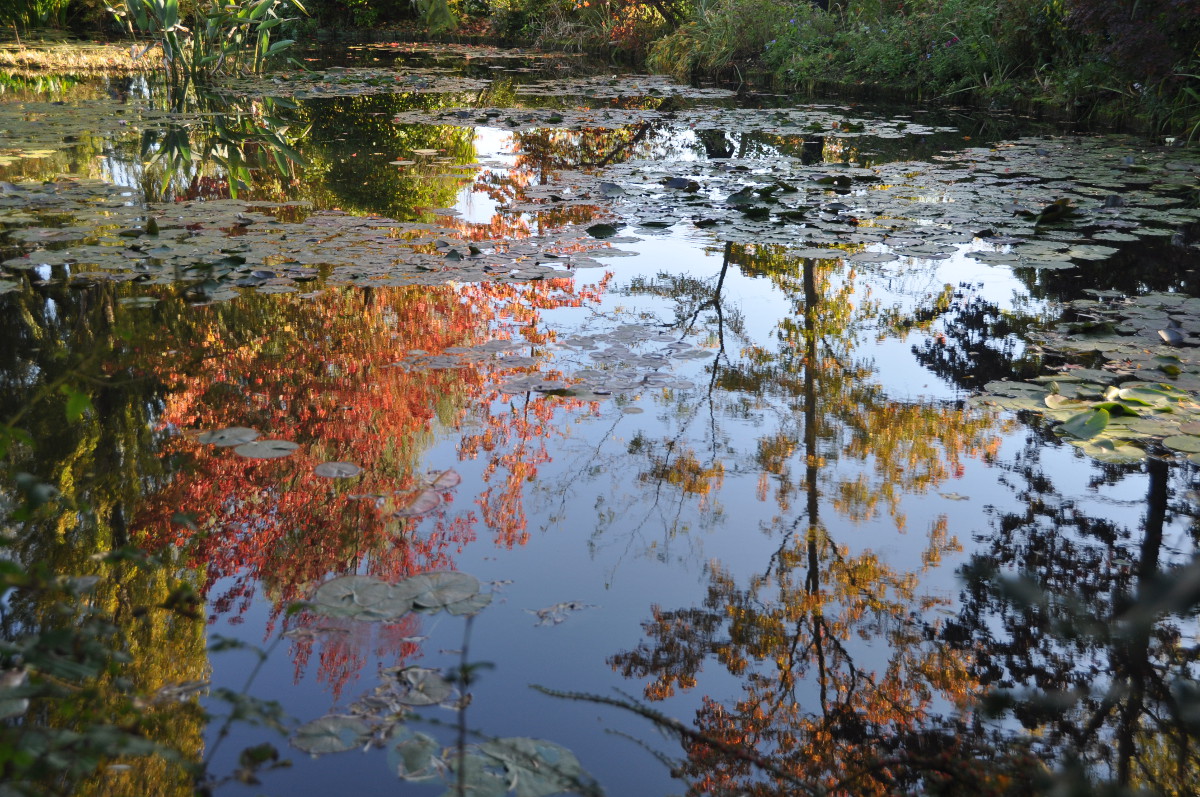
Yesterday I guided very charming hawaian guests at Giverny. It was nice to look at Monet’s gardens through their eye from Hawai. They reminded me that fall doesn’t exist on their island. It is summer all year round. Discovering the special spirit of this season sounded very exciting for them. Autumn has started to work its magic on the foliage. The three sweet gum trees reflect their reds and oranges into the water lily pond. For us, who know what will come next, this dramatic show of the saison, despite of its beauty, has a special flavour of nostalgia and melancholia intertwined.
Posted in Giverny, Water-Garden No Comments »
November 17, 2013
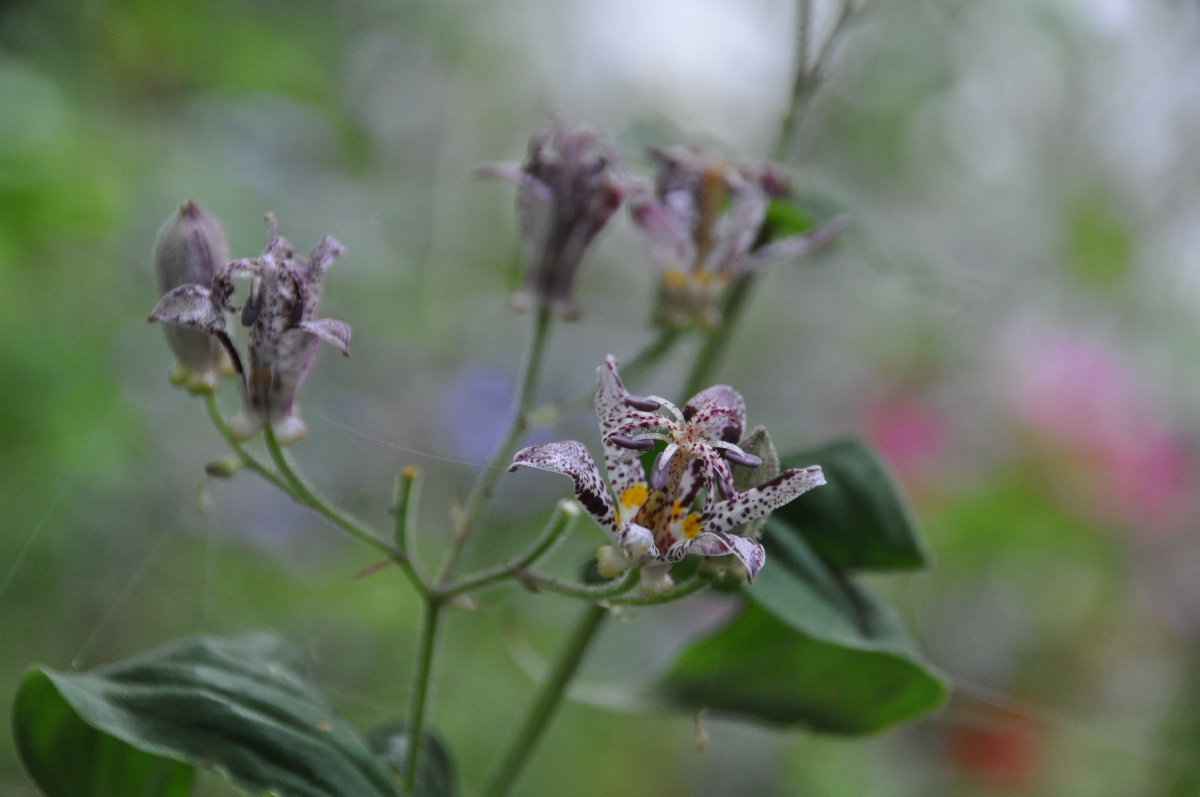
The common name of this beautiful flower that grows in Monet’s water garden is a bit strange: it’s called toad lily.
The appearance of this perennial is more orchid like.
It requires a moist soil, as do toads, part shade under trees, and in these conditions it is very hardy.
The tricyrtis appears late in season.
This picture was taken in October.
Posted in Water-Garden, Flower No Comments »