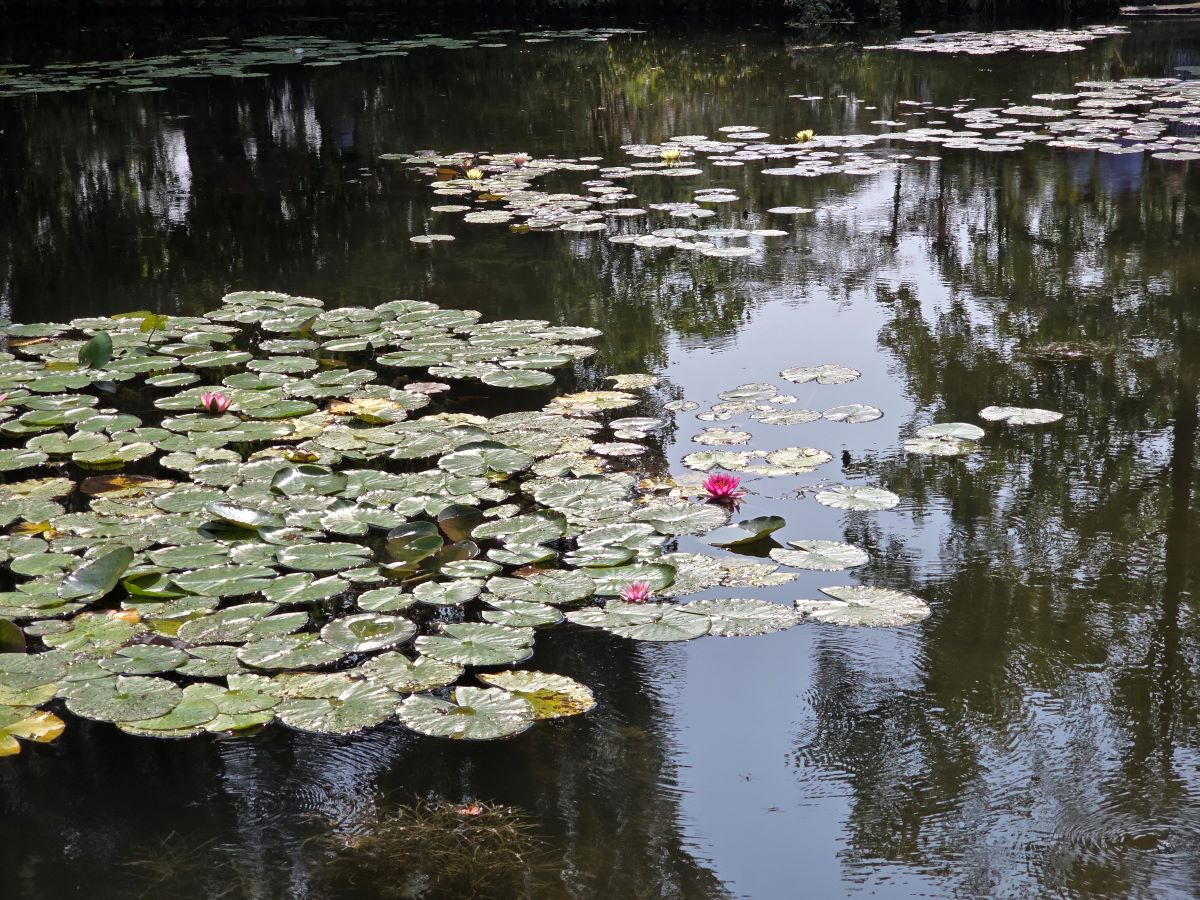
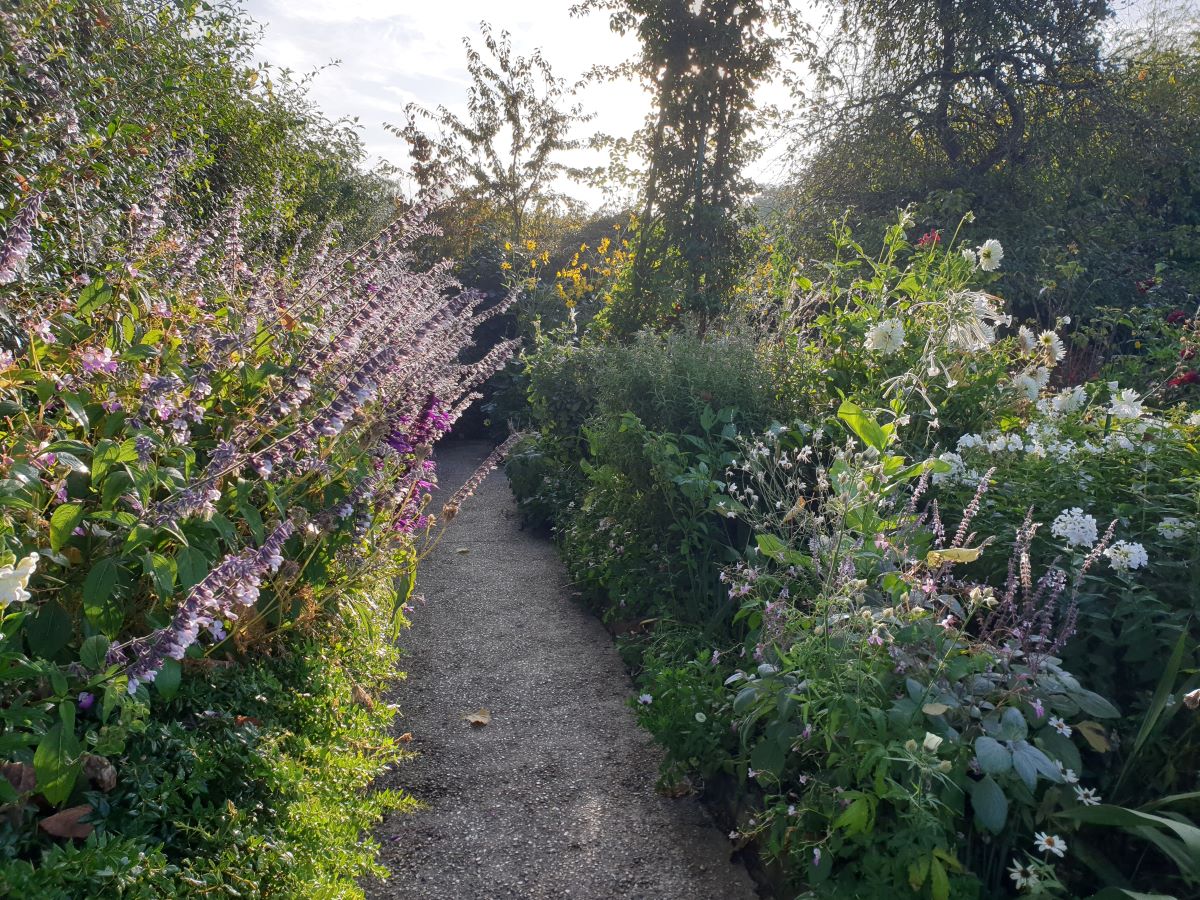
In the soft light of September, water lilies open in the afternoon. They need all the morning to decide it’s warm enough.
Flowers are tall, filling the beds with masses of vegetation and colors. Dahlias, sages, gauras, nicotianas, balsams are at their best, as well as the giant yellow helianthus. Asters will start soon.
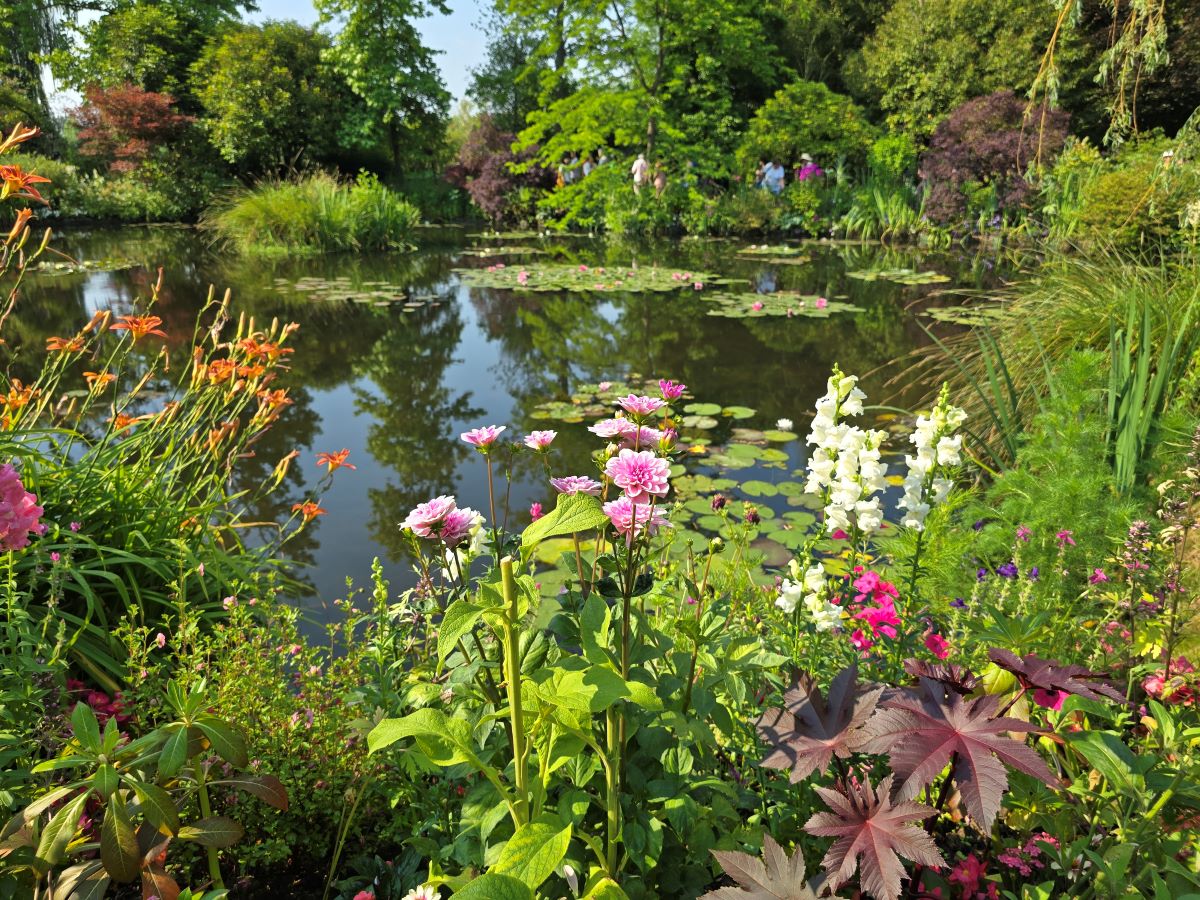
Summer is back! In Monet’s garden, it’s the best time to see water lilie in their splendor. They love a warm water, many hours of sunshine, and all the admirers who walk around the Giverny pond, just like the painter in his times.
Summer is also a great time for dahlias, day lilies, snap dragons or castor plants, to quote but a few visible on this picture.
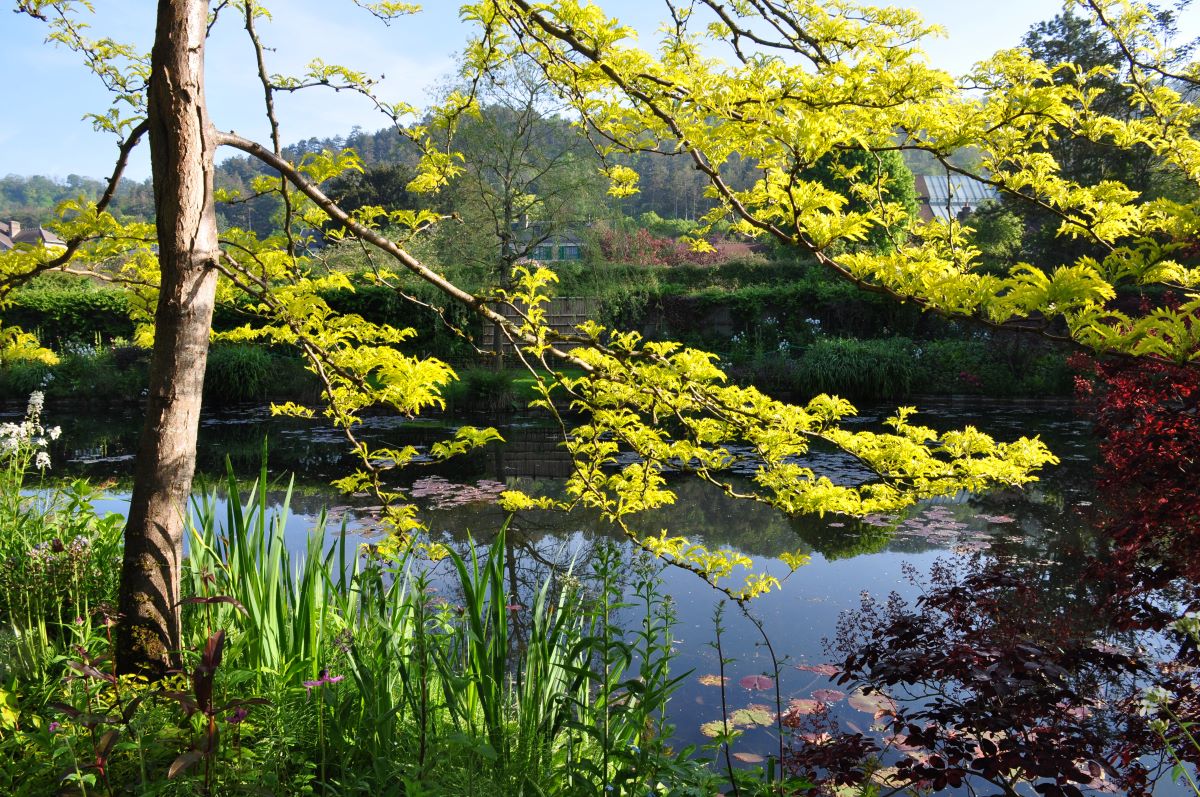
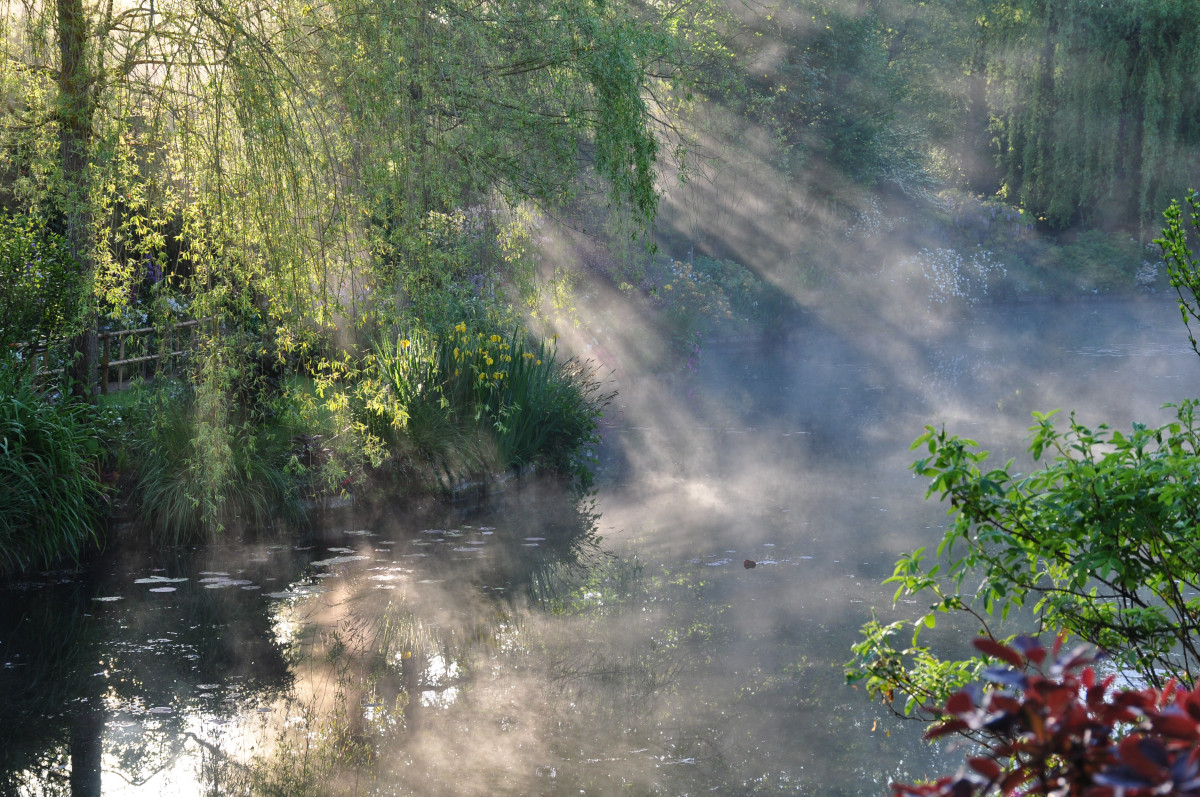
In Claude Monet’s water garden in Giverny, each tree has its own color. In spring, the honey locust (aka gleditsia) planted next to the water lily pond boasts an extraordinary color, that combines beautifully with the purple foliages around. Through its elegantly curved branches, Monet’s house appears in the distance. Two windows look like eyes peeping through the vegetation. On the right, the large windows of Monet’s third studio shine in the early light.
The water lily pond in Claude Monet’s garden at Giverny
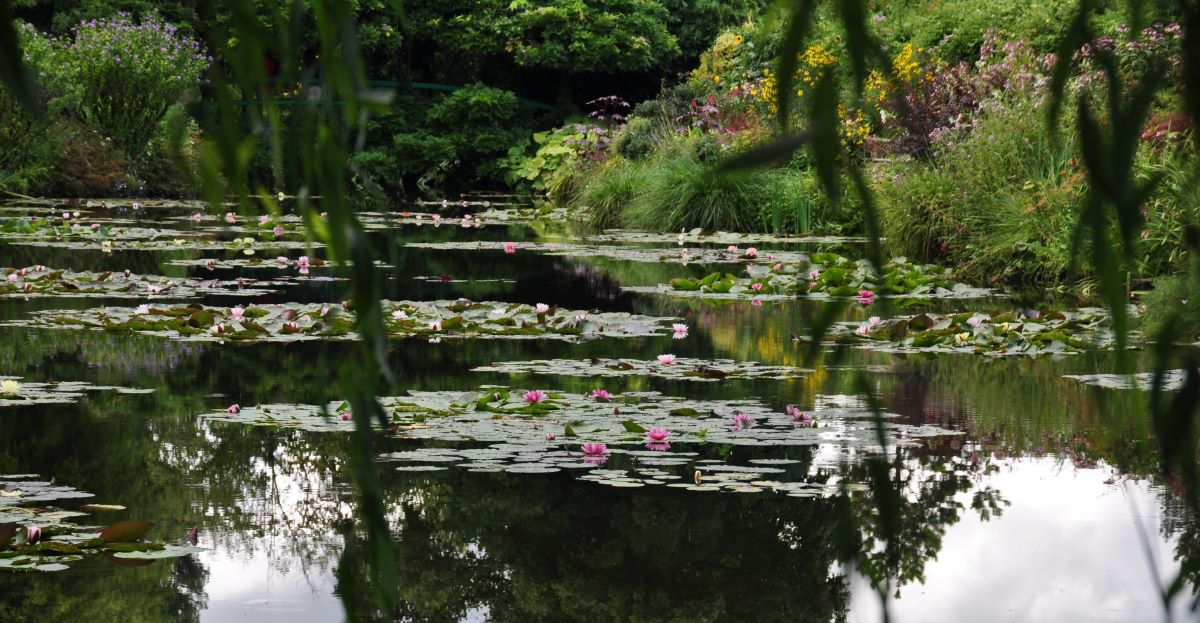
We are having a cool and rainy summer here in Normandy. Despite the temperature that would be more suitable for September, the water lilies look good on Monet’s pond. Their colors range from white to pale yellow and pinks of all hues. There is even a dark red one that looks almost black. Can you see it in the center of the pond ? It is the one with very few pads.
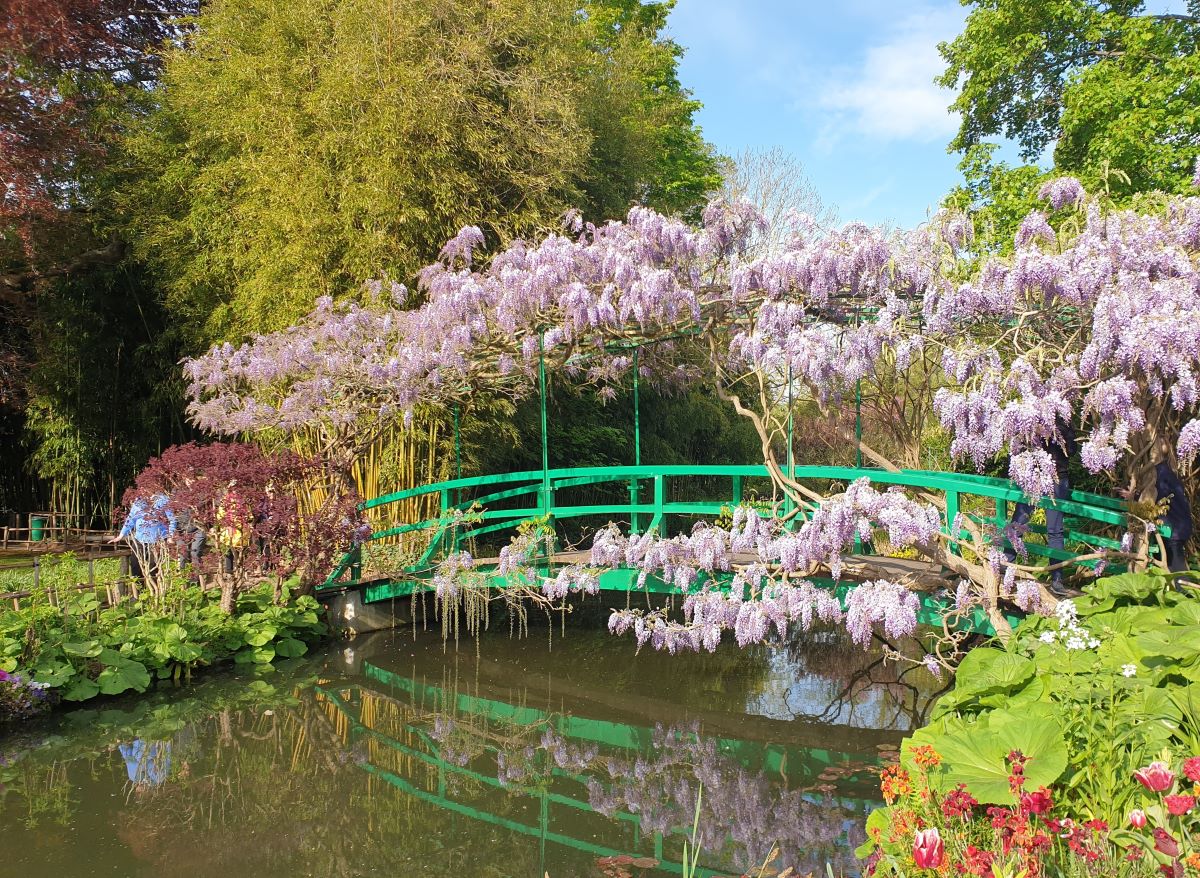
These last years, late frost killed invariably the tender buds of Claude Monet’s wisteria over the Japanese bridge. The following blooming was unimpressive.
But last winter, the Giverny gardeners installed a spray system that coats the buds with ice when the temperature drops. It worked outstandingly well! The wisteria planted by Monet is gorgeous again.
It will be followed by two more wisterias, one with long flowers and another one with white flowers. There are all very fragant. May is a nice time to visit Giverny! 🙂
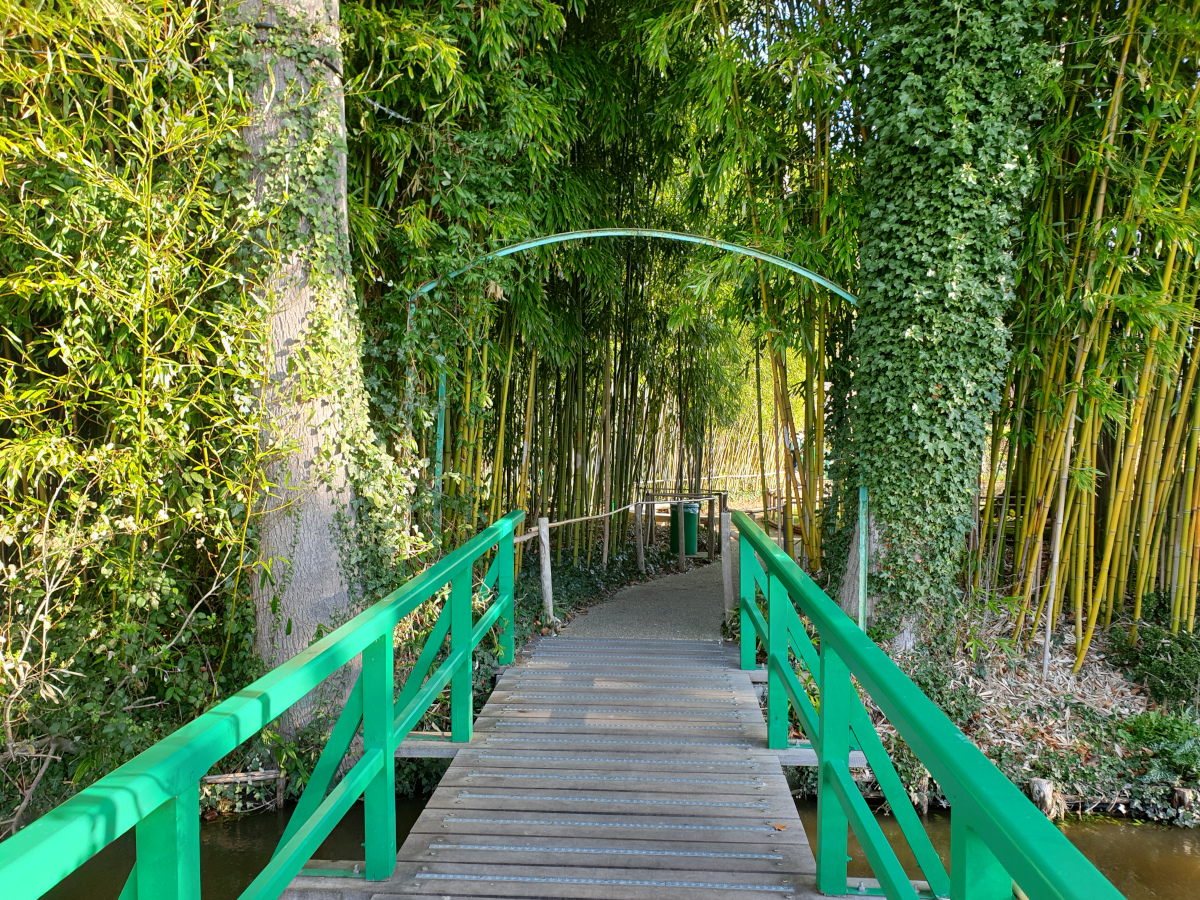
In Claude Monet’s garden at Giverny, the bamboo grove is still the same as in the painter’s time. It shows how much the impressionist leader was influenced by the Far East, that he knew through Japanese woodblocks. Monet was a keen collector of Japanese prints and covered the walls of his home with these exotic pictures.
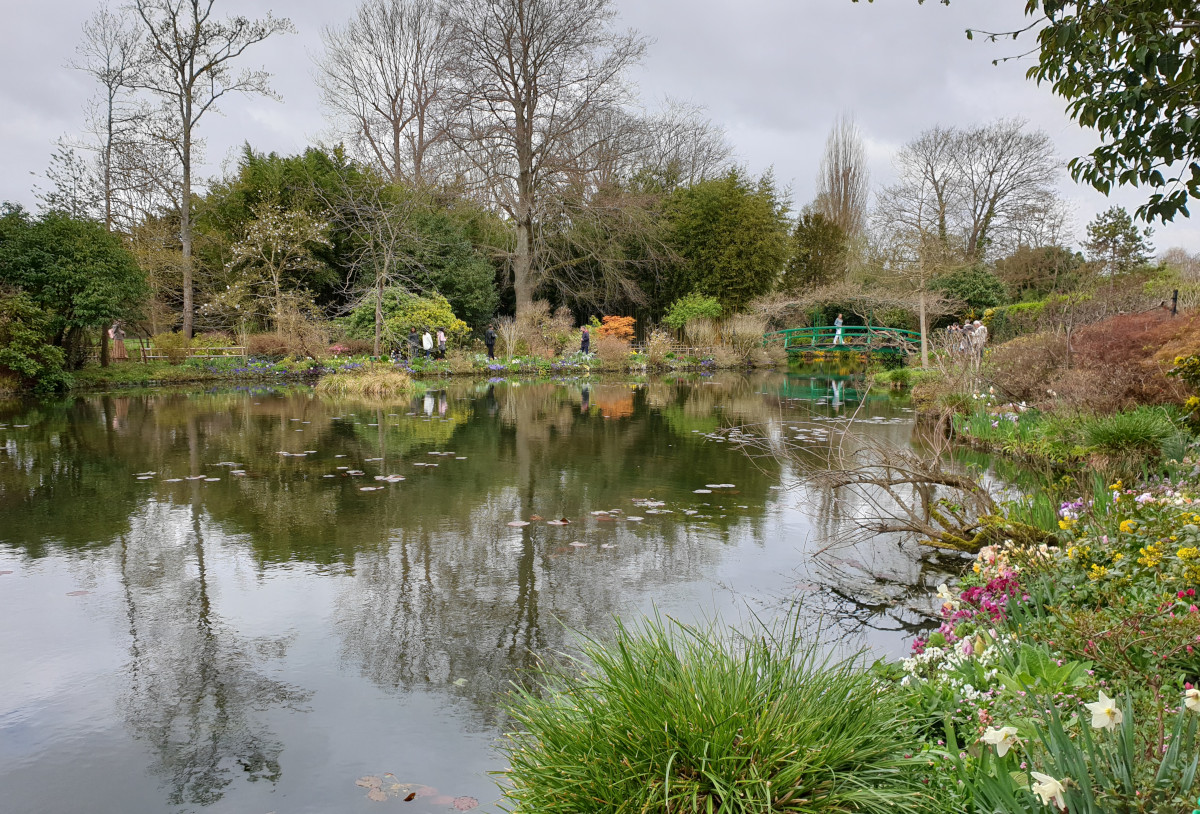
Monet’s gardens at Giverny, 2023, 1st April / Photo Ariane Cauderlier
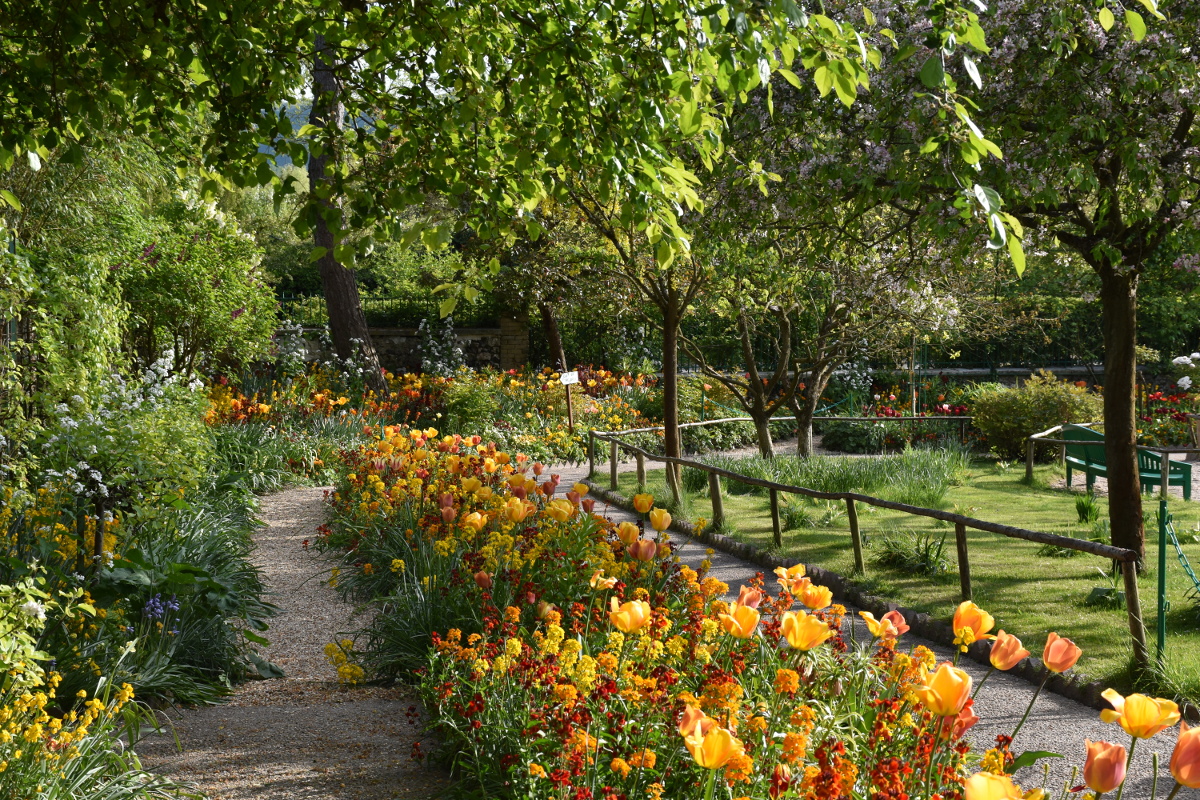
Visitors are back in Monet’s gardens in Giverny, enjoying the first flowers of the season: daffodils, tulips, pansies, hyacinths, fritillaries… Trees blossom in pink and white. The first water lily pads are appearing on the pool.
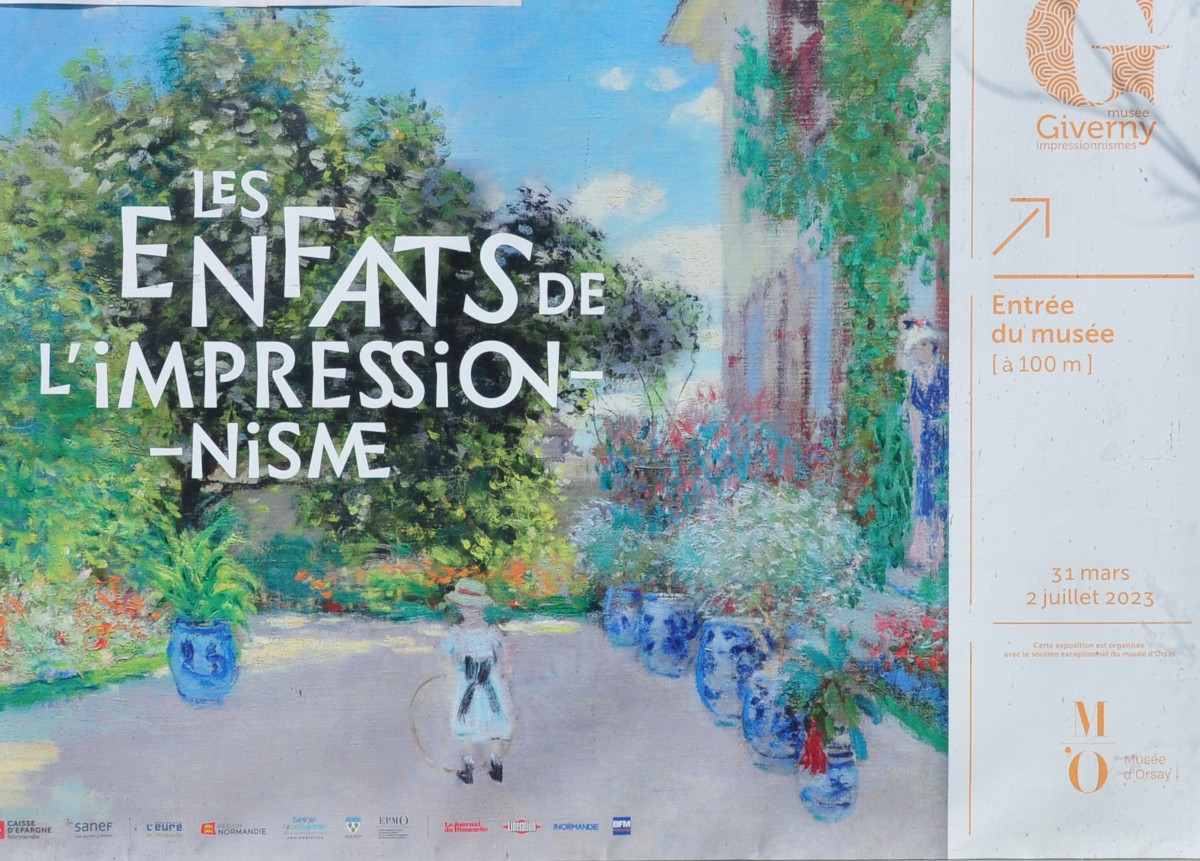
Exhibition ‘The Children of Impressionism’ in Giverny, spring 2023
In the nearby Musee des Impressionnismes Giverny (MDIG) the current exhibition is called ‘The Children of Impressionism’. It is packed with works by Renoir, Monet, Morisot, Pissarro, Boudin… full of fatherly or motherly tenderness. The exhibition will last up to July 2, 2023. Enjoy!
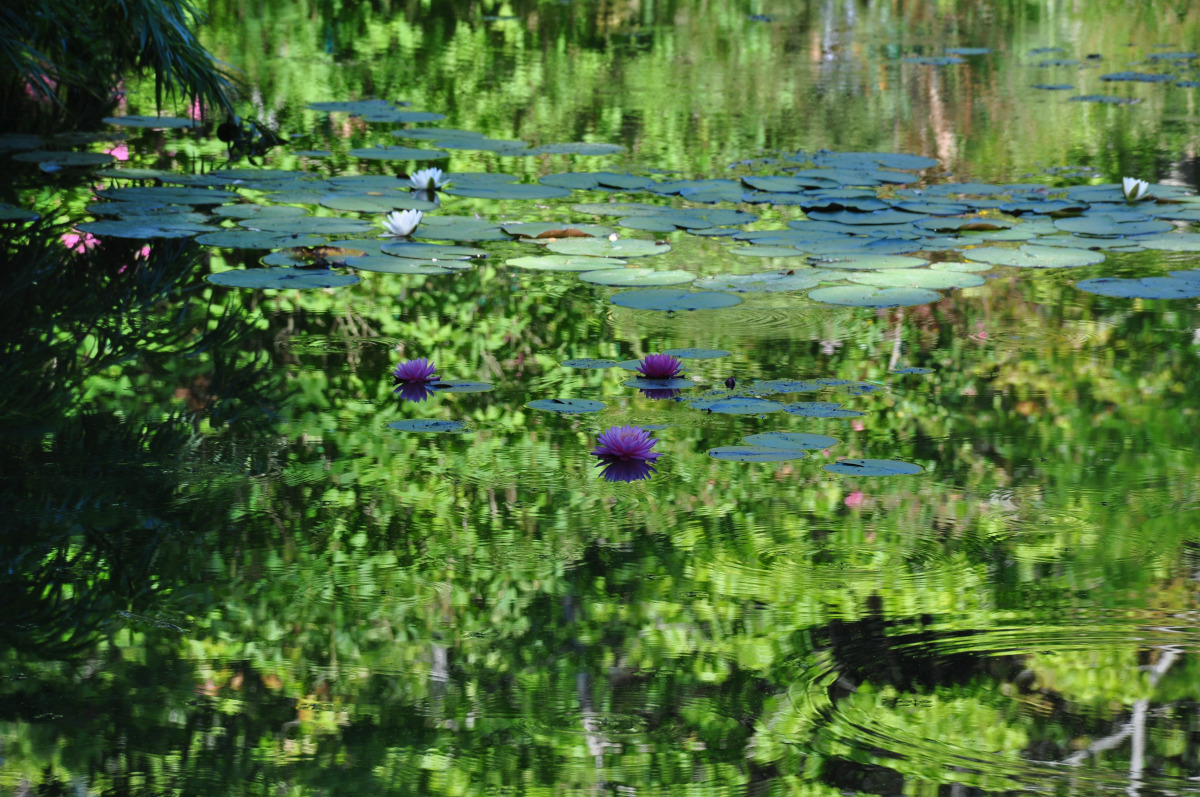
Photo Ariane Cauderlier, Monet’s water lily pond at Giverny, 7th July 2022
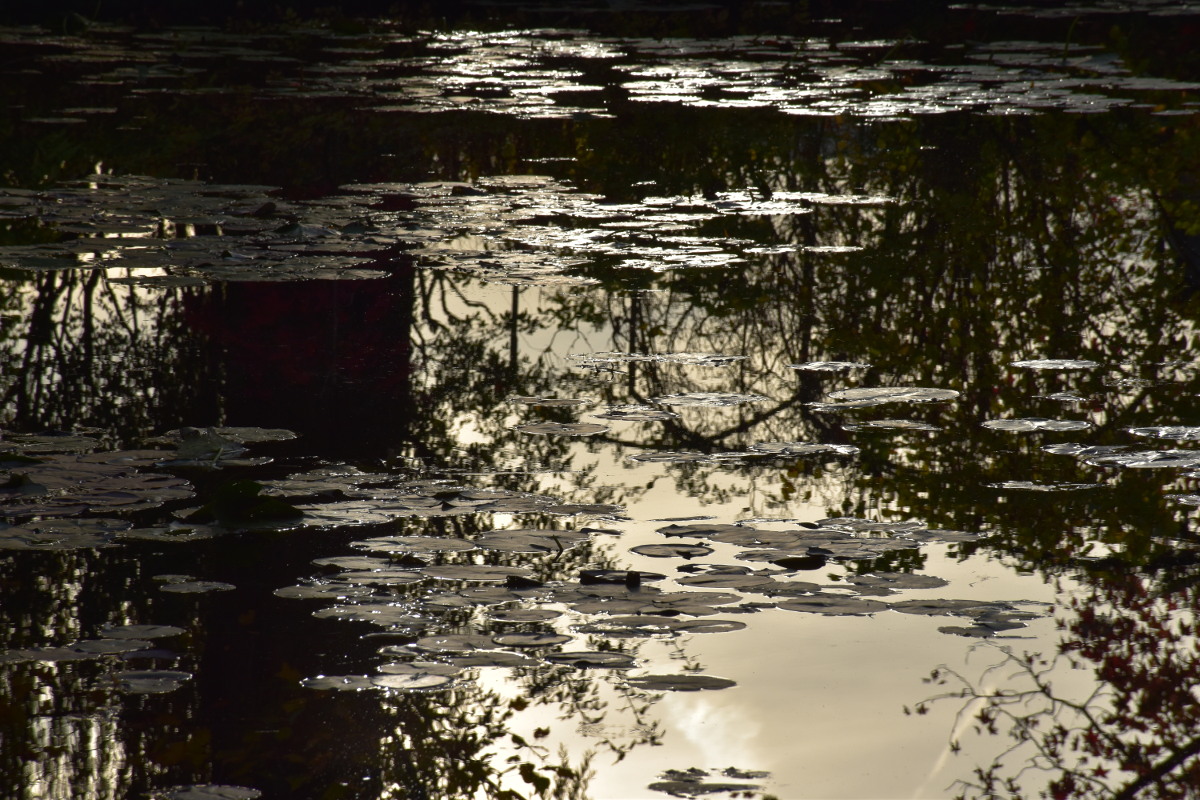
When Claude Monet didn’t paint, he could sit next to his water lily pond and observe it for long minutes. He was fascinated by the changing aspect of the surface. Some corners can be totally green, like this one, others reflecting the sky may be blue or animated by passing clouds. And the breeze blurs the surface in some places, ignoring other ones. Not to speak of the slow motion of the water lilies, opening in the morning and closing in the late afternoon.
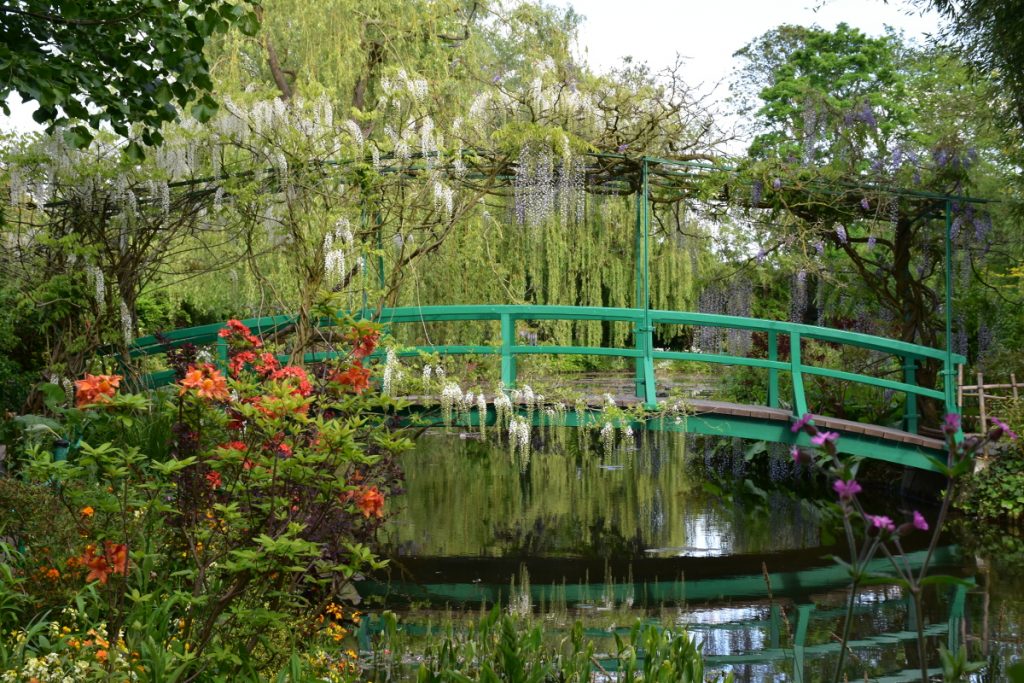
Photo Ariane Cauderlier, Monet’s Garden in Giverny, 13th May 2022
Many visitors report that they feel inspired by Monet’s gardens at Giverny. “I haven’t painted for decades,” they tell me, “but now I feel tempted to take the brushes again.”
Claude Monet’s water lily pond is inspiring, for sure. The master of impressionism painted it year after year, relentlessly. It is not only breathtakingly beautiful, it is also very picturesque: worth being painted.
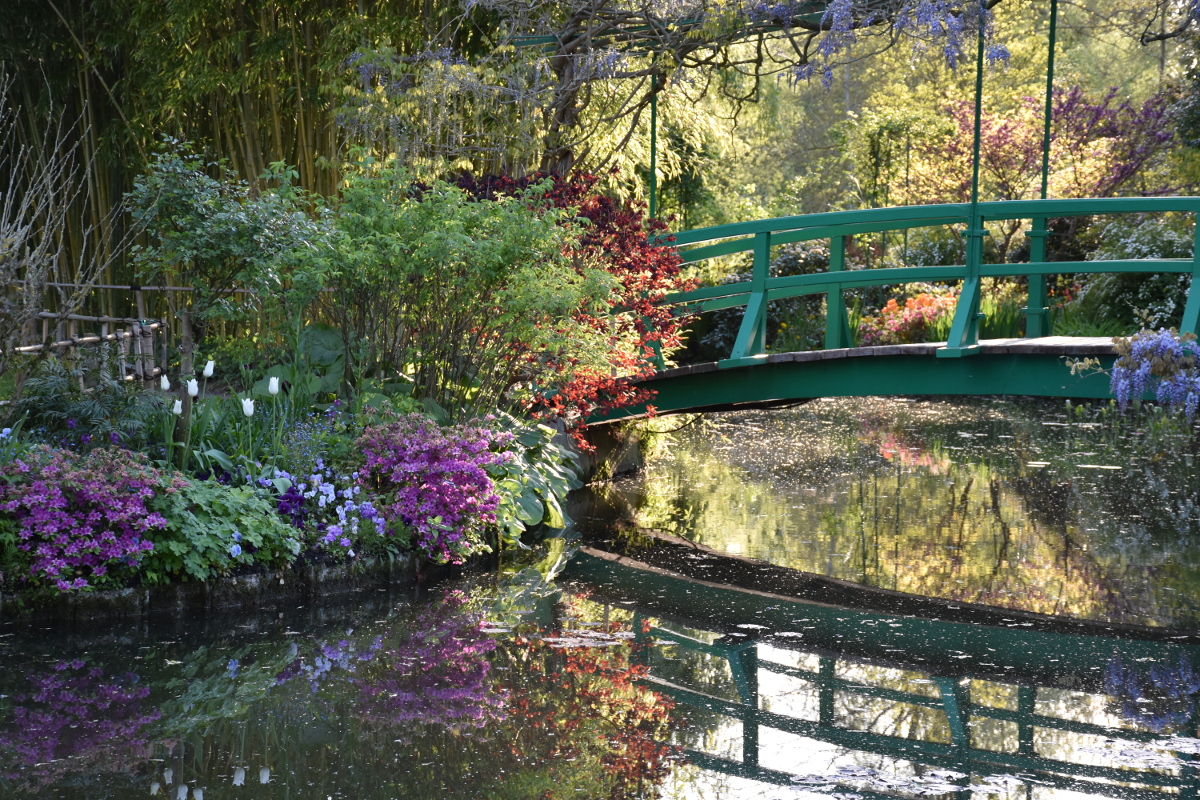
Garlands of wisterias wrap Monet’s footbridge with softness and delicacy. They are of different colors and sizes of panicles, from small to very long, from mauve to white, and when the sun shines, they fill the air with their fragrance.
This charming little bridge stands at one end of Claude Monet’s water lily pond in Giverny, over the small canal that used to bring some water into the pond. Agapanthus grown in planters and white hydrangeas cultivated like trees grace the place. Does this scene look familiar to you? It recalls many famous works of the artist. But as iconic as it sounds, Monet never painted this little bridge in his garden, but the big one only. Now covered with a canopy of wisterias, the big bridge has lost some of its likeness with Monet’s paintings.
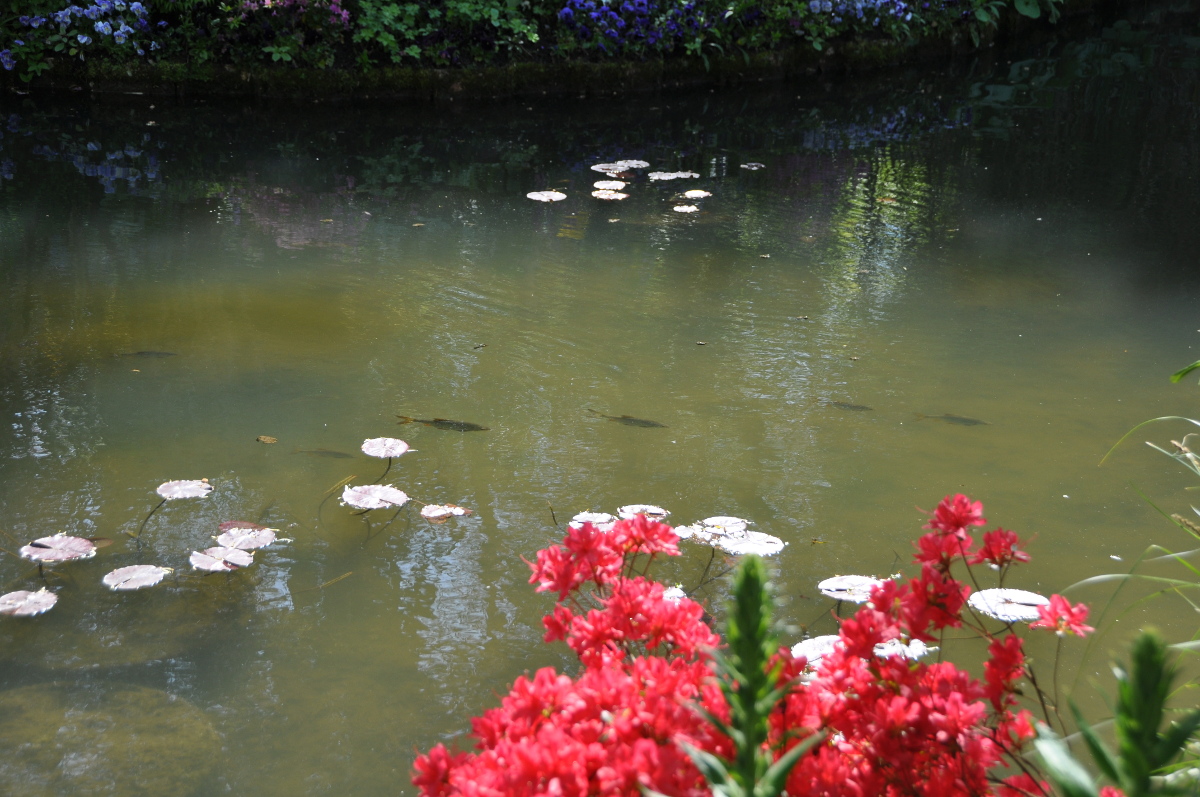
Is there fish in Monet’s pond at Giverny? This is a question visitors ask frequently.
The water lily pond houses a few big carps, maybe eight according to the gardeners.
There are also smaller fish like ruds, that have orange fins, and at least a perch and a pike.
All of them are wild fish that can be found in streams nearby.
They contribute to the ecosystem of the pond and are invaluable to keep this little microcosm balanced.
The Giverny fish are greyish, silvery, but not colorful. No koi carps here, although they would add to the oriental look of the garden.
As mute as they may be, they are visible enough for the heron that visits the pond at dawn. The water is too deep for him to stand in it, but he stays on the side and keeps a close eye on the fish, hoping one will come near enough to be turned into his breakfast.
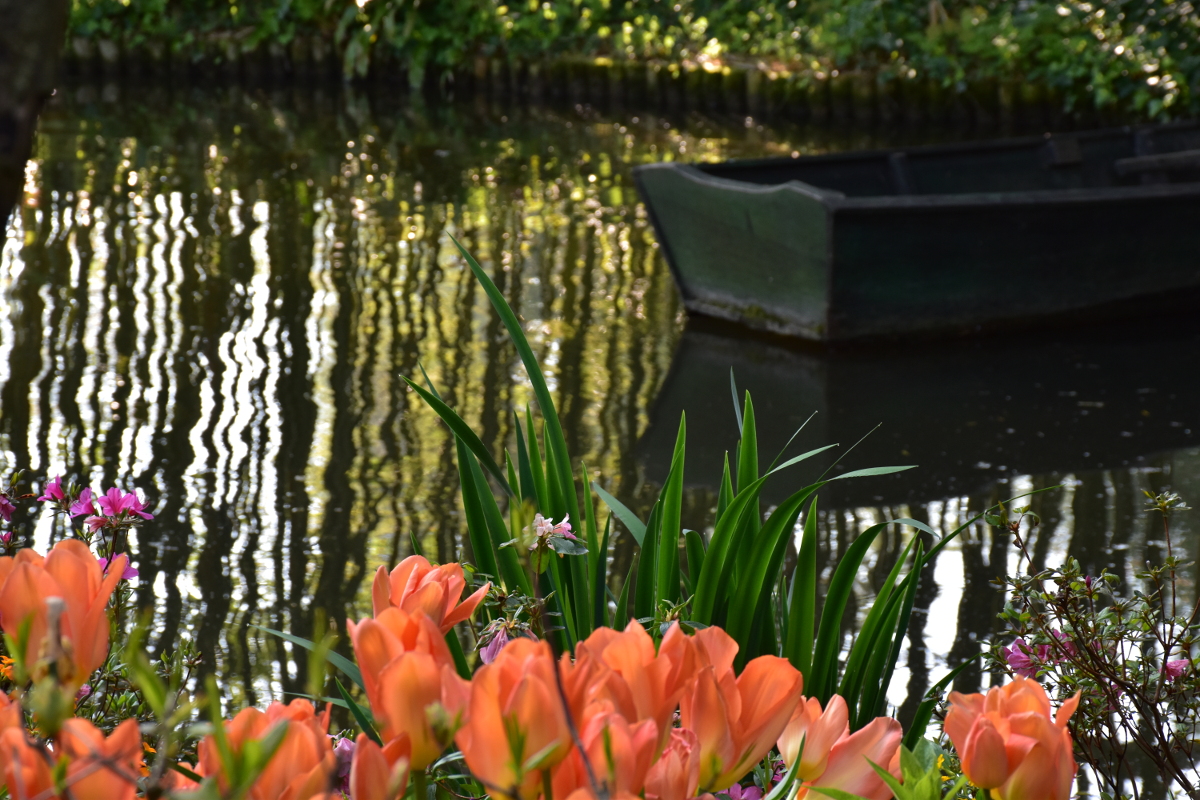
The bamboos reflection on Claude Monet’s water lily pond at Giverny adds a lot of interest to the scene, thanks to their moving lines. Their slow motion is quite hypnotic for the viewer, and their geometric aspect contrasts with the other plants all around.
Spring makes us all want to walk in beautiful gardens. At Giverny, azaleas and tulips gradually give way to irises, peonies and wisterias. The first water lilies should open within two weeks, recreating once more Monet’s beautiful setting and endless source of inspiration.
In the flower garden, visitors meander inside of a living painting where flowers recreate the illusion of brushstrokes. Monet had good reasons to claim that his garden was his most beautiful masterpiece.
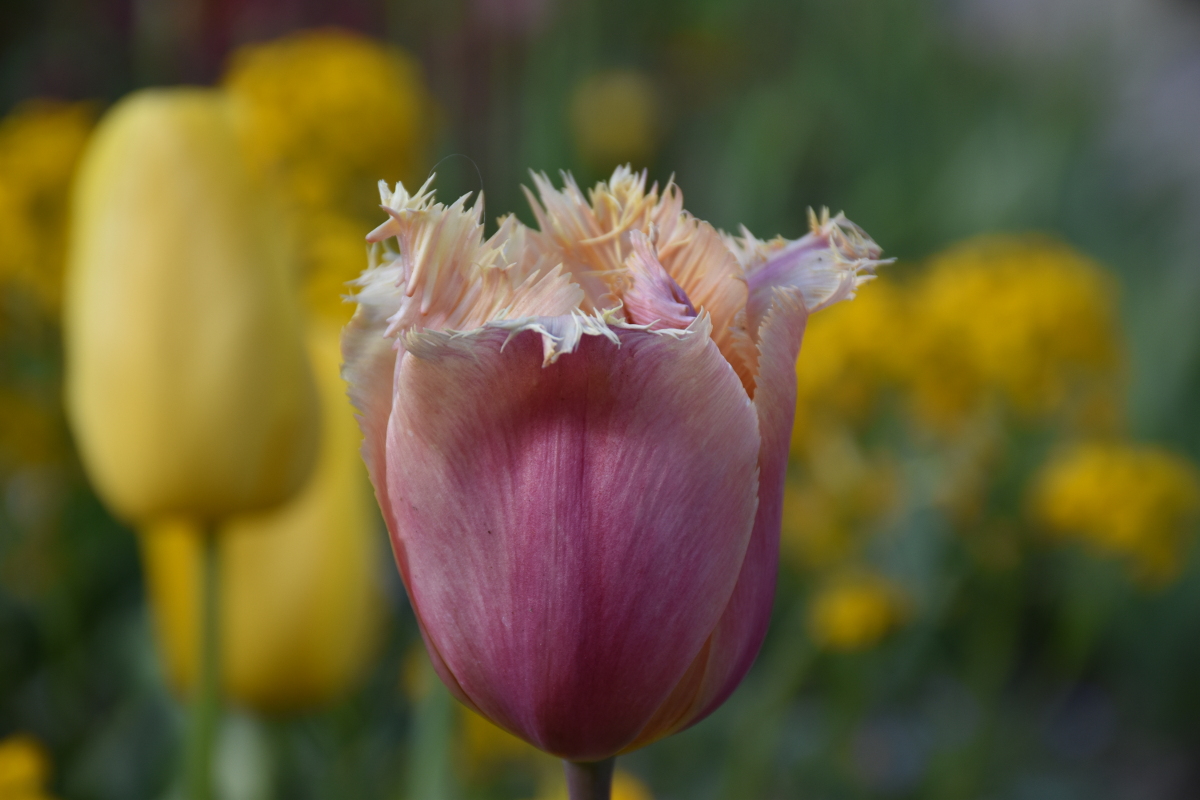
Just like you can see the brushwork when you tour an exhibition and have a close look at paintings, at Giverny each single flower is a little universe in itself, offering its beauties to our admiration.