February 6, 2017
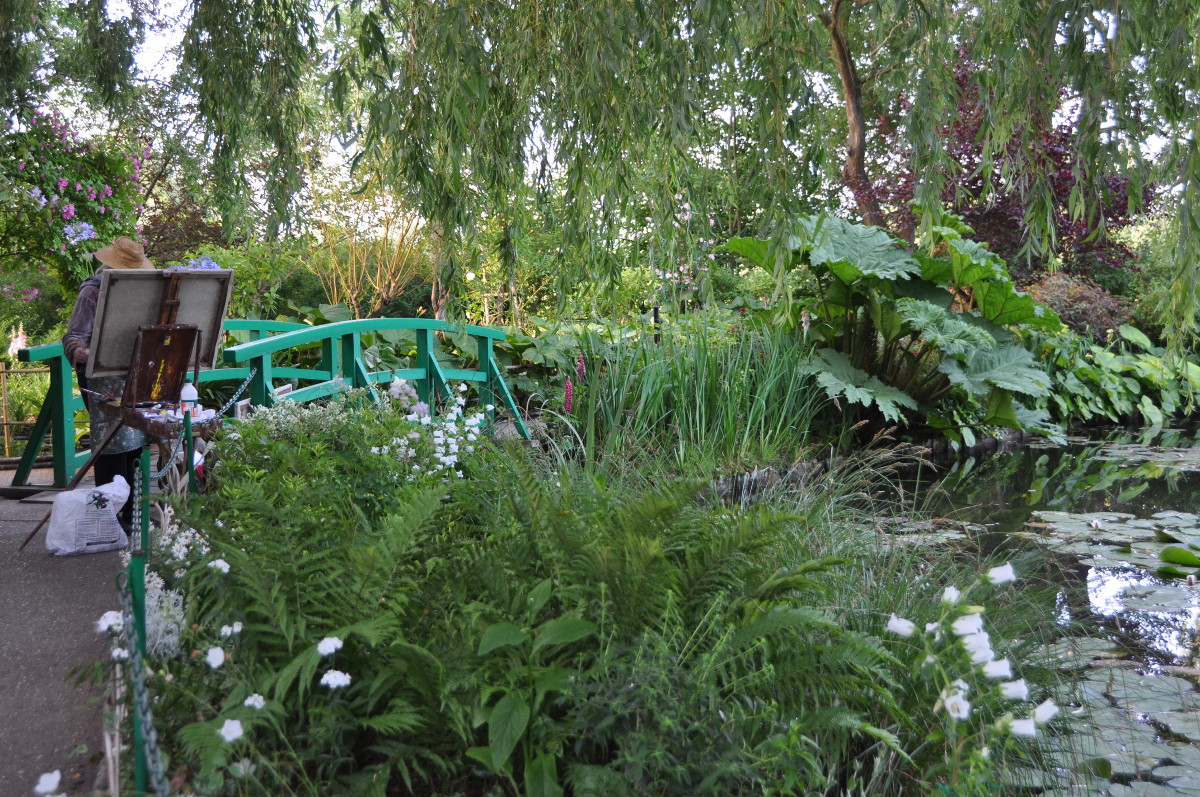
The beautiful water garden created by the impressionist master Claude Monet at Giverny still inspires painters.
Monet’s house and gardens will re-open on March 24, 2017. I’m looking forward to it. It is such a joy to work daily in this beauty giving guided tours to wonderful people. I miss flowers so much. What about you?
Posted in Claude Monet, Giverny, Water-Garden 2 Comments »
January 20, 2015
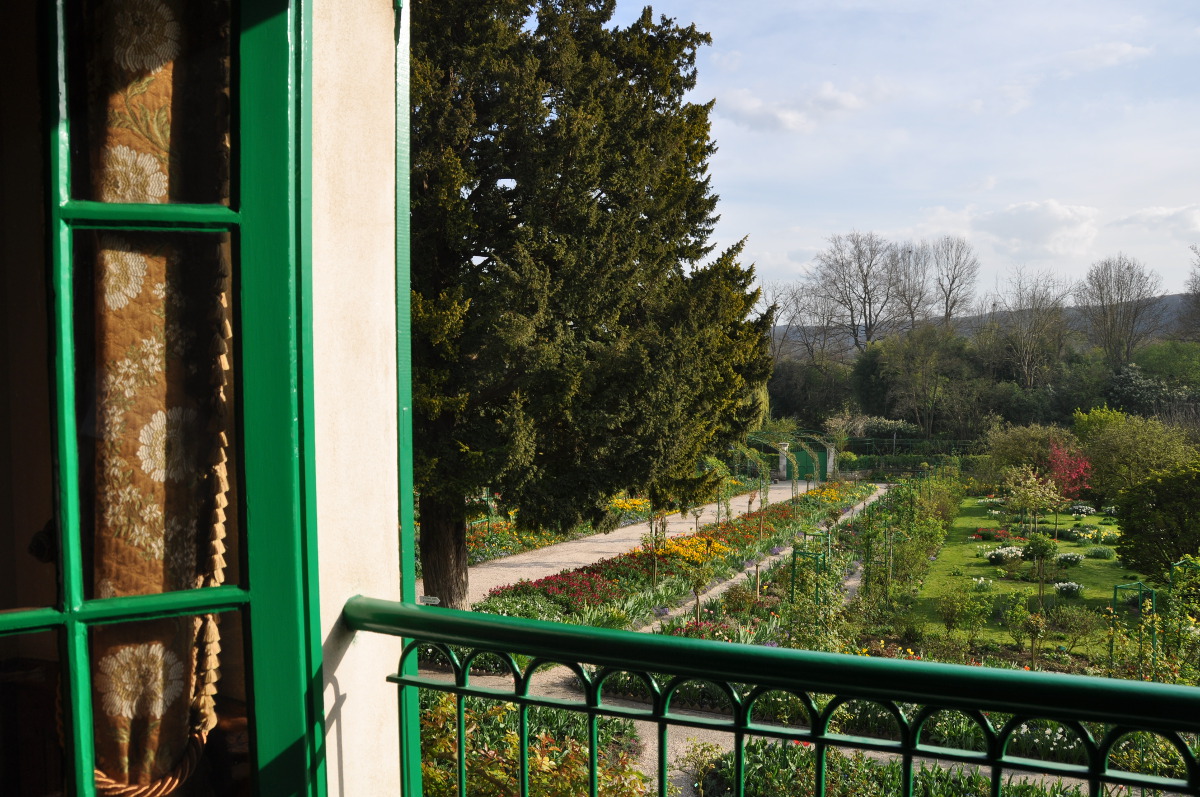
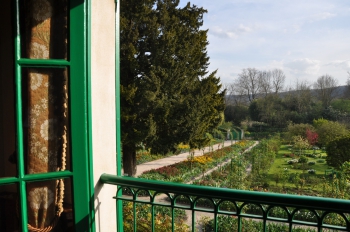 This is what Claude Monet could see when he gazed through his bedroom’s window in April. Last year spring was very early and the first colors were already there at the opening of the garden. Wallflowers make a striking effect combined with tulips, while daffodils and jonquils form islands of white and yellow flowers on the lawns. In the distance, the tall trees of the water garden don’t have any leaves yet. It is just a matter of days.
Posted in Giverny, Monet's flower garden, Monet's House 4 Comments »
September 14, 2014
[singlepic id=257 w=320 h=240 float=left]
Early in the morning, the low sunbeams stroke the flowers at Giverny. Some mist still hangs in the air, like the dreams of the night. There is a feeling of awakening.
The little lanes of Monet’s garden look even more inviting. Early in the morning, minutes after opening time, the Clos Normand is still silent. One can hear the plants breathing, almost.
It is a magical moment that must be picked up quickly. Shortly later, the air will be full of voices, and the place full of people.
Posted in Giverny, Monet's flower garden 1 Comment »
November 9, 2013
[singlepic id=245 w=320 h=240 float=left]
On the 30th of October, the perfectly serene pool in Claude Monet’s garden offers a mirror view of the world around.
Blue sky and turning trees create a bold contrast between the still floating water lily pads.
(Click on the picture to enlarge).
Posted in Giverny, Water-Garden 1 Comment »
September 6, 2013
[singlepic id=243 w=320 h=240 float=left]
According to Claude Monet’s step son Jean-Pierre Hoschedé, the painter loved blue flowers.
This beautiful solanum, a plant belonging to the family of tomatoes and potatoes, is covered with simple little blue flowers.
It matches the colors of the kitchen window with its blue squared curtains, a very typical french pattern called vichy fabric.
In late Summer, plants are at the top of their heigth. With a bit of imagination, the flowers of the Giverny garden look like big waves splashing against the walls of the house.
Posted in Monet's flower garden, Monet's House No Comments »
June 7, 2012
[singlepic id=222 w=320 h=240 float=left]After the yellow and orange Iceland poppies, and the enormous red perennial Chinese poppies, it is now time for the lovely pink annual poppies.
Each year, when they pull the dried ones out of the ground, the gardeners scatter the seeds in the flower beds. They grow everywhere, and they turn the garden into a pink fairy for a few days.
The eremurus, also known as fox tails, create an interesting contrast with their vertical shape.
They are topped by the climbing roses, at their best in June.
Posted in Monet's flower garden No Comments »
January 23, 2012
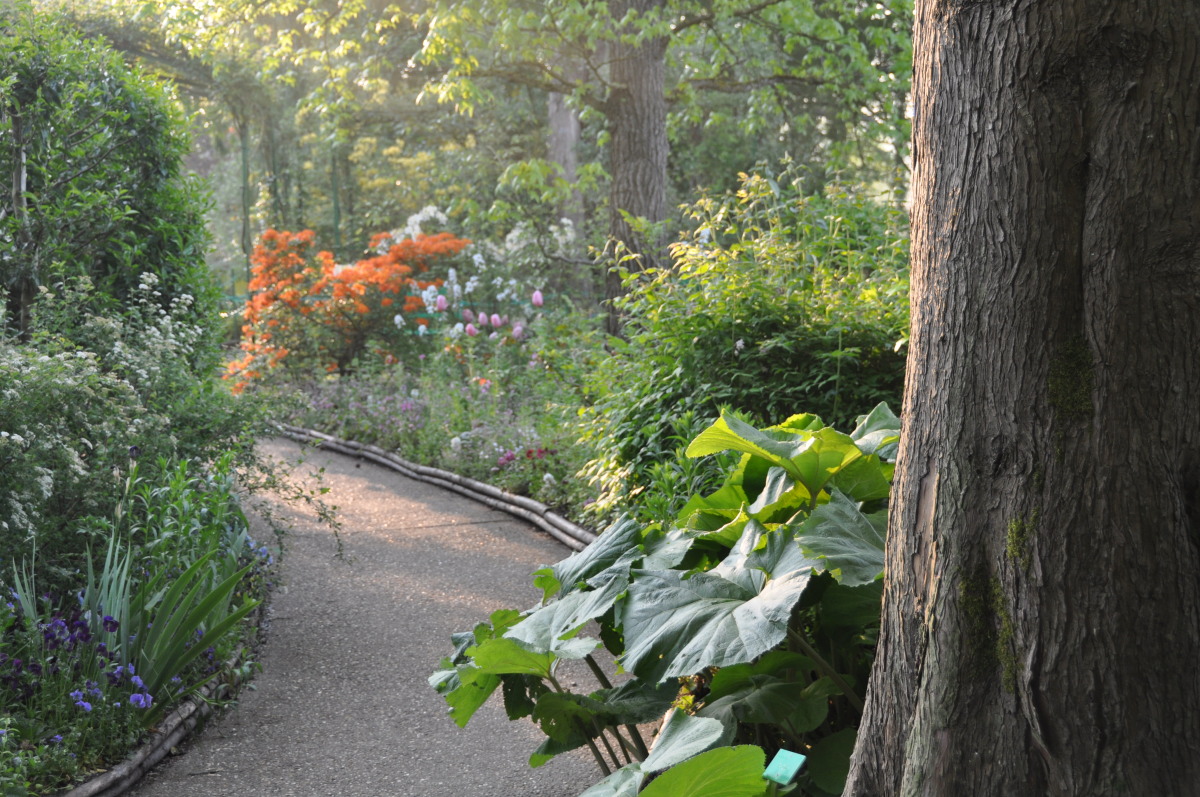
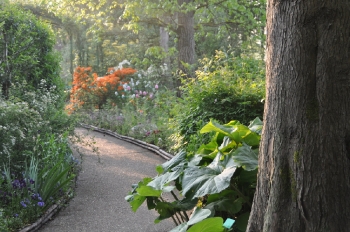 A quiet path, early in the morning in Claude Monet’s water garden at Giverny.
The big tree on the right is the trunk of a taxodium, a deciduous coniferous that loves river sides. The big leaves at its feet are petasites, also known as butterbur, a plant that grows wild along the streams in the surroundings of Giverny.
An orange azalea tops a bed of pink tulips and pink forget-me-nots.
This picture was taken last Spring, the 4th of May.
Posted in Water-Garden 2 Comments »
December 21, 2011
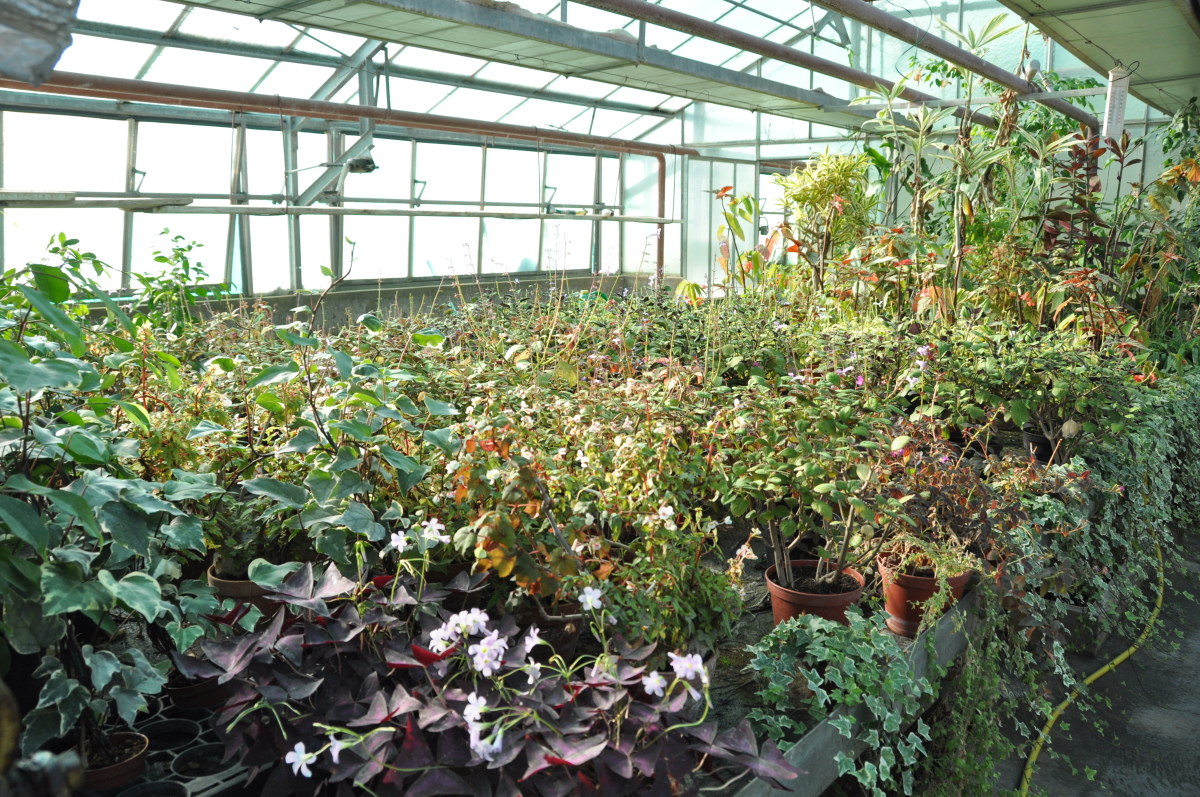
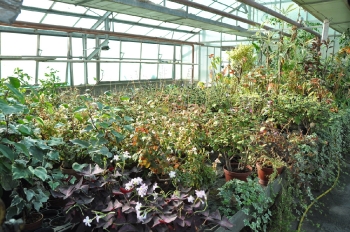 Are you curious to have a look inside of Monet’s greenhouse, that is not open to the public?
I was! With the allowance of the gardener, I took this picture last July.
Even in Summer many plants need to be kept inside. Some of them will decorate the house, others will be used to adornate the meeting rooms when VIPs come to Giverny, others are waiting for being planted, others are mother plants…
Monet was such a keen gardener that he built a greenhouse on the location of this one, on the left side of the flower garden. It was heated, and the painter cultivated orchids and exotic ferns. He also grew his seedlings in the greenhouse.
Posted in Monet's flower garden 2 Comments »
December 2, 2011
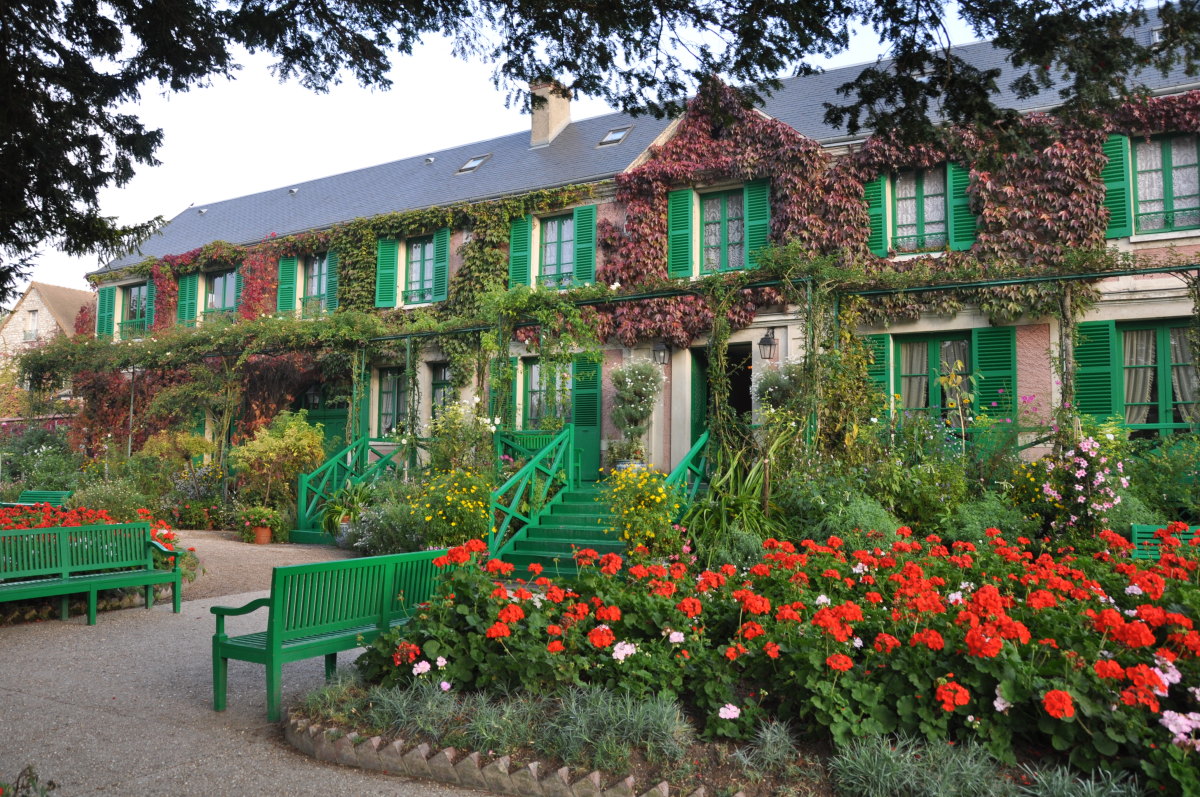
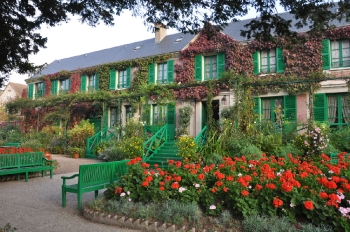 Flashing reds and greens in the soft light of October, this is what Monet’s garden offers in October in the area in front of the painter’s house.
The “Monet green” spreads on benches, shutters, stairs… creating a strong contrast with the formal geranium beds and the virginia creeper on the façade.
Posted in Monet's House No Comments »
September 27, 2011
[singlepic id=186 w=350 h=350 float=left]The beauty of September in Monet’s garden at Giverny lies in the bright colors displayed by giant flowers.
Pink or red huge dahlias, tall yellow helianthus, enormous purple asters, supersized yellow or brown sunflowers have now reached their final height.
In the main alley, nasturtiums flow like a river on the sloping ground, pretending to fill the pond of the water garden.
Their petals shimmer in the sunshine, just like paint on an impressionist canvas.
Posted in Monet's flower garden No Comments »
August 20, 2011
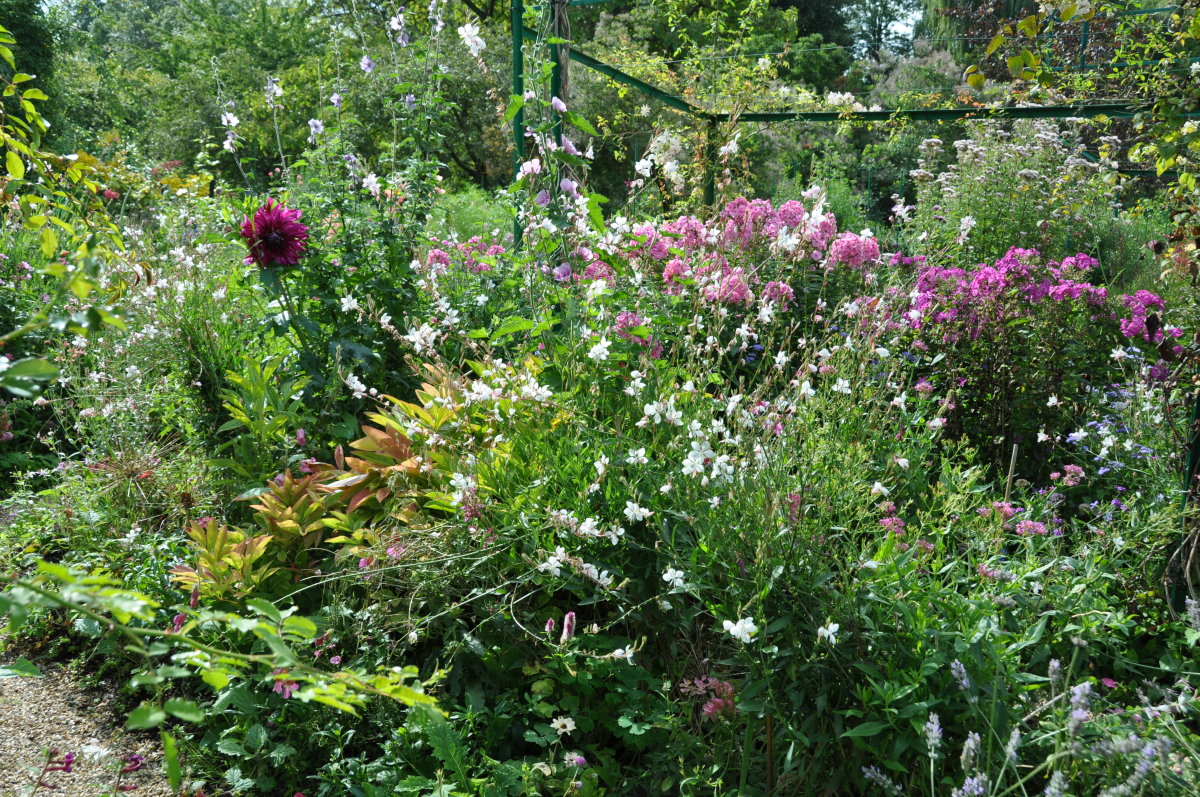
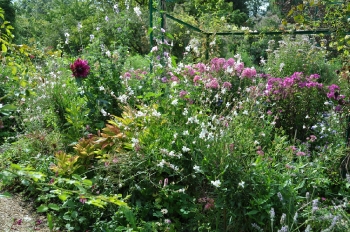 Summer is a gorgeous time in the gardens, especially at Giverny. While water lilies are at their best, the flower garden offers an explosion of colors.
Dahlias in every shapes and shades show their heads among the light butterfly like gauras, phlox and lavenders spread their scents, gladiolis bent graciously over the alleys, surrounded by sages and verbenas. The list of blooming flowers is endless.
Instead of carpeting the ground like in spring, summer flowers stand, tall, imposing and delicate at the same time, offering another experience of the garden.
Posted in Monet's flower garden 3 Comments »
April 16, 2010
[singlepic=147,350,350,,left]Spring at Giverny is like fireworks renewed every two weeks.
Daffodils and hyacinths burst out first, followed by tulips and alliums.
Bright colorful bulbs are everywhere, in the middle of the lawns, in squares, in rows, squattered in flowerbeds…
The gardens of Claude Monet opened two weeks ago, on April 1st. During the winter, benches and fences have been freshly repainted in green, and the spring garden looks repainted too, with the fresh greens of leaves and of grass.
Japanese cherries and crab apple offer their blossoms to the breeze, creating delicate flakes of pink snow.
The air is full of delicious scents and birds songs, and the sun is higher every day.
Posted in Giverny, Monet's flower garden No Comments »
December 27, 2009
[singlepic=139,350,350,,right]It is time for Season Greetings, so I wish you all the best for 2010.
Let the old year become a dry leaf blown away by the wind, and new sprouts grow, like green buds full of life and energy!
It is time for garden dreams, when flowers still sleep in the cold ground.
And time for dreams of travelling as soon as the sun is higher and warmer again.
Will you come to Giverny this year?
Posted in Giverny No Comments »
March 2, 2009
[singlepic=114,350,350,,left]
This is how the garden of the Museum of Impressionisms Giverny looks like in April.
Small chambers of monochromatic beds are hidden behind tall hedges. Each one has a different atmosphere, creating a surprising effect for visitors who stroll along the central alley.
Tulips are a must in spring, of course. But they need to be planted together with smaller flowers at their feet for a greater impact.
Several varieties are suitable to cover the bare ground. Pansies exist in so many colors that it is possible to create infinite harmonies.
Daisies are also a simple solution. Their pink gives a fresh look to the flower bed.
But if you are as lazy as I am, you will certainly prefer forget-me-nots. They reseed on their own and offer a very tender and poetic cloud of tiny flowers for weeks.
They are generally blue, but can also be found in pink or white. In Monet’s garden they are widely used: blue forget-me-nots with pink tulips, white ones with white tulips or pink with pink tulips for a ton sur ton harmony.
Here in the Museum’s garden they are planted in a wave towered by a bunch of tulips: this way they give rhythm to the border.
Posted in Impressionism Museum No Comments »
August 28, 2008
[singlepic=91,350,350,,left]
The main alley of Monet’s garden at Giverny is invaded by nasturtiums.
Monet planted them this way, but originally, it was not on purpose.
Monet wanted to soften the straight lines of his alley by an edge of small flowers, and he planted what he thought were dwarf nasturtiums. Which appeared to be… rambling ones, and they started to creep over the gravel.
Monet liked this effect, then he repeated it intentionally every year.
It is a talent to know how to use one’s own mistakes.
Posted in Monet's flower garden 2 Comments »