April 23, 2018
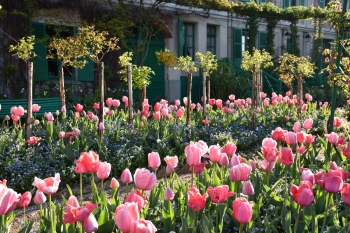
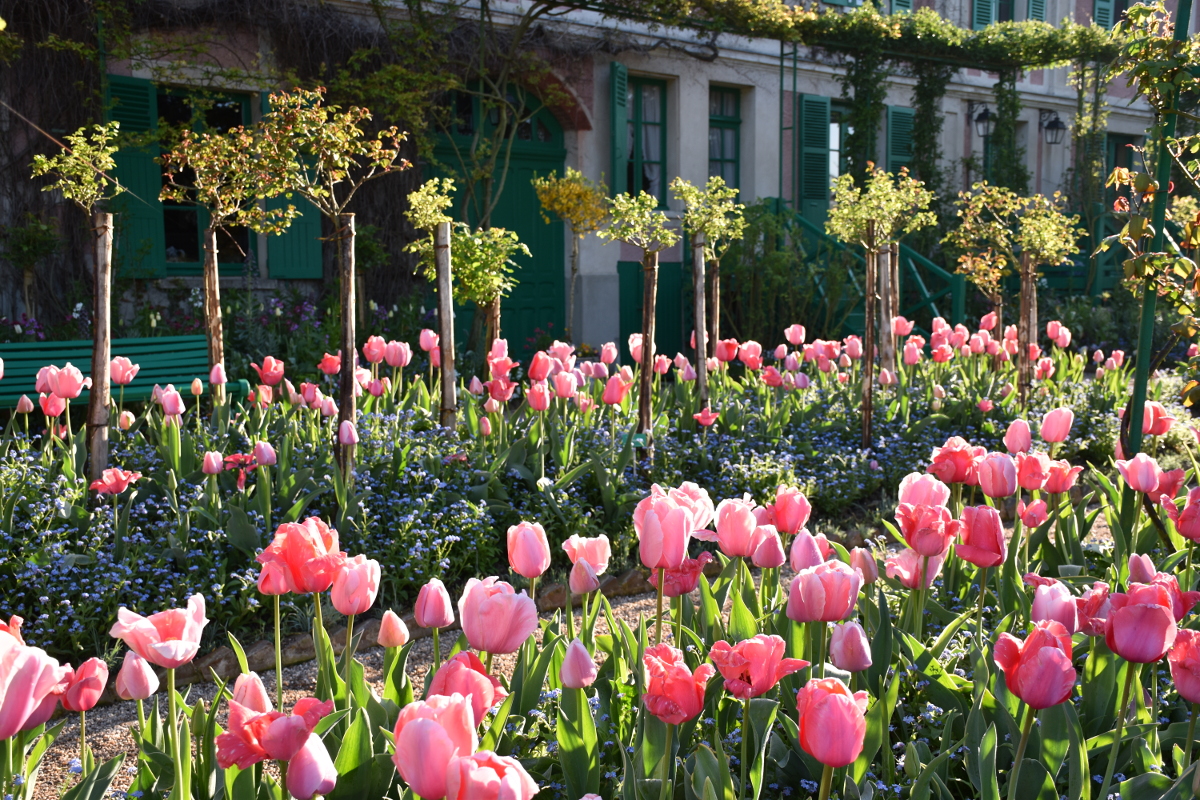
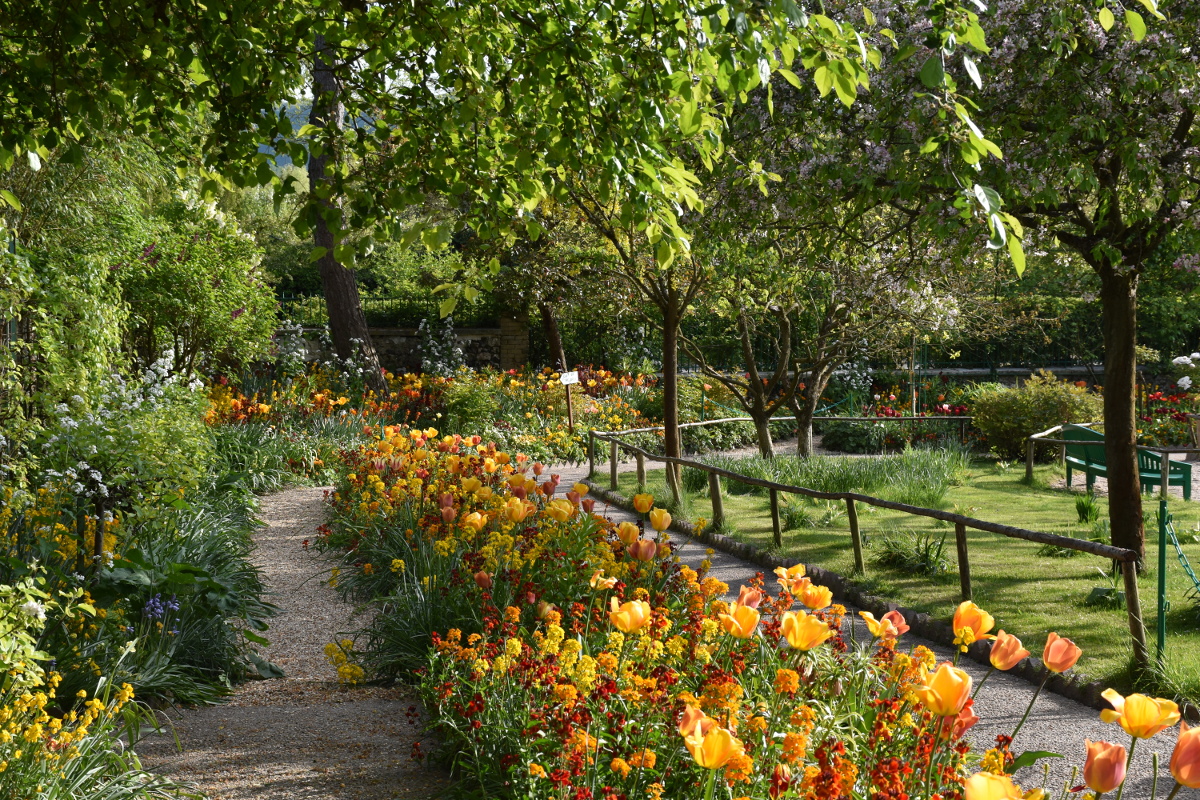
The name of Monet and his garden at Giverny evoke specific flowers: water lilies, wisterias, irises in large rows… It rarely brings up images of tulips. The big tulip show of April is a surprise to many visitors.
Tulips in Monet’s times were not yet what they are now, but Monet planted them and painted them, especially on the dining-room doors of his art dealer Paul Durand-Ruel. They are so colorful and charming that a painter can only fall under their spell.
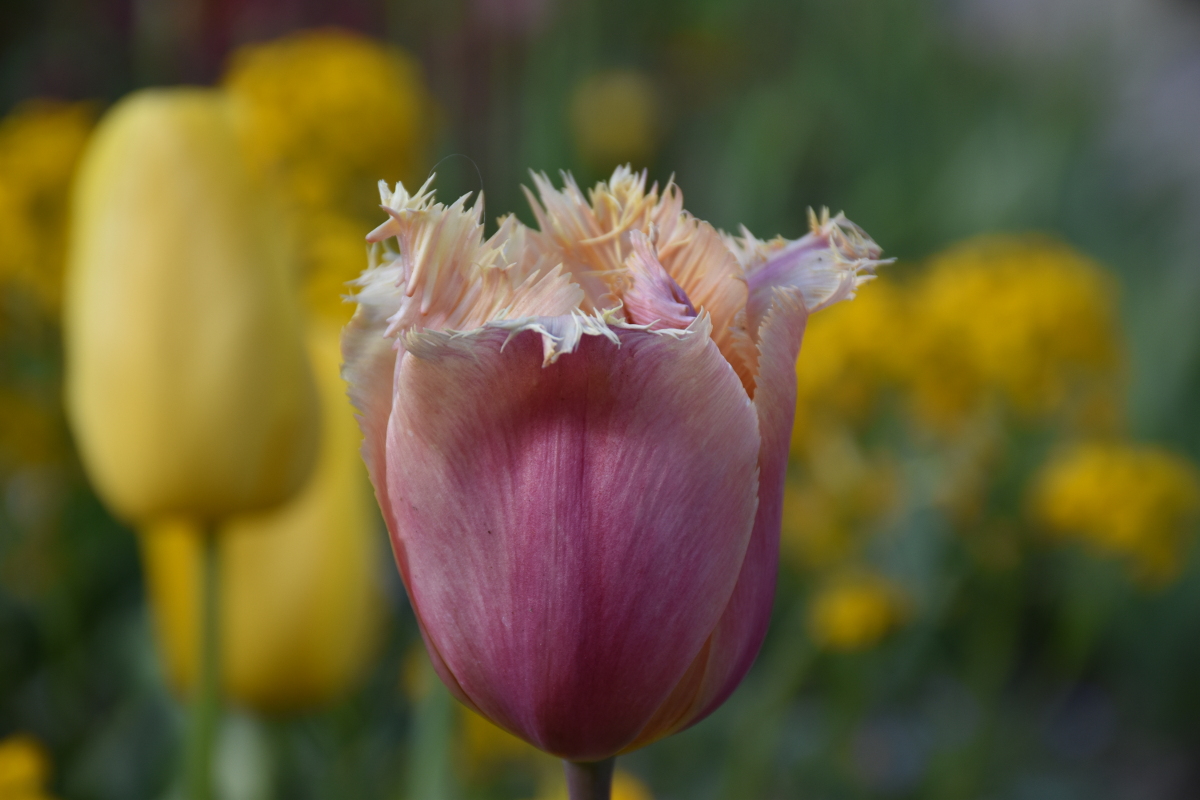
10 000 bulbs are planted yearly in Monet’s gardens at Giverny. During the first weeks after the opening, they pop out of the ground, form their thick buds and open all of a sudden at the first ray of sunshine. It is like a canvas suddenly covered by paint, each of them being a brushstroke. It may be the time of year when the feeling of walking in a painting is at its strongest in the flower garden designed by Claude Monet.
Posted in Monet's flower garden 2 Comments »
February 7, 2018
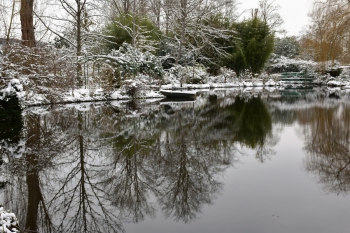
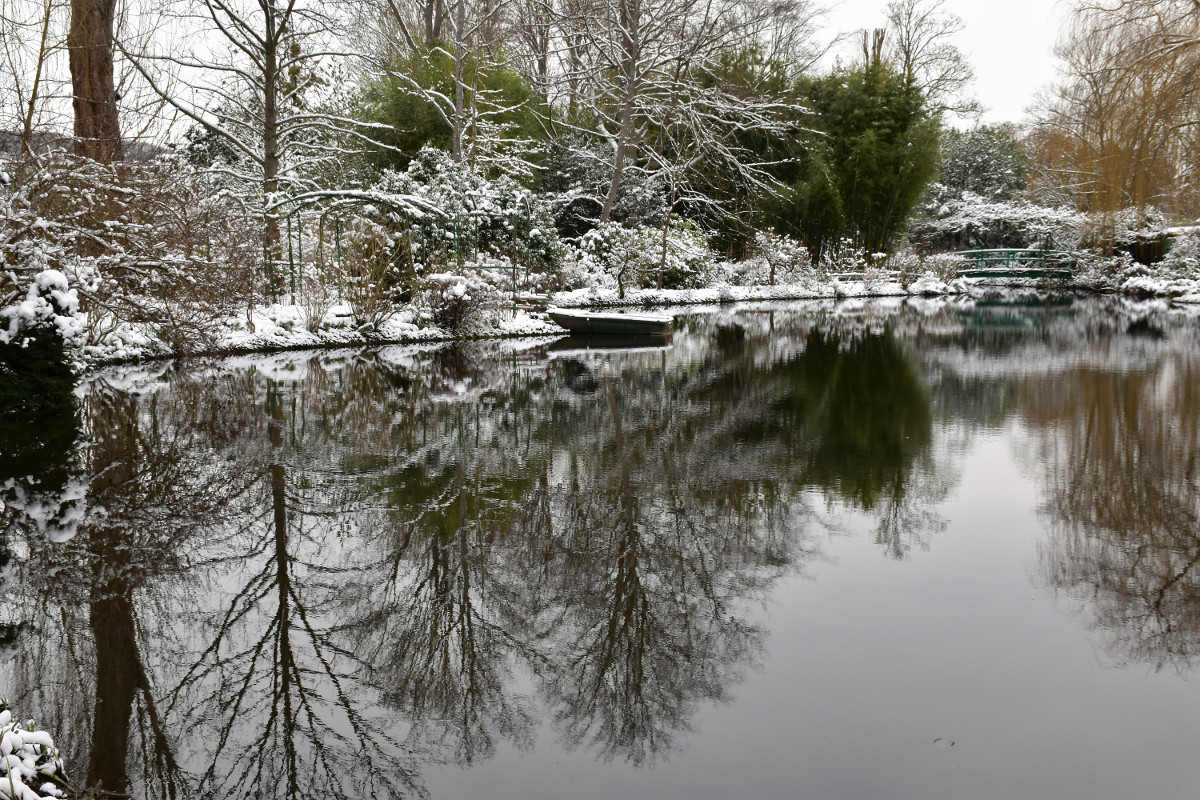
Some snow has fallen on Giverny! Claude Monet’s pond that will be graced with water lilies in summer is not frozen. It reflects the evergreen bamboos and the snow covered shrubs and trees around. The roots of the water lilies are dormant under the surface, waiting for warmer times to come. In the distance you can see the Japanese footbridge and its canopy of wisteria, all white for the moment. (Click for larger picture)
Posted in Giverny through the seasons No Comments »
May 14, 2017
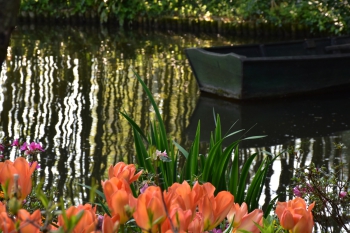
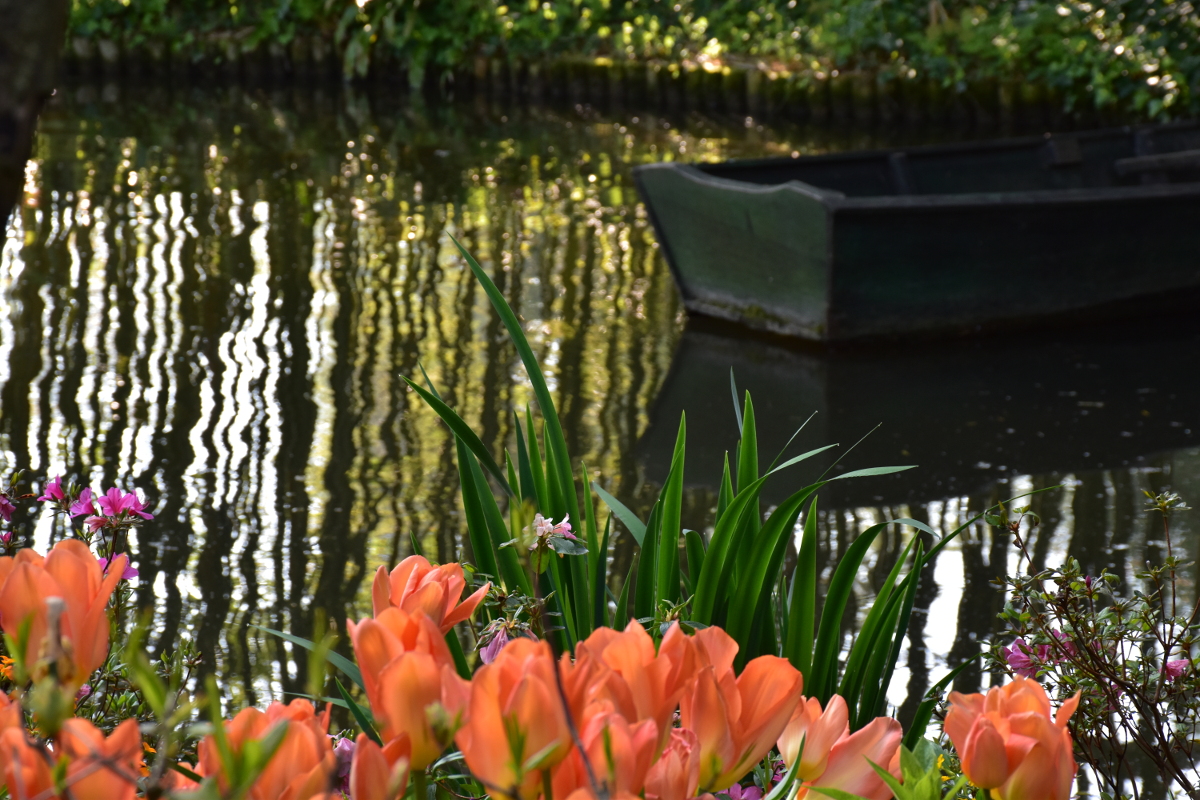
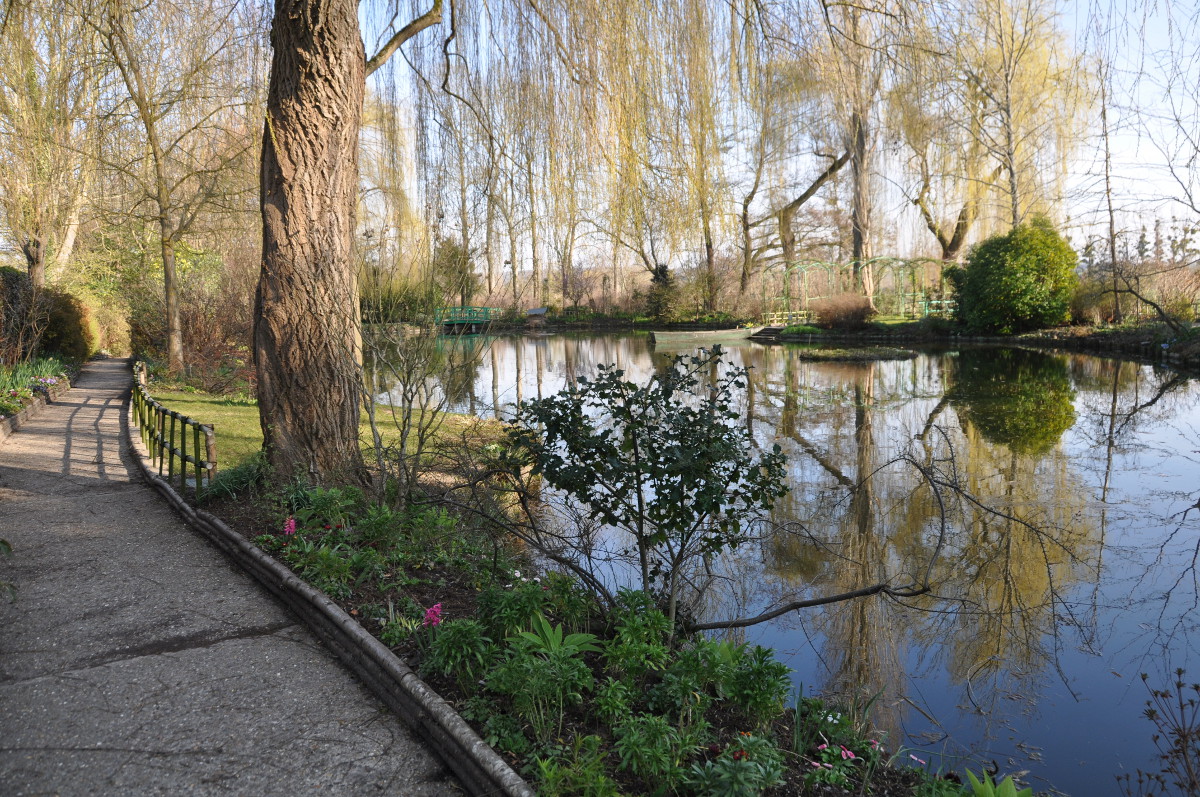
The bamboos reflection on Claude Monet’s water lily pond at Giverny adds a lot of interest to the scene, thanks to their moving lines. Their slow motion is quite hypnotic for the viewer, and their geometric aspect contrasts with the other plants all around.
Posted in Giverny, Water-Garden No Comments »
April 28, 2017
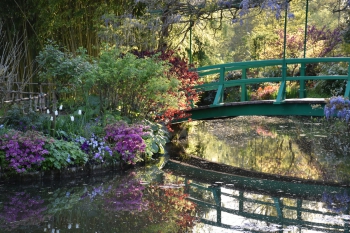
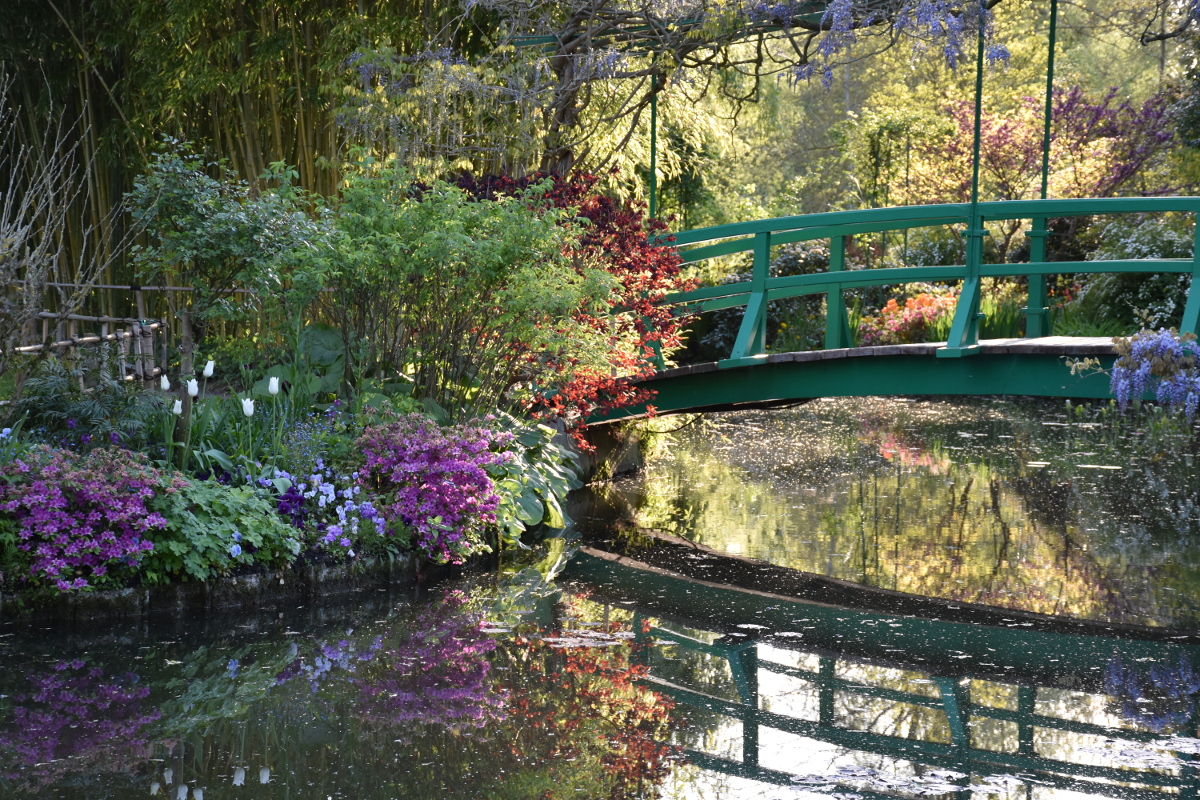
Spring makes us all want to walk in beautiful gardens. At Giverny, azaleas and tulips gradually give way to irises, peonies and wisterias. The first water lilies should open within two weeks, recreating once more Monet’s beautiful setting and endless source of inspiration. 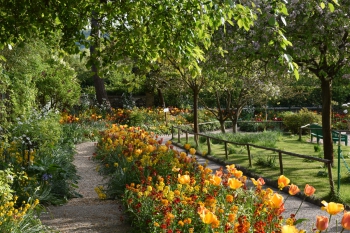
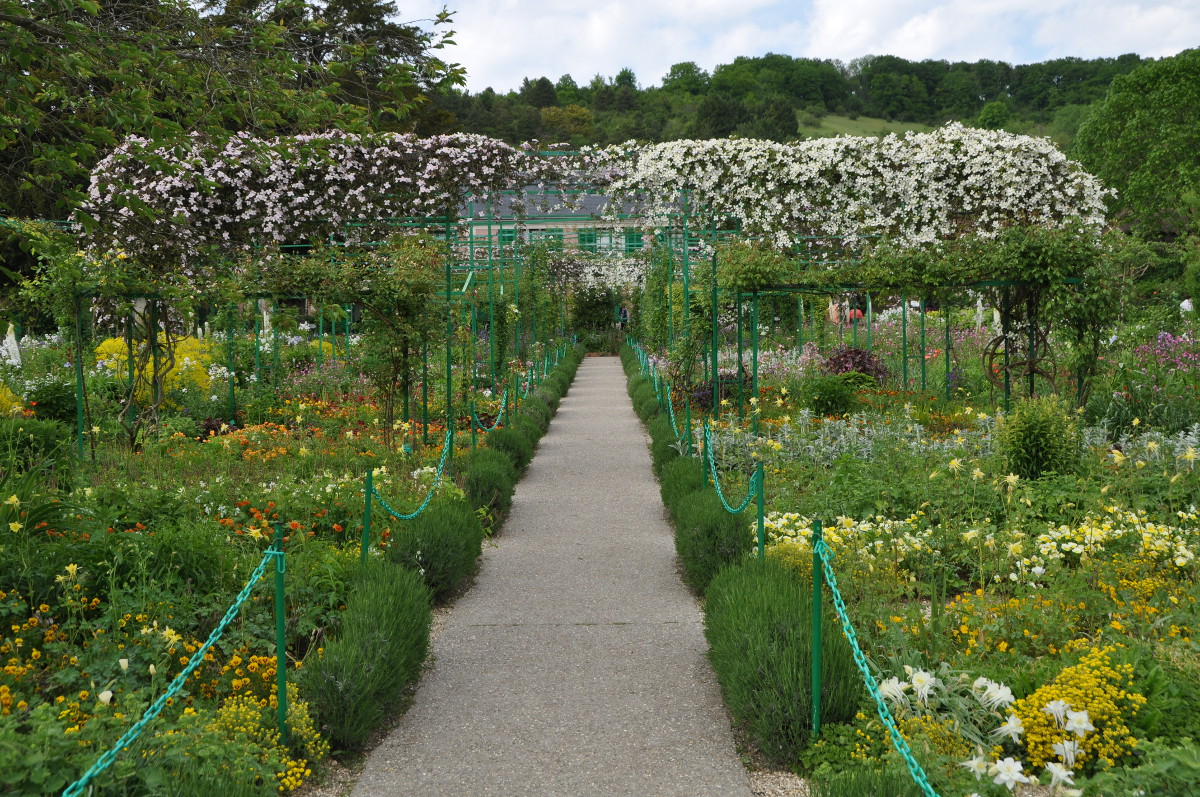
In the flower garden, visitors meander inside of a living painting where flowers recreate the illusion of brushstrokes. Monet had good reasons to claim that his garden was his most beautiful masterpiece.
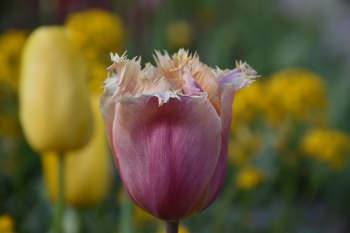
Just like you can see the brushwork when you tour an exhibition and have a close look at paintings, at Giverny each single flower is a little universe in itself, offering its beauties to our admiration.
Posted in Flower, Giverny, Monet's flower garden, Water-Garden 1 Comment »
March 8, 2017
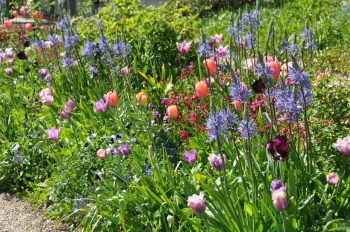
What is so different and appealing with Monet’s flower garden is its very natural look. The gardeners apply themselves to avoid that flowers seem regimented.
It is not as simple as it sounds. We as humans have a tendency to organize. Spontaneously, unconsciously, what we do and make turns out to be regular.
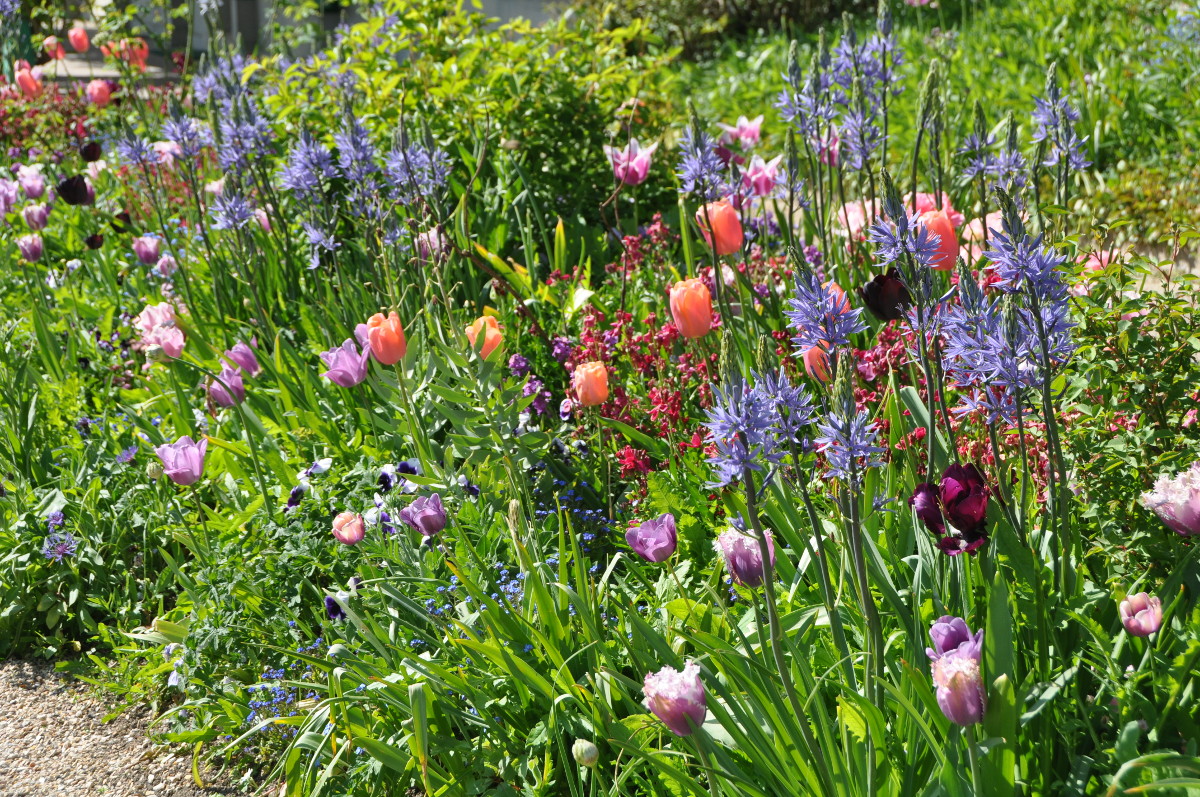
One of the gardeners’ trick for planting bulbs randomly is to throw them on the ground, the bare ground of late Autumn. Where the bulb fell, there it is planted.
This tip works for camassias or tulips. Biennals are planted by color patches that combine different varieties, wallflowers, pansies, violas… Sizes, shapes and hues of the same color help creating the impressionist brushstrokes feeling.
Posted in Giverny, Monet's flower garden 2 Comments »
February 6, 2017
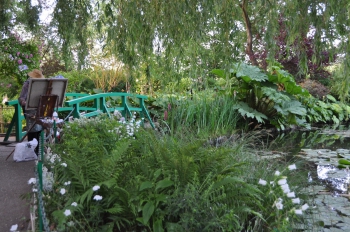
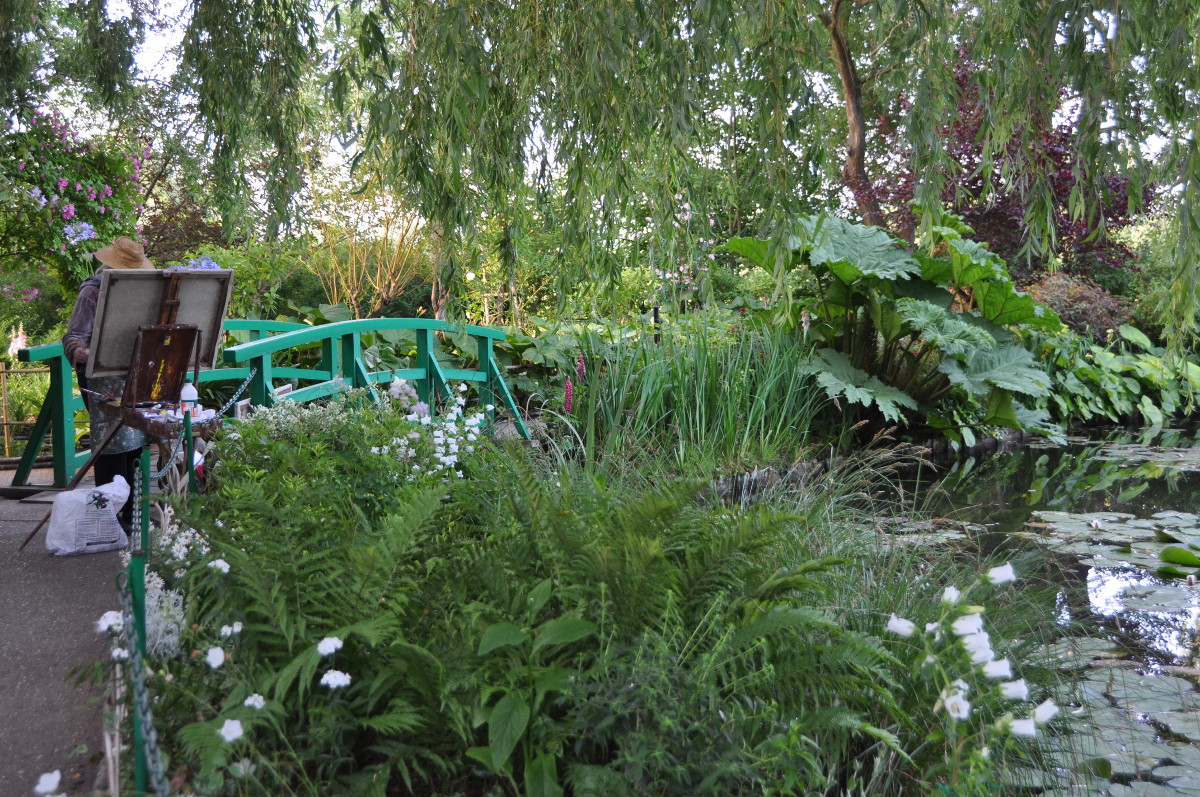
The beautiful water garden created by the impressionist master Claude Monet at Giverny still inspires painters.
Monet’s house and gardens will re-open on March 24, 2017. I’m looking forward to it. It is such a joy to work daily in this beauty giving guided tours to wonderful people. I miss flowers so much. What about you?
Posted in Claude Monet, Giverny, Water-Garden 2 Comments »
June 16, 2016
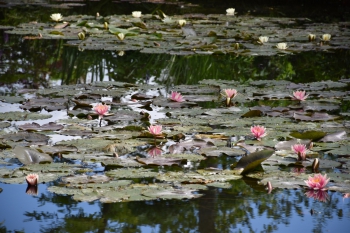
In June, all the water lilies flower on Monet’s pond, beautiful and delicate corollas in different tones of pink and soft yellow or white.
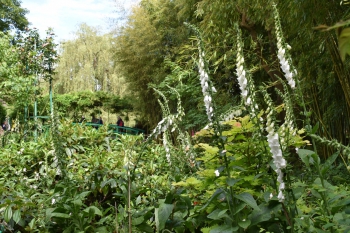
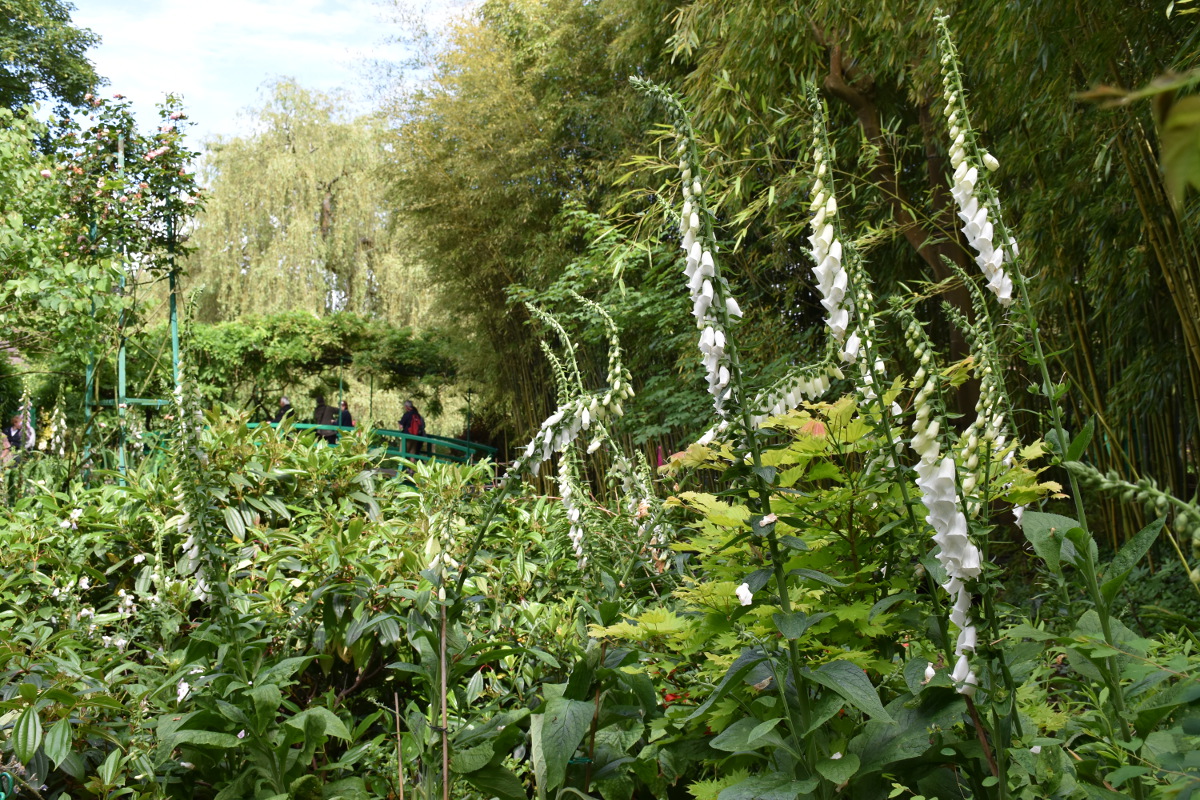
The foxgloves stand out everywhere in the garden, like giant sentinels that tower far above our heads.
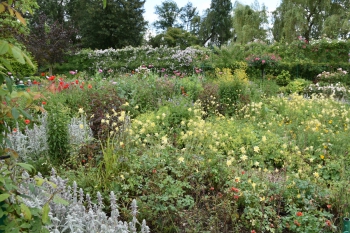
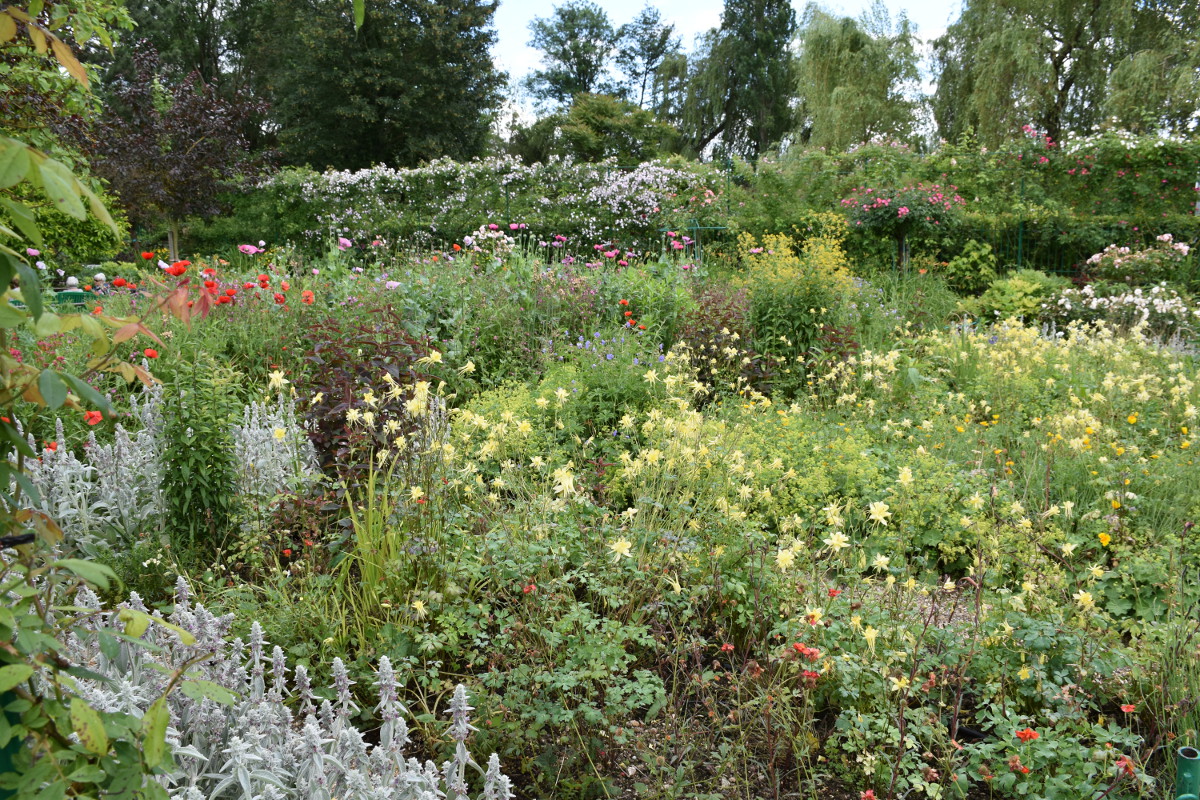
The long lasting columbines team with other small flowers like geums and catchfly to offer a light foam of little dots of color. Elsewhere, annual poppies turn the garden pink or red.
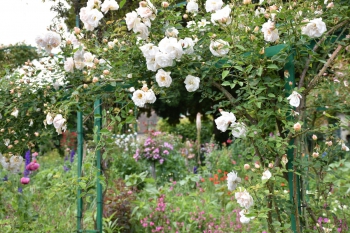
June is the month of roses. At Giverny they stand or climb on dozens of metallic structures or on fences. Their scent is a delight…
Posted in Monet's flower garden, Water-Garden No Comments »
May 15, 2016
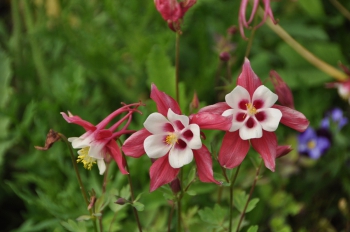
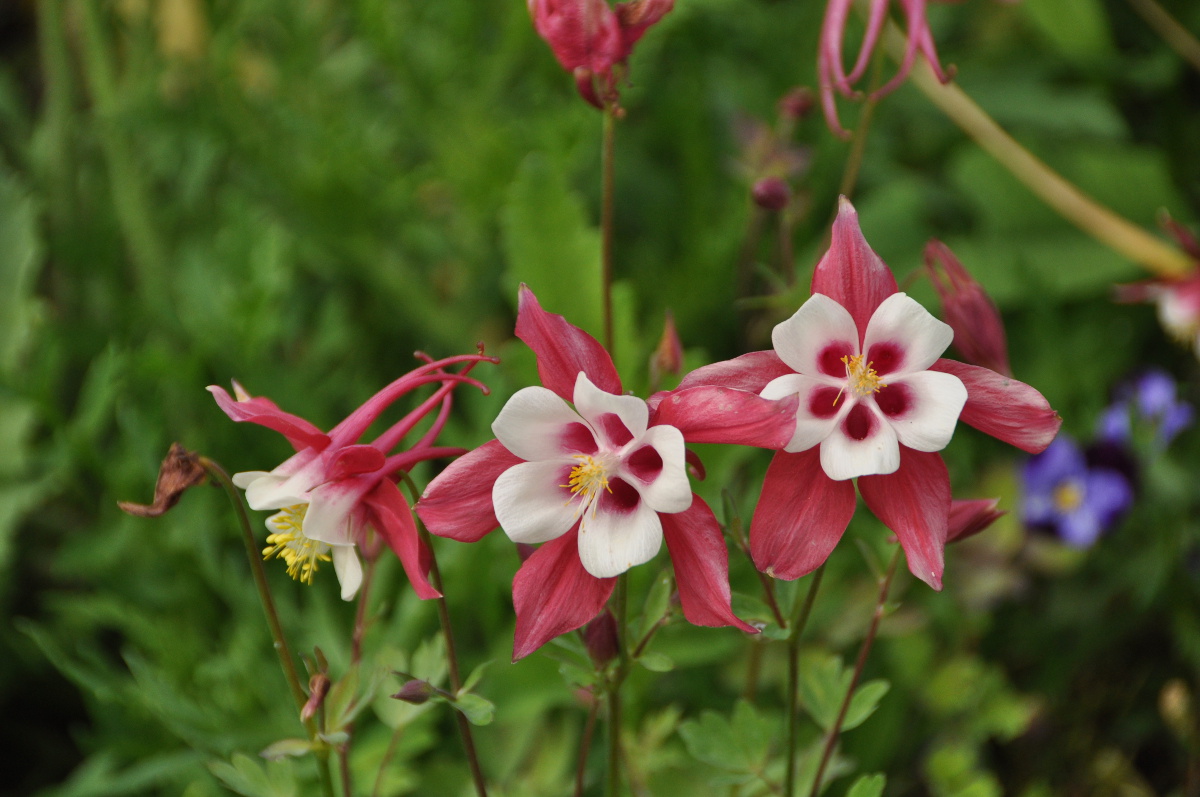
After tulips, what kind of flowers steel the show at Giverny? Among my favorite are aquilegias, for their delicacy, strange shapes and wide range of colors including white and black, yellow and blue, and pink. Their light foliage is a beauty.
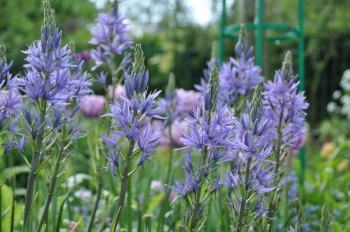
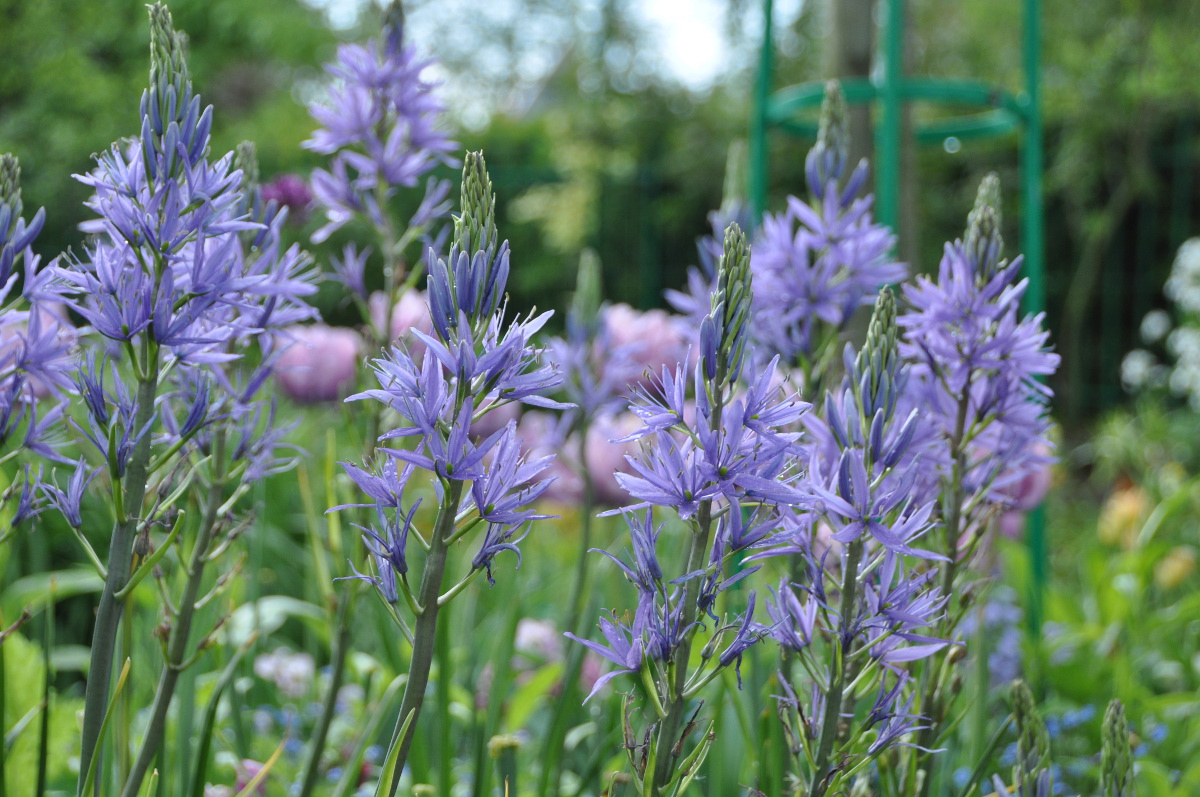
Camassias are late spring bulbs that grow rather tall.
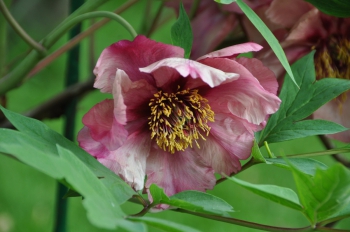
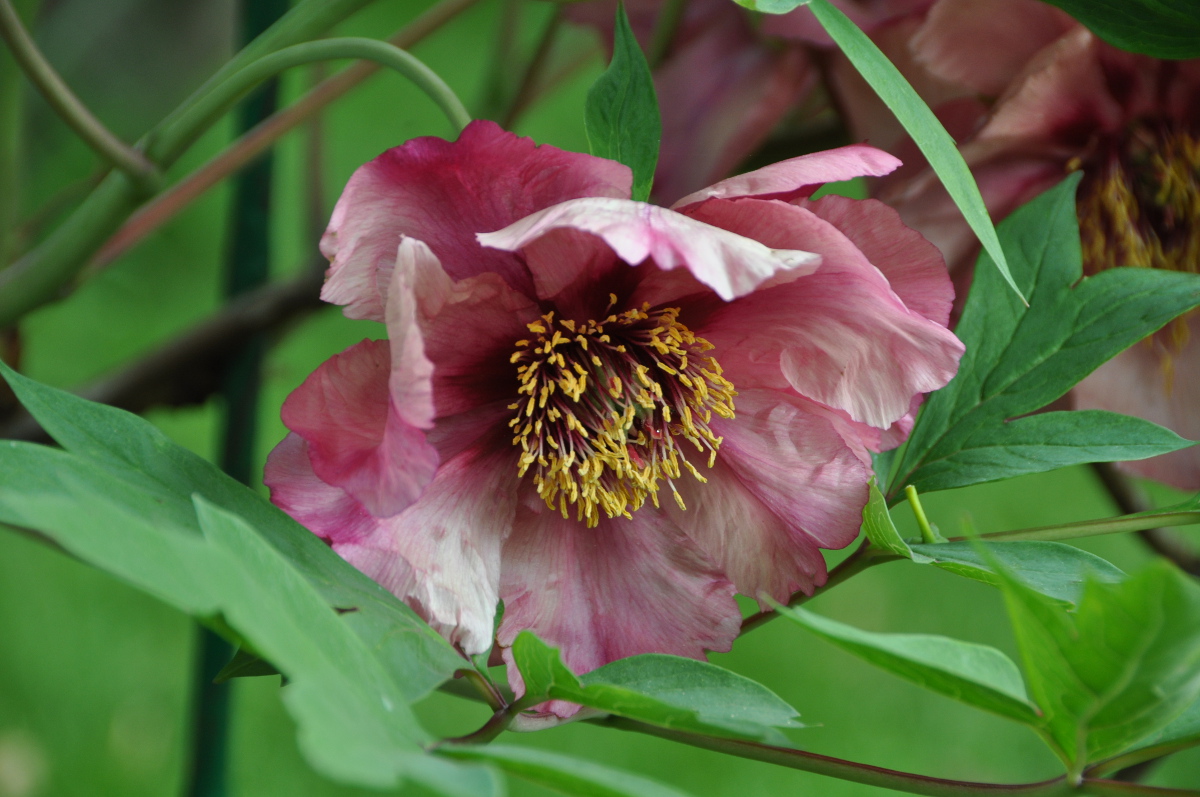
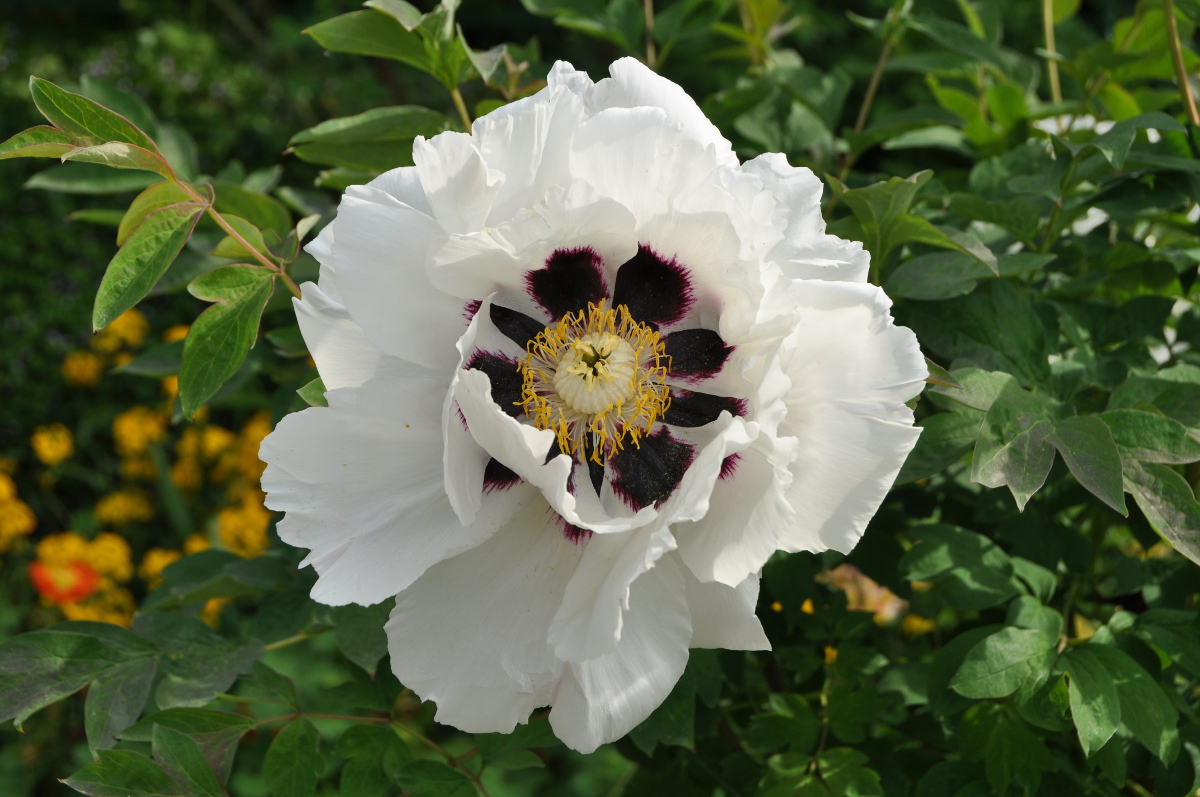
Pink tree peonies are short lasting little wonders,
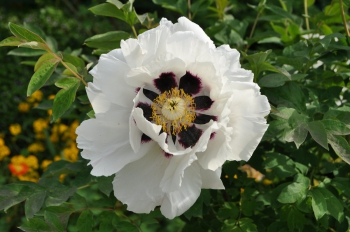
just like this one that looks more modern.
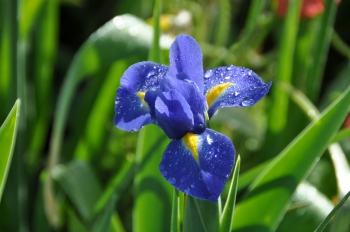
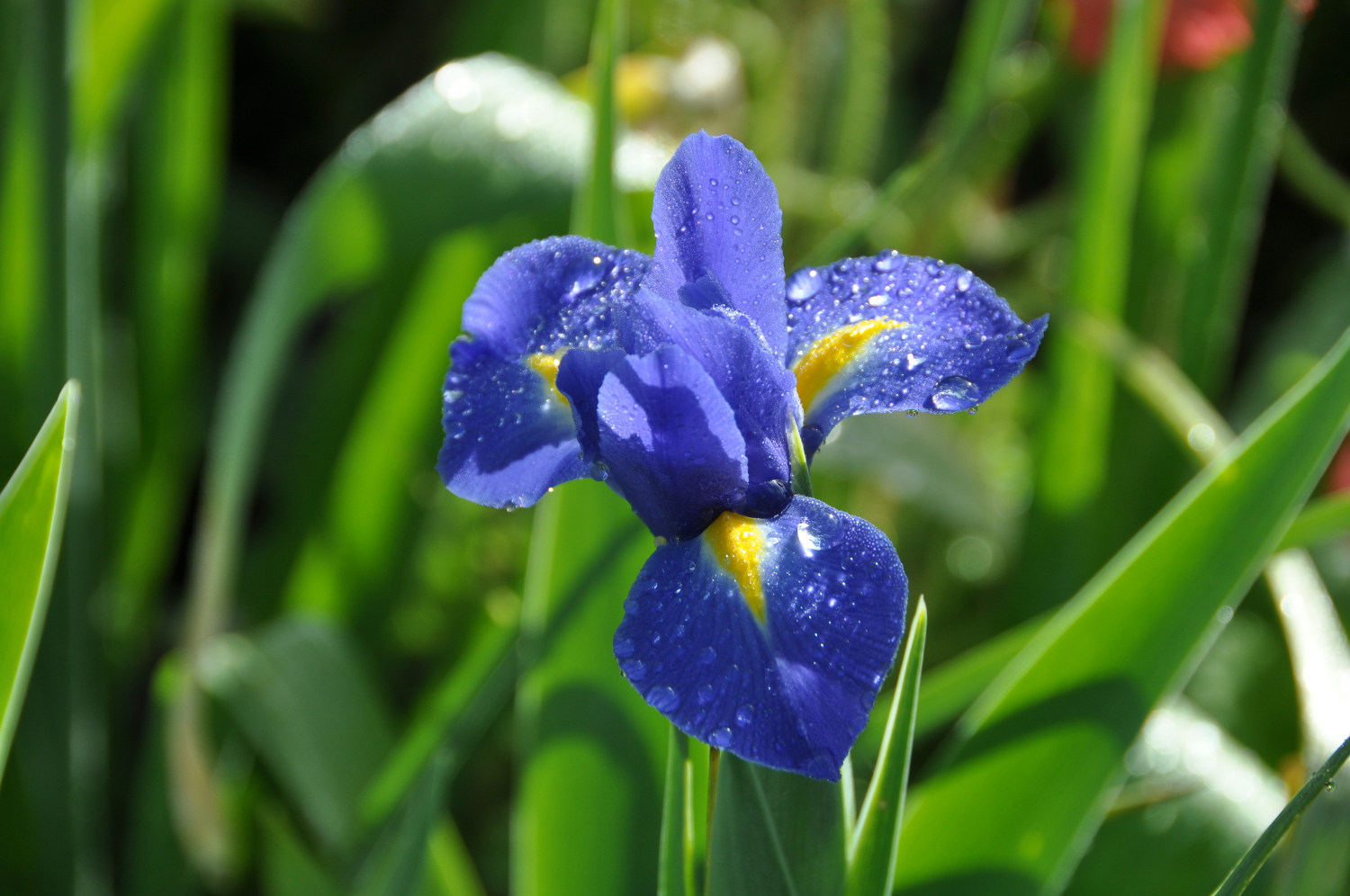
Irises are just starting.
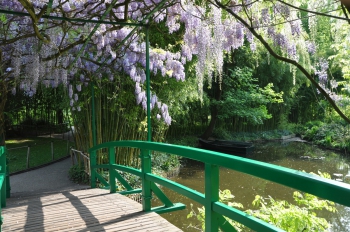
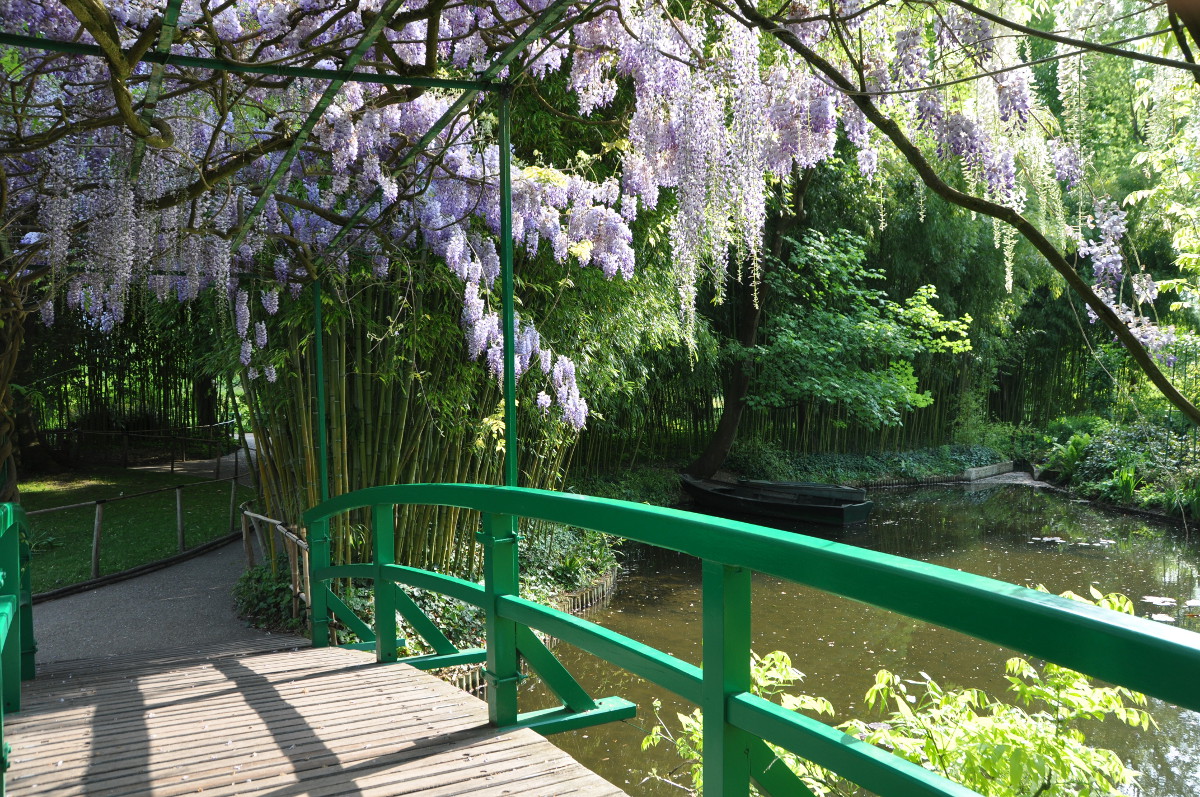
The vines are at their best. Here the wisterias over the Japanese footbridge,
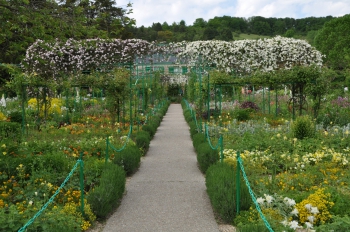
And the Clematis montana covering the trellises in the flower garden.
Posted in Flower, Giverny, Monet's flower garden 2 Comments »
March 15, 2016
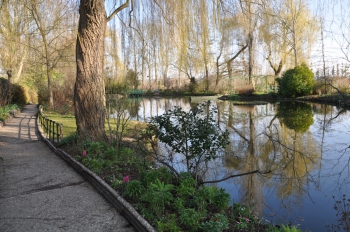
Although the water garden designed by Claude Monet still looks very peaceful, everybody is working hard at Giverny. The Fondation Monet (his home and gardens) as well as the Musee des Impressionnismes Giverny reopen in ten days, on Friday, 25th March. It is earlier than normally, because Easter is especially early this year.
Just out of the Winter, the gardens are not overloaded with flowers, yet pleasant to walk around. They look fresh and shiny. The first signs of Spring can be noticed. Jonquils are already out, illuminating special spots with their bright yellow. I took the picture above this afternoon.
The Musée des Impressionnismes will display an exhibition of works by Gustave Caillebotte. This hugely talented impressionist was a keen horticulturist. His garden and rare flowers were among his favorite motifs.
Posted in Giverny, Impressionism Museum No Comments »
January 29, 2016
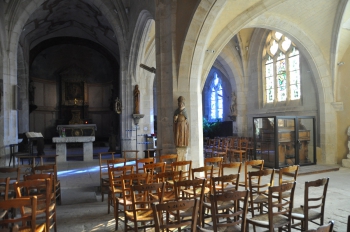
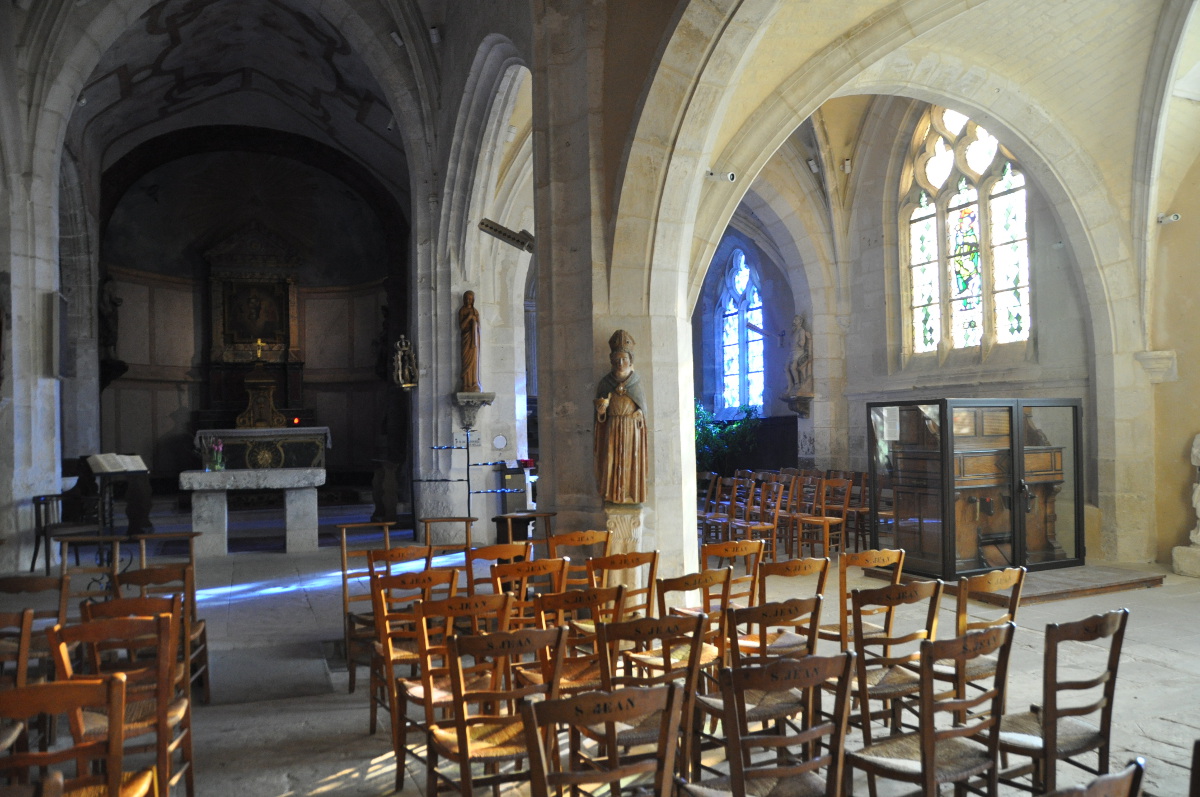
Once a week, on Thursdays at 6.00 pm, a mass is celebrated in the church of Giverny. Everybody is most welcome, especially tourists, even if they are not Catholics, even if they don’t speak French, as long as they are respectful.
Expect locals to smile at you with some curiosity in the eyes. They are eager to know who you are and where you are from, but won’t ask.
The mass starts soon after the old bells stop chiming. There are two of them, a little one that has a high sound and a big one that is lower.
If you are like me, you will prefer not to sit on the first row of chairs, to mimic the faithfuls who know when to stand up or sit down. It feels good to be among them, because churches are not monuments only. Their stones retain all the faith of the humans who built them and prayed in them. The parishioners of today are their beating heart.
Posted in Giverny No Comments »
December 24, 2015
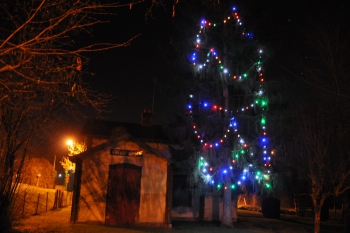
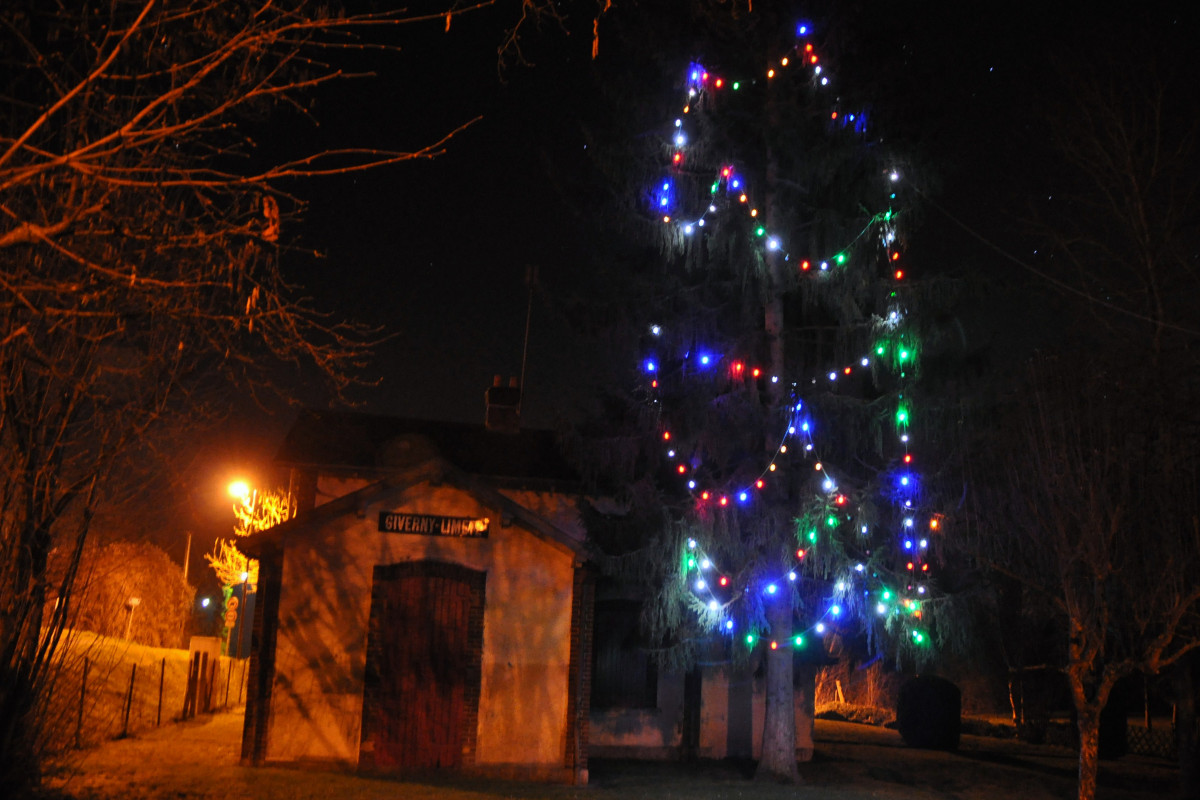
Next to the former railway station of Giverny-Limetz now converted into a ‘salle des fetes’ (community hall), the big fir tree proudly sports Christmas light garlands.
In winter, simplicity and peacefulness reign in the little village of Claude Monet, inhabited by 500 persons only.
631 000 visitors flocked to the water lily pond in 2015, from late March to early November. Now that they have gone, it is like night after day, a time for relaxing and dreaming.
The Christmas tree shines for the Givernois (inhabitants of Giverny) and for the passersby driving on the Chemin du Roy.
Posted in Giverny No Comments »
October 4, 2015
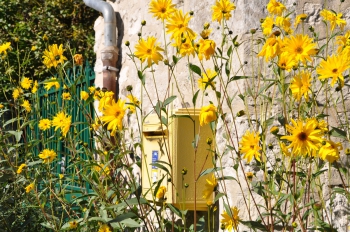
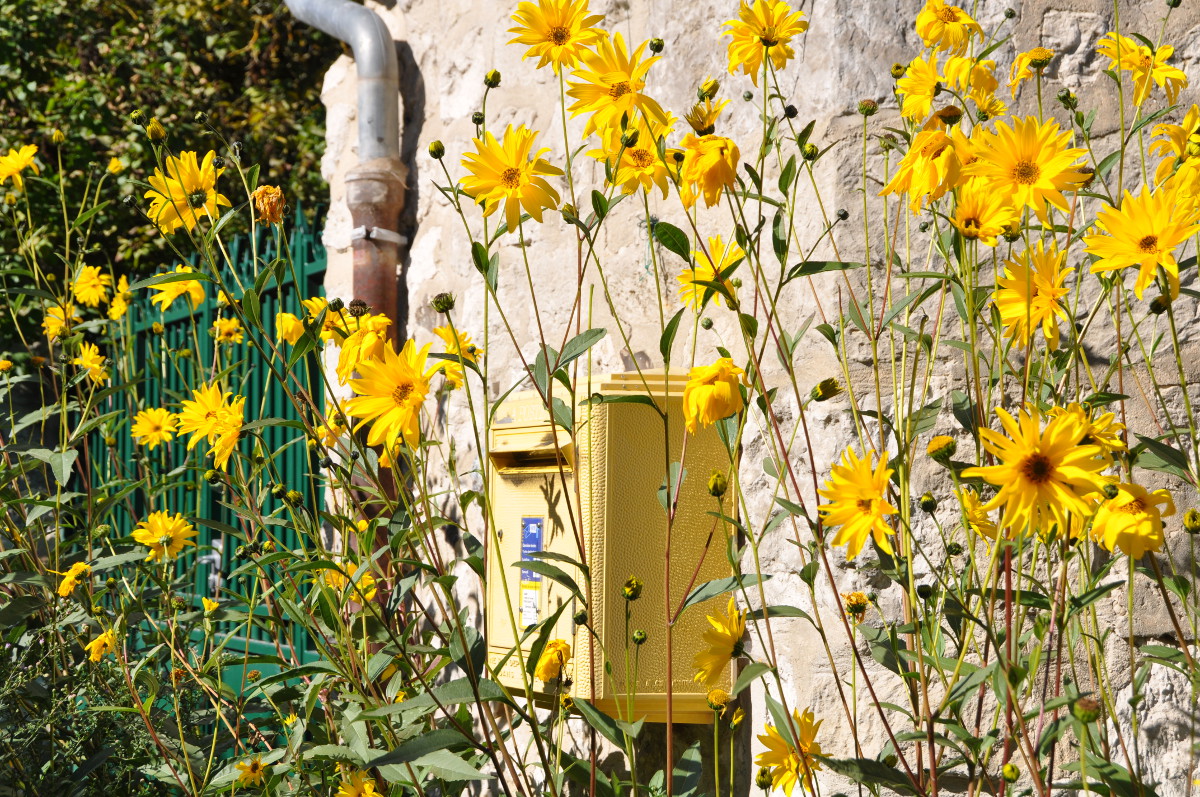
At Giverny in Rue Claude Monet, one of the mail boxes to send letters and postcards is located amid flowers.
In October, the helianthus are big enough to reach the height of the mail box.
Their yellow hues match the official color of La Poste boxes.
Having to make your way through the flowers to post your mail makes paying the bills just a little more fun.
Posted in Flower, Giverny No Comments »
March 29, 2015
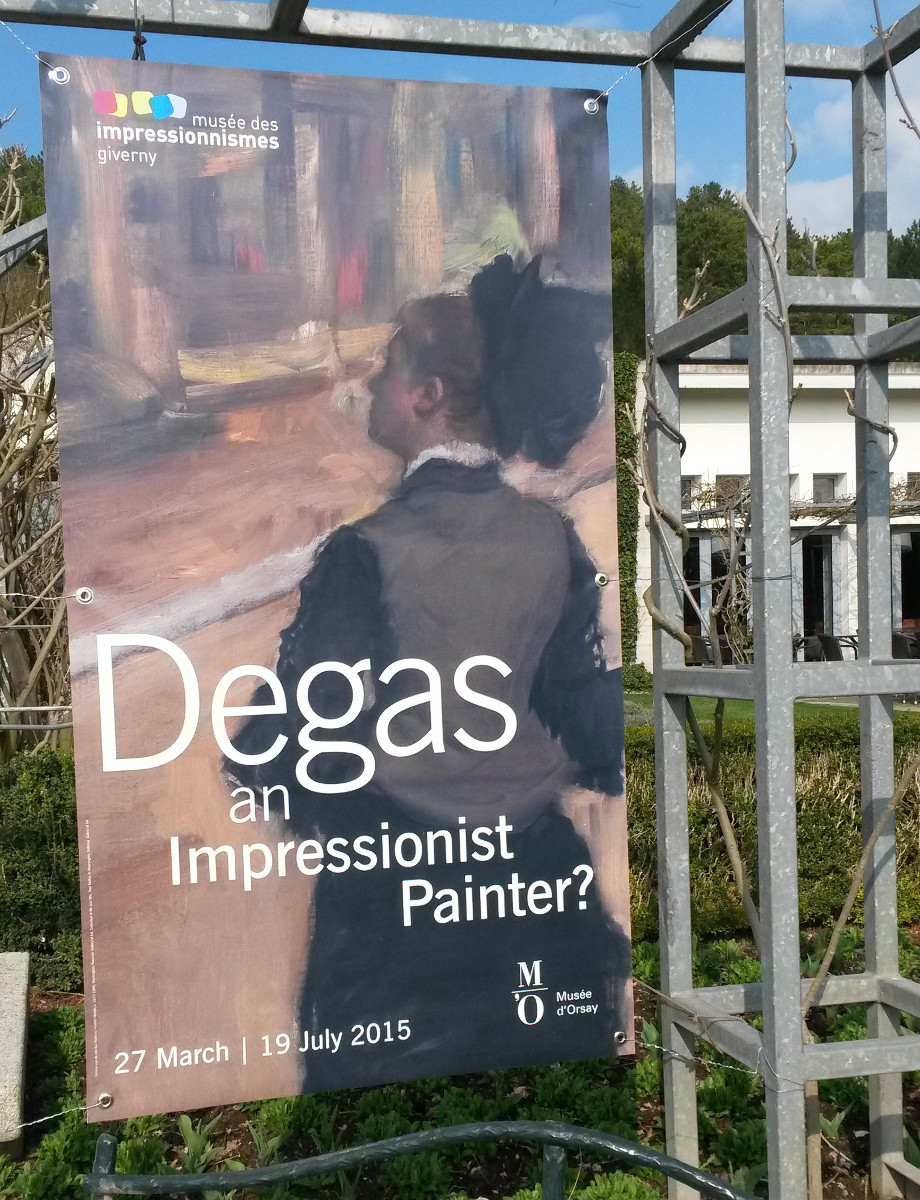
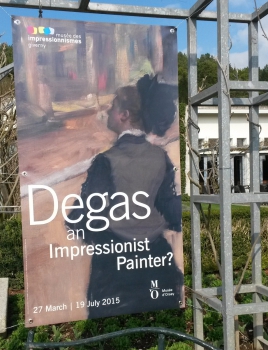 A beautiful exhibition has just started at the Museum of Impressionisms Giverny. Through 80 works signed Edgar Degas, (oil on canvas, pastel, brass, etc) it questions the painter’s membership in the group of the impressionists. His daring compositions, his motifs taking in the present day life, his free brushwork, last but not least his involvement in the organization of the impressionist exhibitions of the times make him an impressionist.
But Degas rejected open air painting, had a classical training, and hated the word impressionist itself. So was he, or not, an impressionist painter? Make your own opinion exploring this outstanding exhibition that displays many famous masterpieces, as well as less known works uncluding rarely seen Degas landscapes.
MDIG, 27 March-19 July 2015 More information
Posted in Giverny, Impressionism Museum No Comments »
January 20, 2015
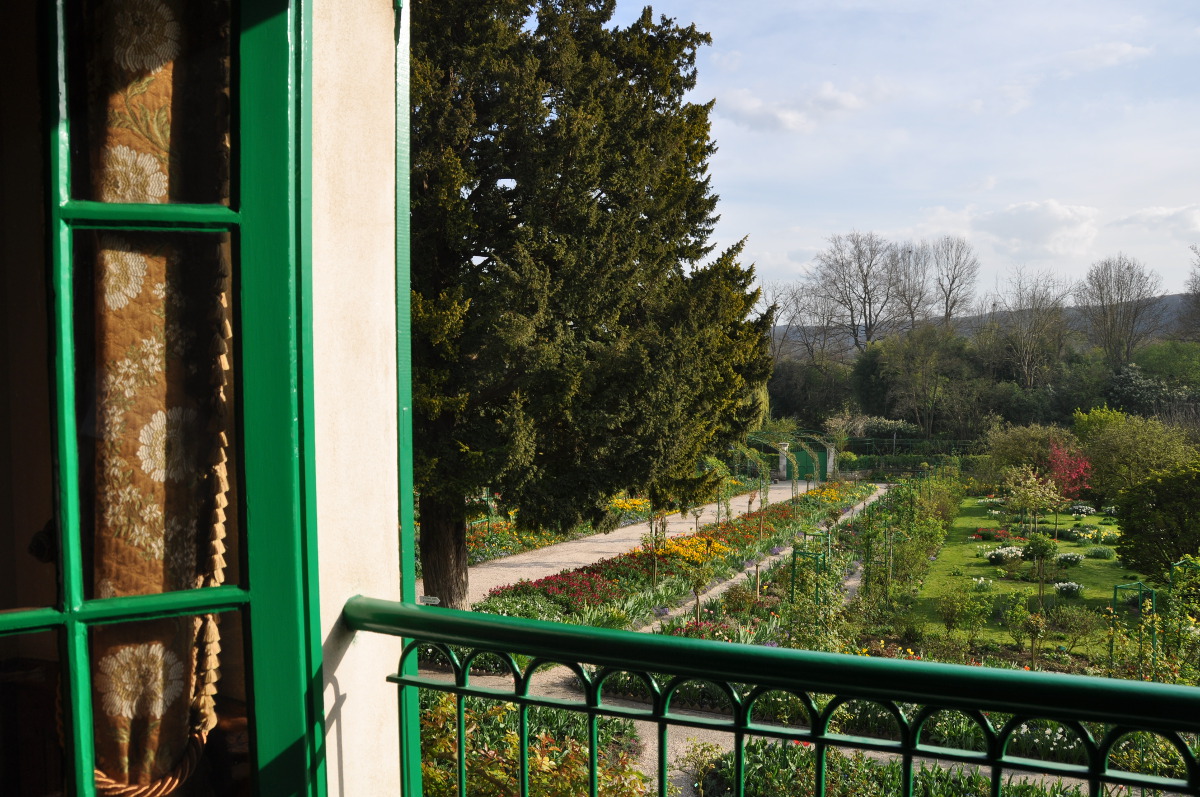
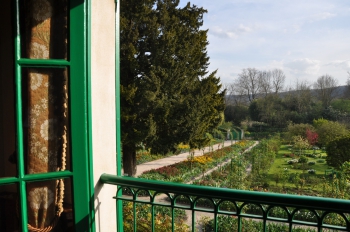 This is what Claude Monet could see when he gazed through his bedroom’s window in April. Last year spring was very early and the first colors were already there at the opening of the garden. Wallflowers make a striking effect combined with tulips, while daffodils and jonquils form islands of white and yellow flowers on the lawns. In the distance, the tall trees of the water garden don’t have any leaves yet. It is just a matter of days.
Posted in Giverny, Monet's flower garden, Monet's House 4 Comments »
November 24, 2014
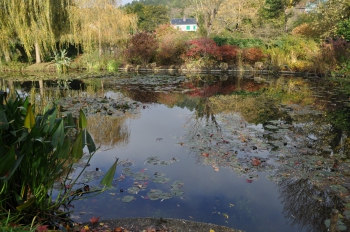
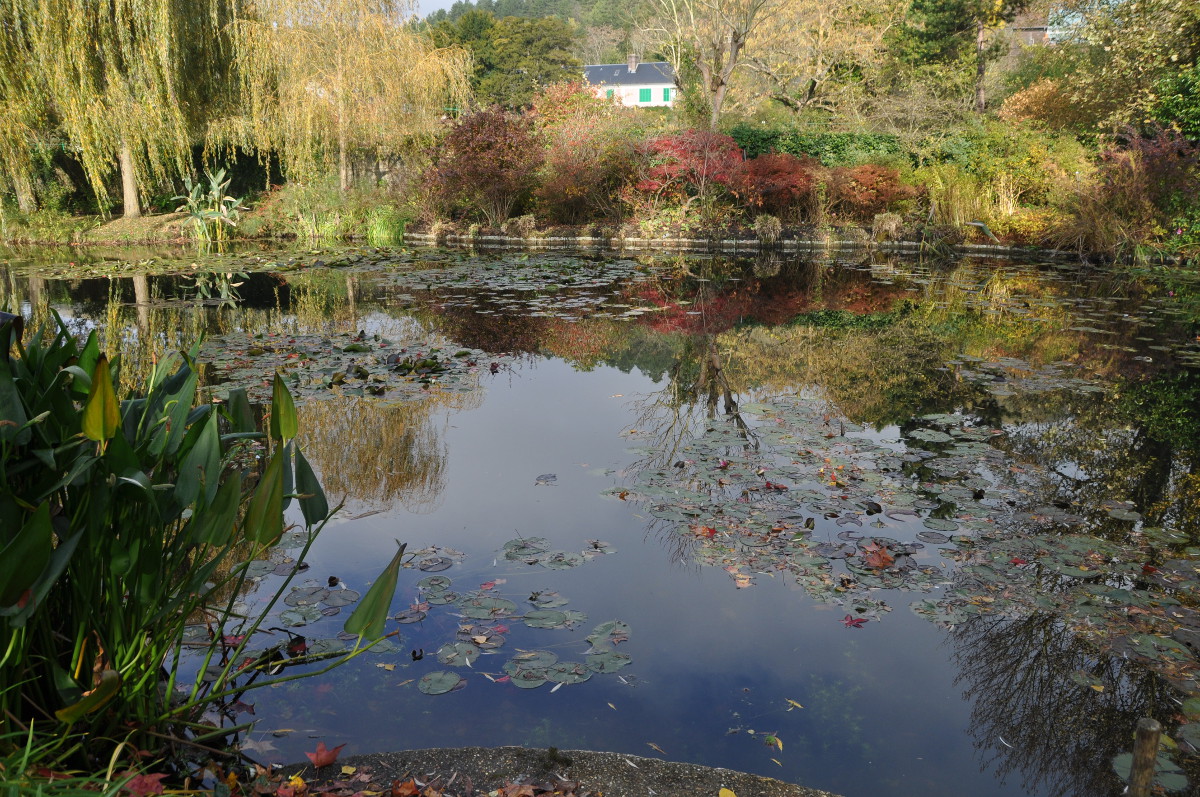
Fall atmosphere in Monet’s gardens at Giverny.
The picture was taken from the steps of the dock next to the water lily pond.
On the left, the green leaves of pontederias.
The red shrub on the opposite bank is a Japanese maple.
In the distance appears the pink house with green shutters, Monet’s home for 43 years.
On the right, through the branches, the third studio where Monet painted his biggest water lilies panels.
Posted in Claude Monet, Giverny, Water-Garden No Comments »