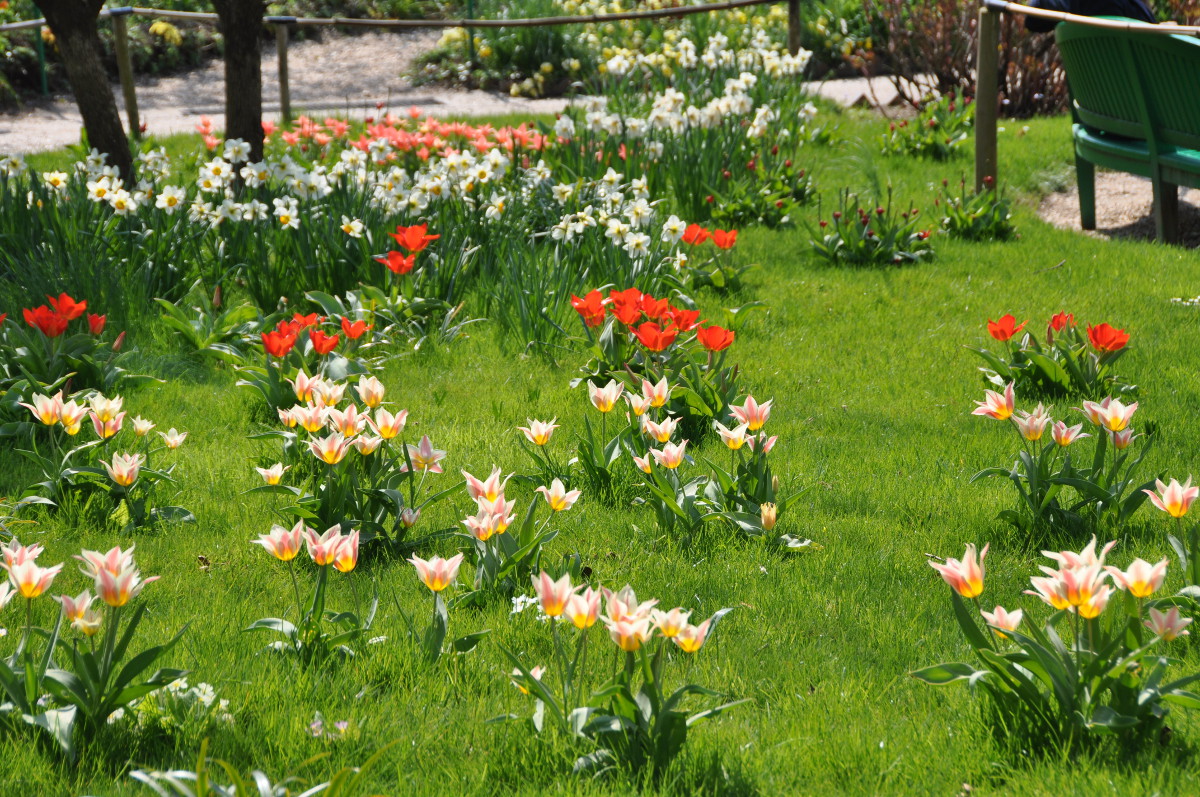
July 24, 2018
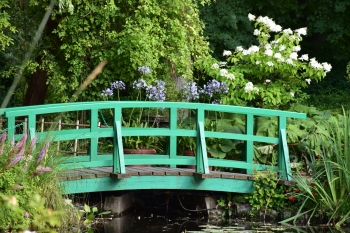
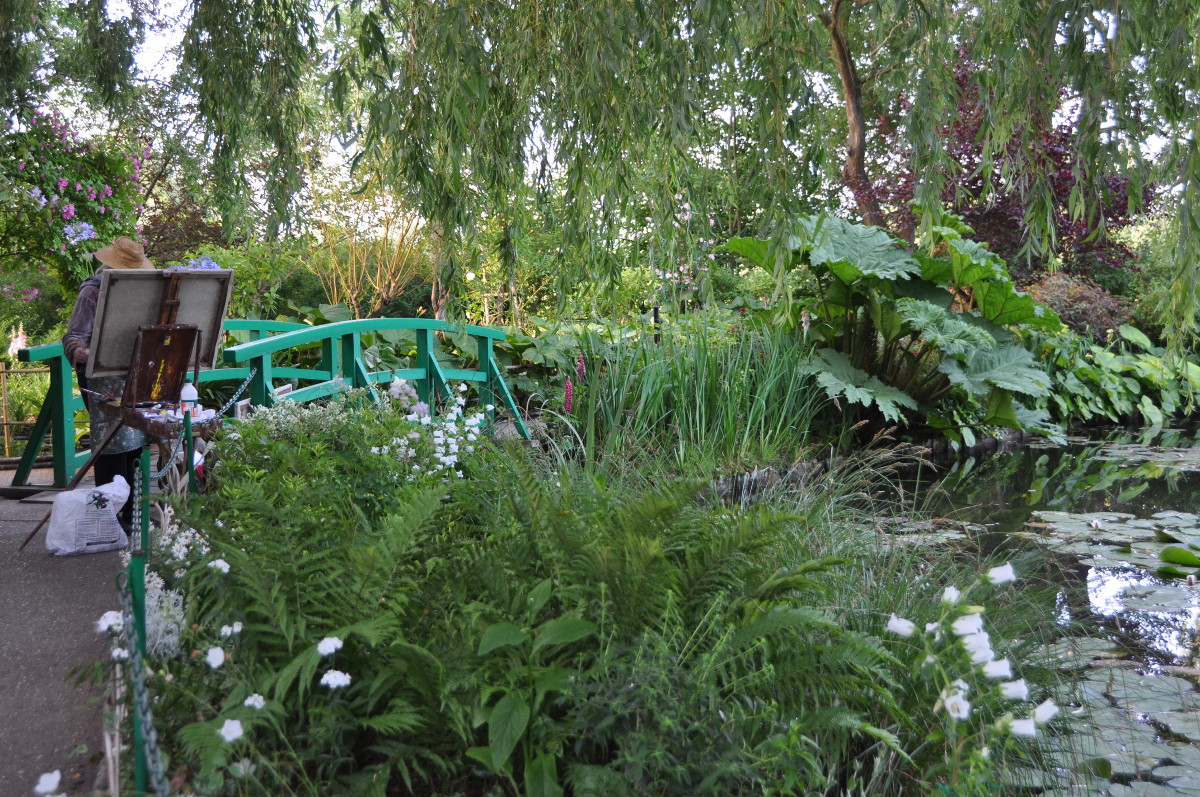
This charming little bridge stands at one end of Claude Monet’s water lily pond in Giverny, over the small canal that used to bring some water into the pond. Agapanthus grown in planters and white hydrangeas cultivated like trees grace the place. Does this scene look familiar to you? It recalls many famous works of the artist. But as iconic as it sounds, Monet never painted this little bridge in his garden, but the big one only. Now covered with a canopy of wisterias, the big bridge has lost some of its likeness with Monet’s paintings.
Posted in Water-Garden No Comments »
March 8, 2017
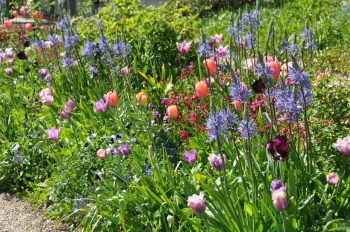
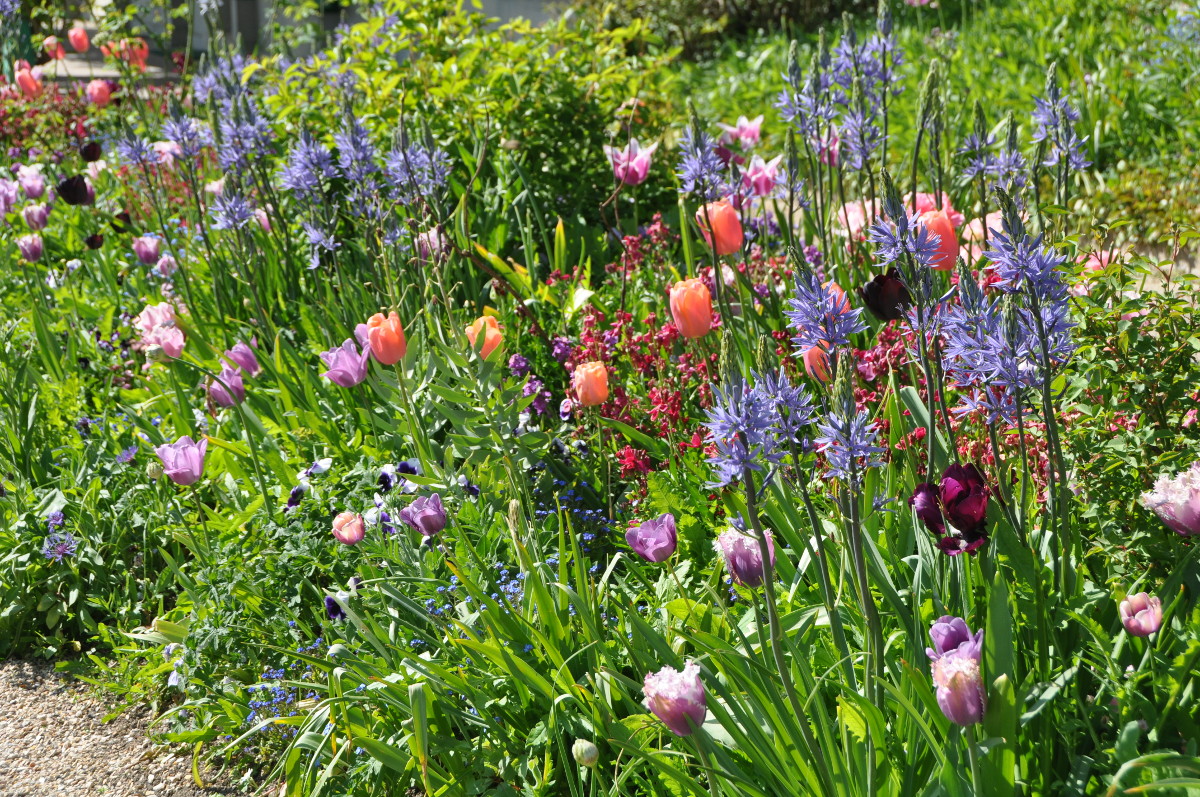
What is so different and appealing with Monet’s flower garden is its very natural look. The gardeners apply themselves to avoid that flowers seem regimented.
It is not as simple as it sounds. We as humans have a tendency to organize. Spontaneously, unconsciously, what we do and make turns out to be regular.
One of the gardeners’ trick for planting bulbs randomly is to throw them on the ground, the bare ground of late Autumn. Where the bulb fell, there it is planted.
This tip works for camassias or tulips. Biennals are planted by color patches that combine different varieties, wallflowers, pansies, violas… Sizes, shapes and hues of the same color help creating the impressionist brushstrokes feeling.
Posted in Giverny, Monet's flower garden 2 Comments »
February 6, 2017
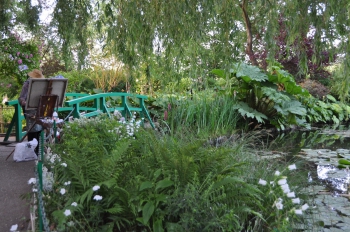
The beautiful water garden created by the impressionist master Claude Monet at Giverny still inspires painters.
Monet’s house and gardens will re-open on March 24, 2017. I’m looking forward to it. It is such a joy to work daily in this beauty giving guided tours to wonderful people. I miss flowers so much. What about you?
Posted in Claude Monet, Giverny, Water-Garden 2 Comments »
October 21, 2016
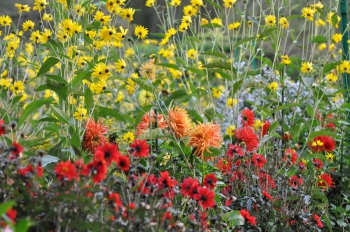
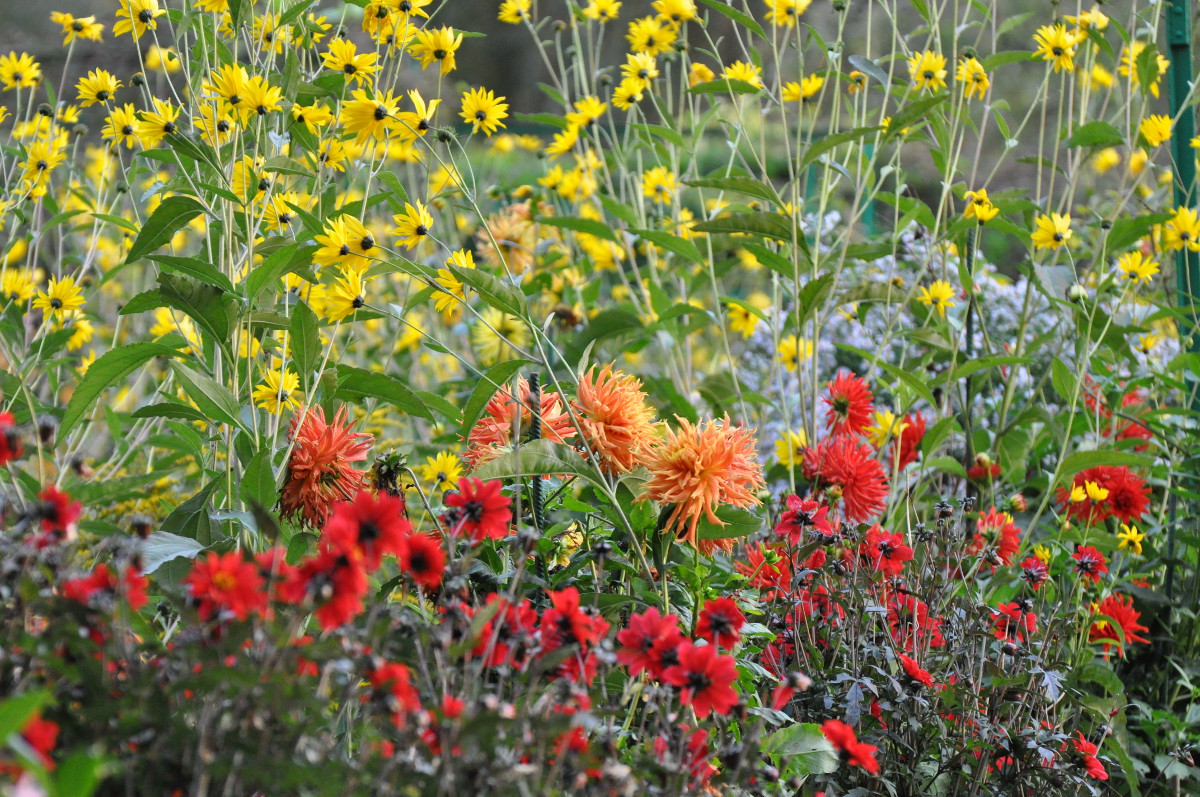
Is it worth visiting Monet’s gardens in October? Yes it is!
While the other gardens open to the public have closed or are already preparing their winter borders, at Giverny the fall flowers are at their best.
They have been patiently selected for their longevity to last till the end.
If frost waits for a few more weeks as it is suppose to do, the show will go on until closing day (November 1st).
Posted in Monet's flower garden No Comments »
March 20, 2016
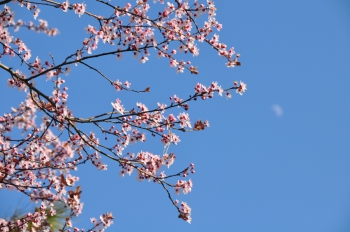
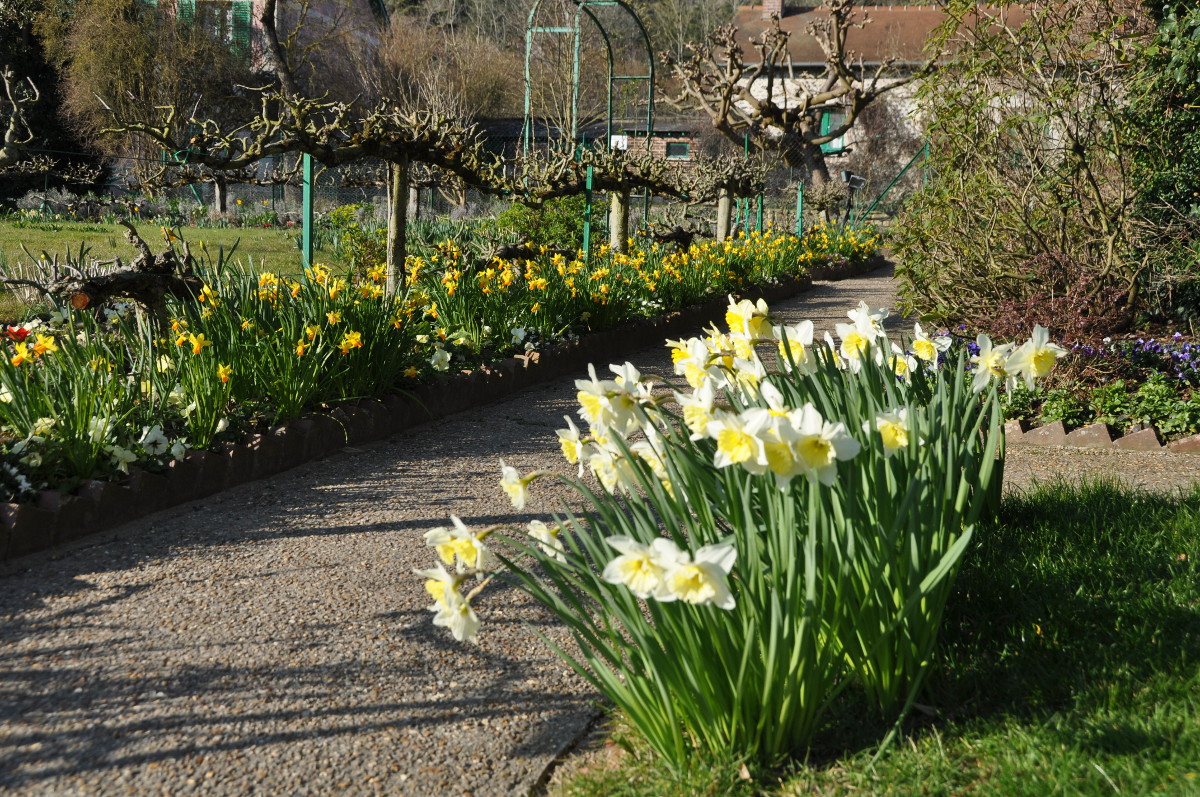
The season has officially changed today! To celebrate the arrival of spring, let’s take a walk in Monet’s gardens at Giverny to look for the very first flowers. So far they concentrate in the best exposed borders. As soon as the weather gets a bit warmer, there will be flowers and colors all over the garden, turning the blank sheet into a joyful painting. (click to enlarge the pictures)
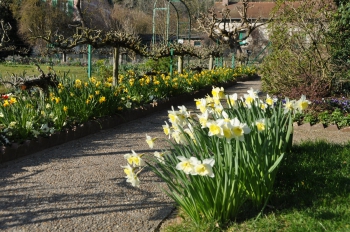
Small jonquils line the feet of the espaliered apple trees, and clumps of daffodils flower next to the chickens cage. It is lovely to see them coming back year after year. I’ve heard they can live for over fifty years!
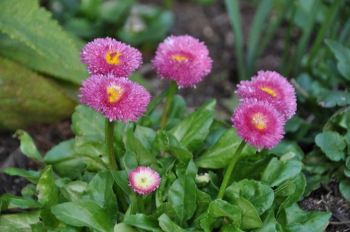
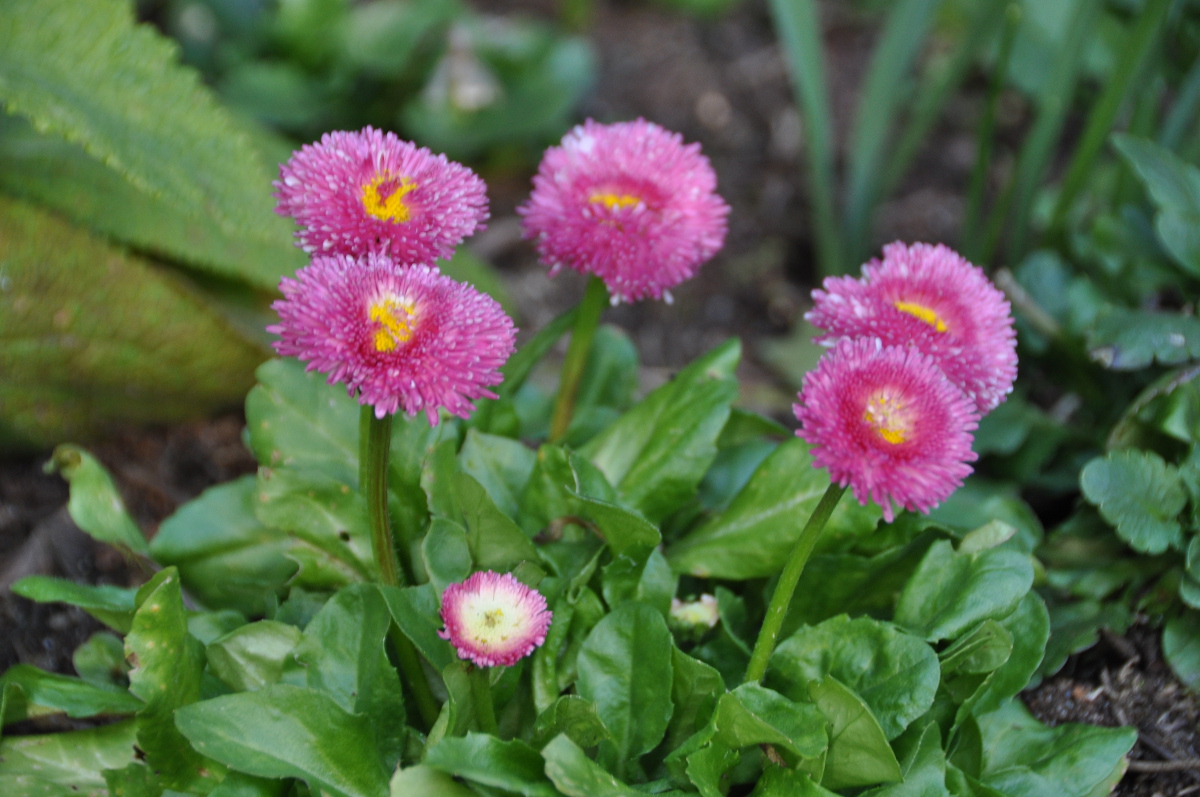
Daisies bloom for Easter, this is why they are called pâquerettes in French, Pâques being Easter. The wild ones love growing into the lawns that they illuminate like little white lights. Horticulturist have improved them to these cute pink or white pompoms. Giverny’s gardeners plant them everywhere in the spring garden. Well, not absolutely everywhere, and certainly not anywhere. In all the places where they fit and match.
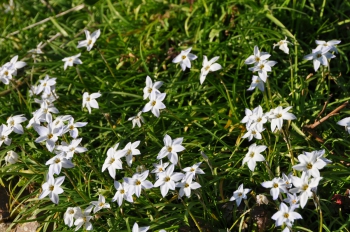
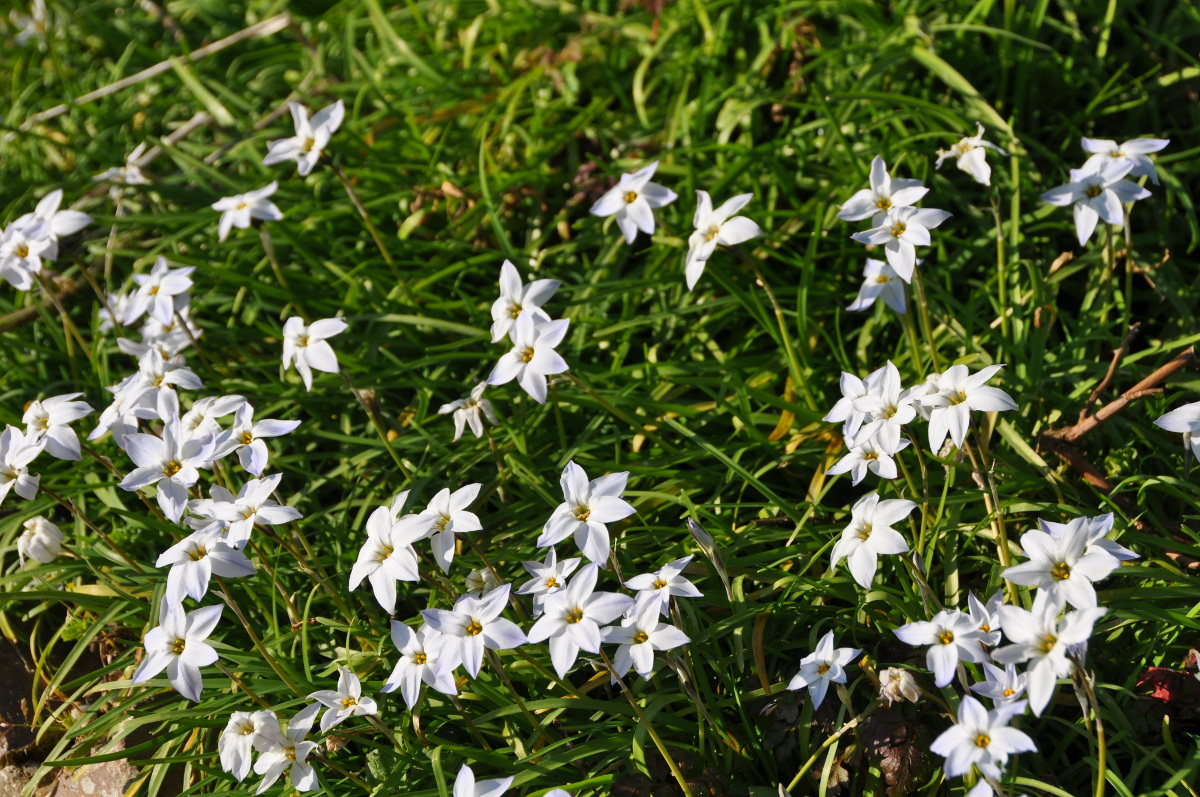
Just out of the winter, flowers are small. They didn’t have much time to grow a long stem, or perhaps it is warmer next to the ground, I don’t know. It is time to bend down to admire the little marvels offered by the season before they disappear under more impressive giants. These are the lovely ipheions, also named Spring starflowers – for obvious reasons. At Giverny they can be found next to the left staircase of the Monet house.
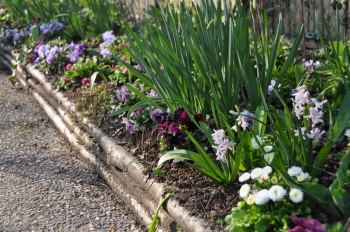
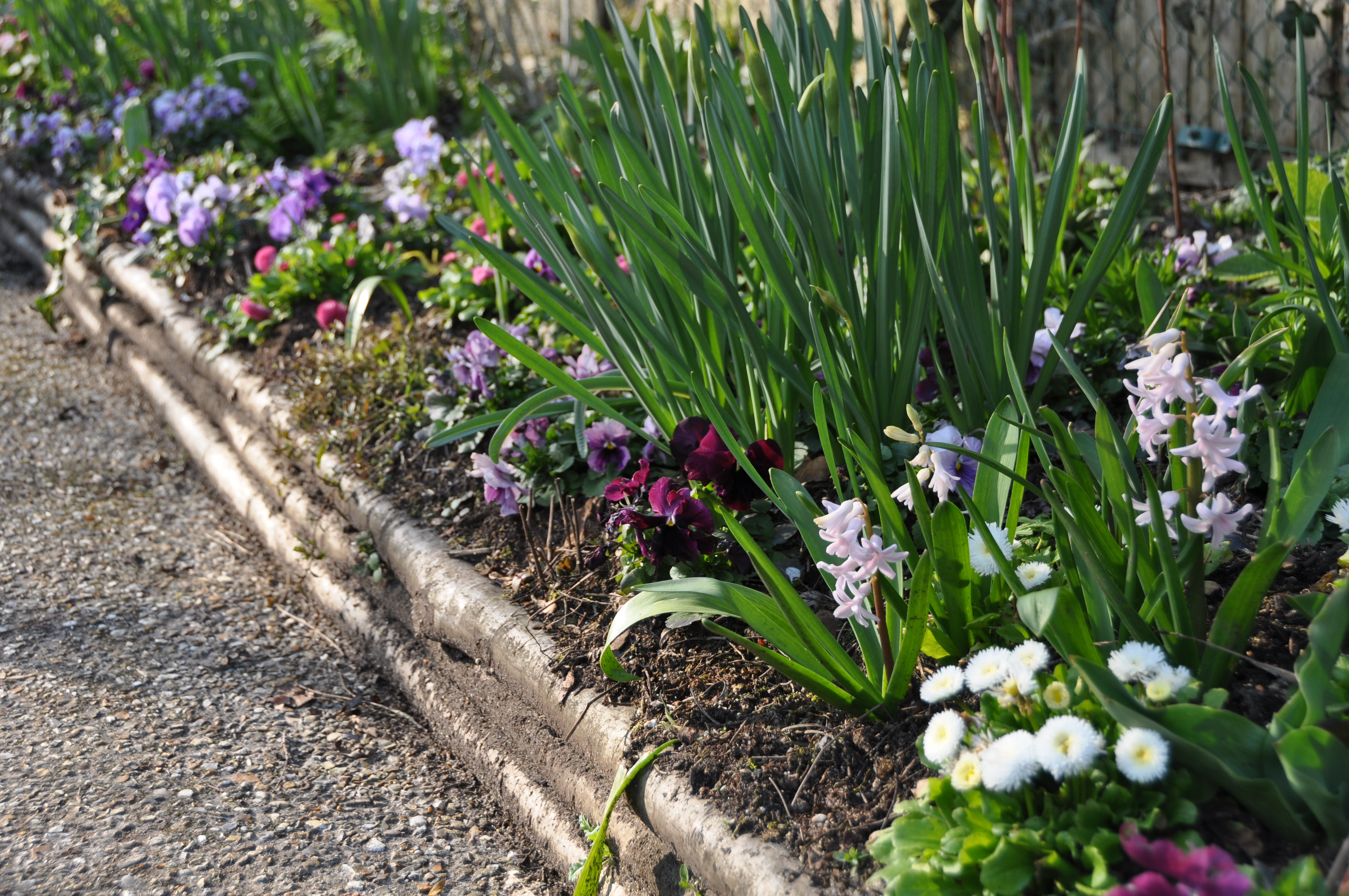
In the water garden, some beds combining pansies, daisies and hyacinths are already quite sweet. I suspect these early hyacinths to be purposely forgotten bulbs of last year. Their scent is a delight. The gardeners plant bulbs at different times, they also plant many different varieties to obtain the longest possible blooming time.
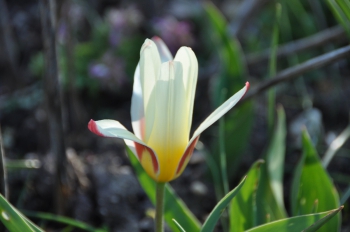
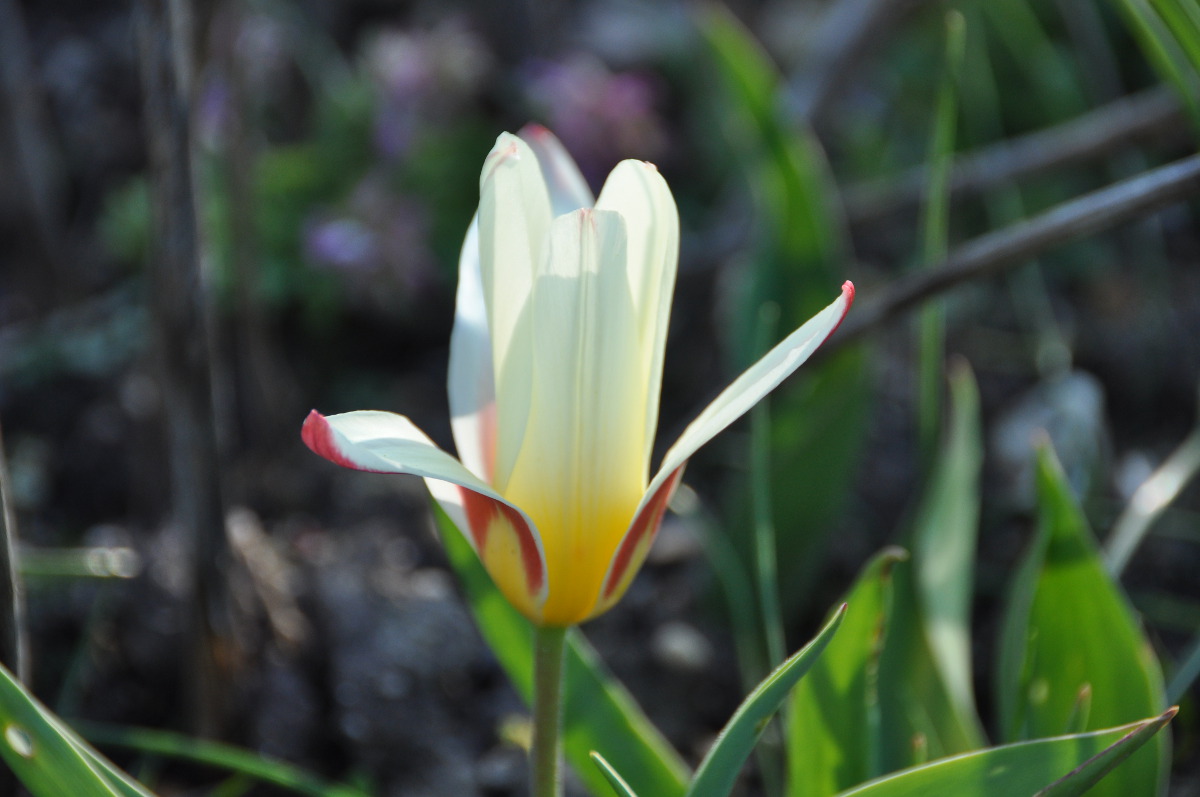
And last but not least, this little dwarf tulip opening its petals is enjoying the first ray of sunshine. Tulips will be at their best in five to six weeks, in all shapes and colors. Giverny has an enormous display of tulips of all kinds. An absolutely beautiful tulip show. Late April is one of my favorite times in the garden… followed by several others…
Posted in Monet's flower garden 2 Comments »
February 20, 2016
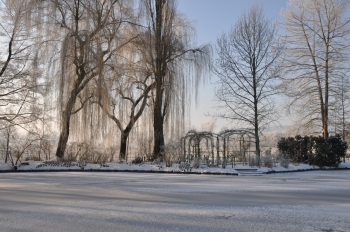
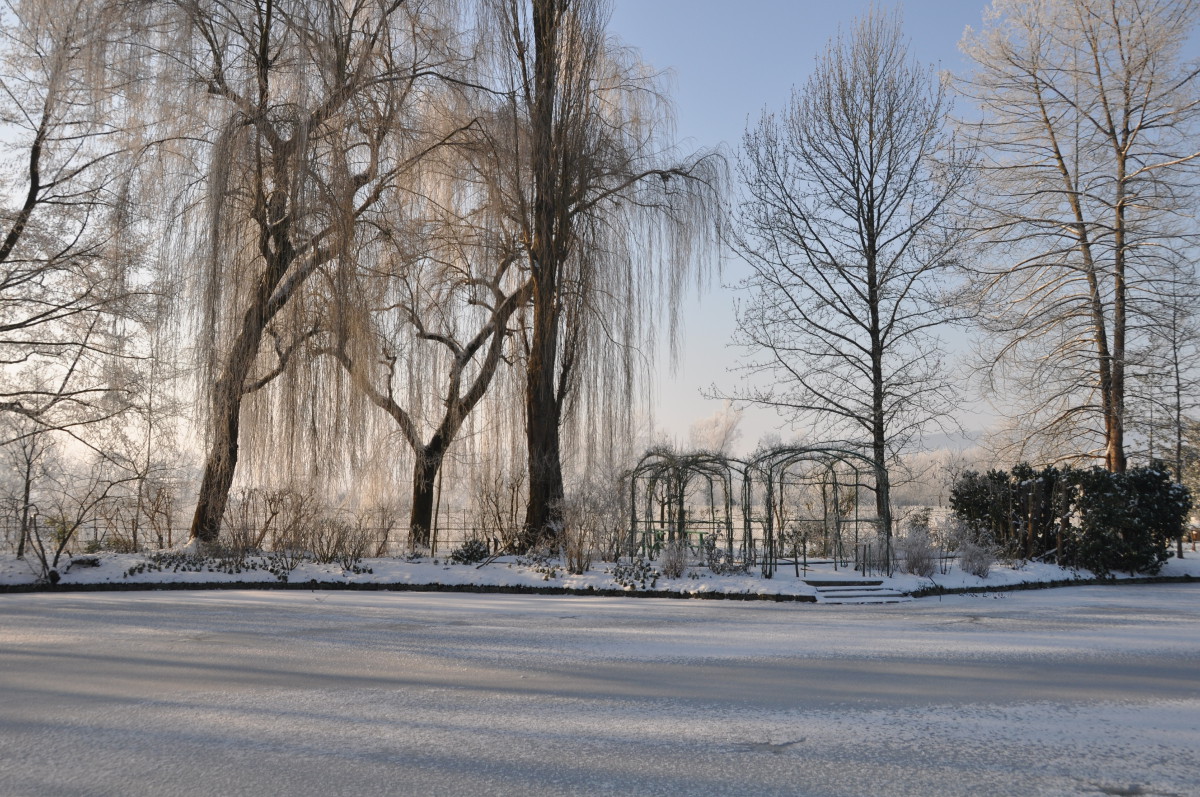
This is not the winter we are having at Giverny this year. The last time Monet’s water lily pond looked that way was in 2012.
It was so beautiful then! I roamed in the gorgeous yet closed garden and couldn’t look and shoot enough.
The landscape turned white is not that frequent at Giverny. Although we do get a few flakes every winter and a few nights of frost, generally the weather is more humid than cold. It is overcast, it rains, but not cats and dogs, only kittens and puppies, you know.
Patience. All this will soon be over. Fondation Claude Monet opens rain or shine on March 25, 2016, and the seven-month flower show wil be more beautiful than ever.
Posted in Giverny, Water-Garden No Comments »
June 10, 2015
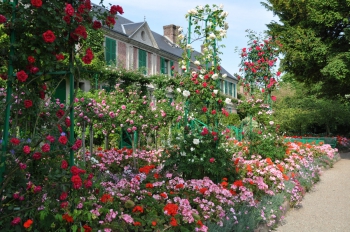
I hope I will live long enough to experience the time when computers will manage to send fragrances. It would be so nice to be able to share the scents of Giverny. The roses are in full bloom, and their delicate perfume fills in the air. In the water garden, it mingles with the sweet scent of honey suckle, creating a very girly combination, the kind of fragrance I loved to wear as a teenager. I wonder if the teenagers of today still like it. But I see everyday how ladies love smelling flowers. To get most of a peony or an iris, the best is to put one’s nose in the petals. It is so good it gets addictive. Is this a feminine gesture, as a female visitor suggested it to me? I remember a photo of Georges Clemenceau smelling a rose. The Tiger himself! With such an example, gentlemen should feel free to indulge in this pleasure.
Posted in Monet's flower garden 1 Comment »
April 25, 2015
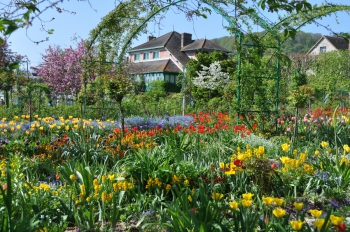
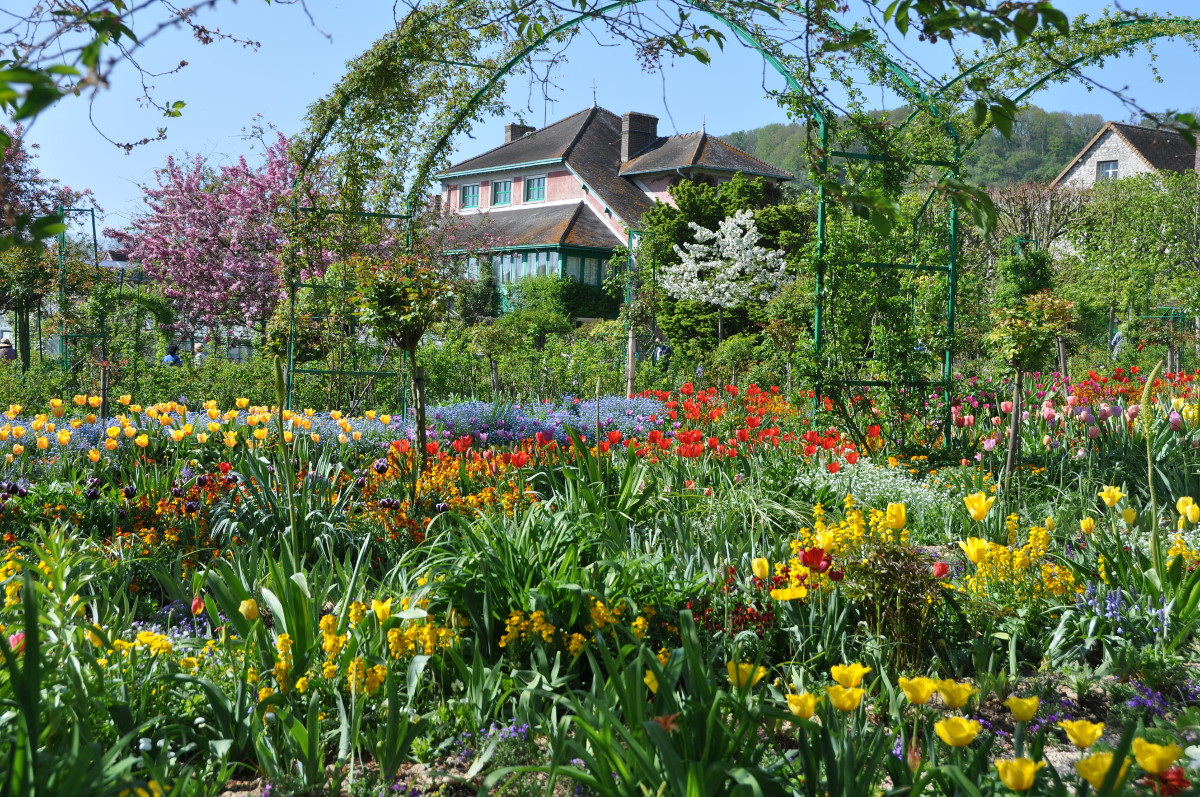
Seen on a map or from the windows of his home, Monet’s flower garden aligns straight lines that ressemble almost a grid. But because Monet raised the flower beds, an oblique look through the garden doesn’t reveal the walkways. Instead, it gives the feeling of an endless flowered meadow full of striking colors. Blues are made by forget-me-not, while tulips, fritillaries and pansies provide all the colors of the painters palette. (Click on picture to enlarge)
Posted in Giverny, Monet's flower garden No Comments »
April 11, 2015
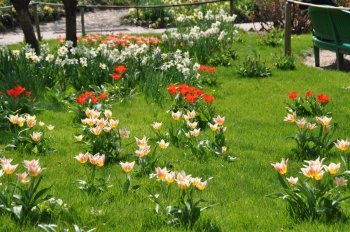
In April, as soon as the sun shines, Monet’s garden radiates. The colors are brighter than ever. Greens are vibrant. Red tulips flame in their complementary color. All the upside down bells of the bulb flowers resemble shiny laterns that have just been switched on.
What is the reason therefore? A freshly washed air, cool enough not to contain any haze? Or is it due to the height of the sun? I don’t know. But it is properly amazing and special to early spring. The glow of April makes you want to come out in the garden, to paint and to photograph.
Posted in Monet's flower garden No Comments »
December 27, 2014
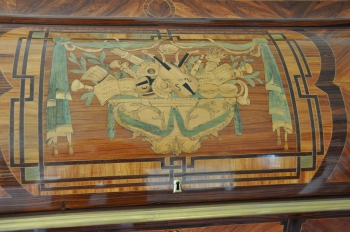
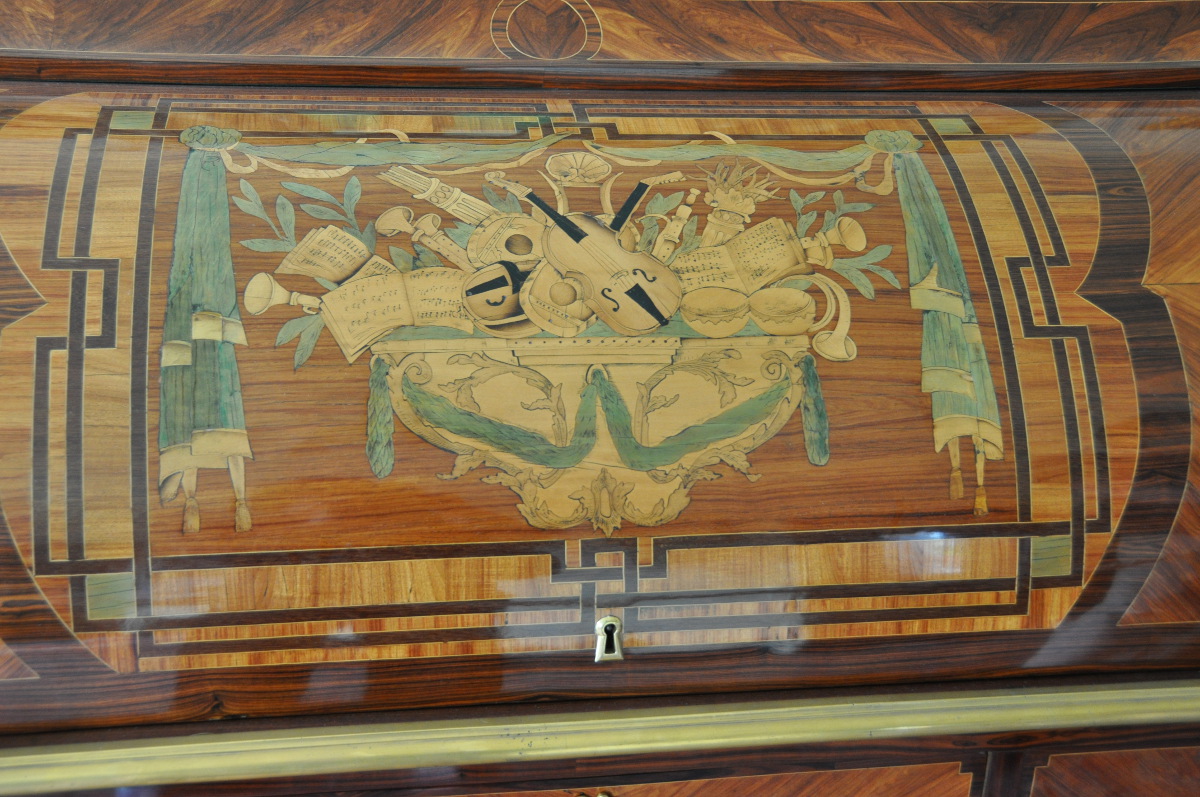
Here is a close-up of the desk that can be seen in Claude Monet’s bedroom at Giverny. It is from the mid 18th Century and features music instruments, not painting material. It was already an antique when Monet purchased it.
During the second half of his life Monet became famous. Recognised as a great painter, he sold his paintings at high prices. This enabled him to live a comfortable life.
The desk was restored last winter and found its original colors again.
Posted in Claude Monet, Giverny, Monet's House No Comments »
September 14, 2014
[singlepic id=257 w=320 h=240 float=left]
Early in the morning, the low sunbeams stroke the flowers at Giverny. Some mist still hangs in the air, like the dreams of the night. There is a feeling of awakening.
The little lanes of Monet’s garden look even more inviting. Early in the morning, minutes after opening time, the Clos Normand is still silent. One can hear the plants breathing, almost.
It is a magical moment that must be picked up quickly. Shortly later, the air will be full of voices, and the place full of people.
Posted in Giverny, Monet's flower garden 1 Comment »
November 9, 2013
[singlepic id=245 w=320 h=240 float=left]
On the 30th of October, the perfectly serene pool in Claude Monet’s garden offers a mirror view of the world around.
Blue sky and turning trees create a bold contrast between the still floating water lily pads.
(Click on the picture to enlarge).
Posted in Giverny, Water-Garden 1 Comment »
August 15, 2012
[singlepic id=226 w=320 h=240 float=right]This flower bed graces the pond side in Monet’s water garden at Giverny. The main color is red, ranging from orange to purple. I’ve counted over 20 different kinds of flowers planted together, but there are probably more. Here are a few: New Guinea impatience, common begonia, angel wing begonia, common fuchsia, fuchsia microphylla, abutilon, asclepia, oxalys, sage, tithonia, heuchera, polygonum, sweet William, nicotinia… to quote only those that are flowering right now. This border is a good example of the way Monet liked to combine flowers. The appearant wildness of the garden is the result of a lot of work.
Posted in Flower, Giverny, Water-Garden No Comments »
June 26, 2012
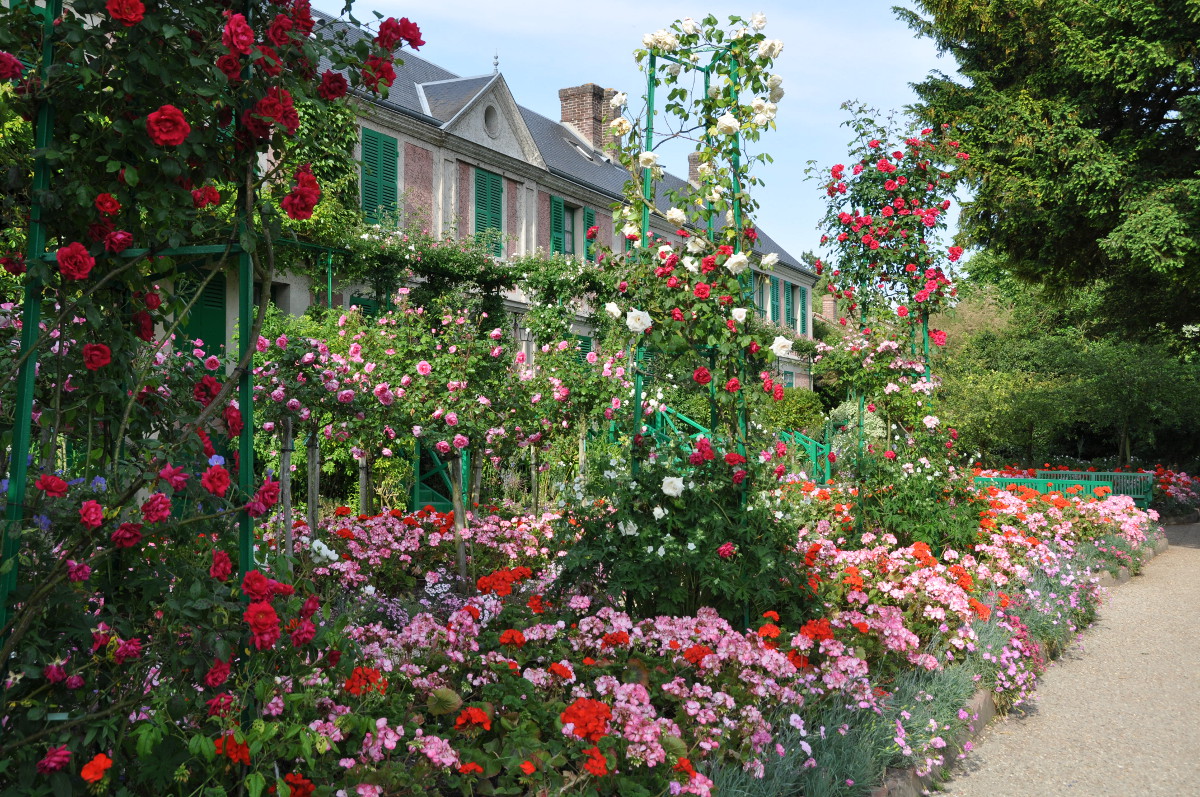
[singlepic id=224 w=320 h=240 float=left]Just an idea of the profusion of roses blooming in June at Giverny!
For a few weeks, Monet’s garden becomes a rose garden.
Rambling, climbing roses climb on dozens of metallic structures, typical for a garden designed in the 19th Century.
Posted in Giverny, Monet's flower garden 7 Comments »
June 7, 2012
[singlepic id=222 w=320 h=240 float=left]After the yellow and orange Iceland poppies, and the enormous red perennial Chinese poppies, it is now time for the lovely pink annual poppies.
Each year, when they pull the dried ones out of the ground, the gardeners scatter the seeds in the flower beds. They grow everywhere, and they turn the garden into a pink fairy for a few days.
The eremurus, also known as fox tails, create an interesting contrast with their vertical shape.
They are topped by the climbing roses, at their best in June.
Posted in Monet's flower garden No Comments »